
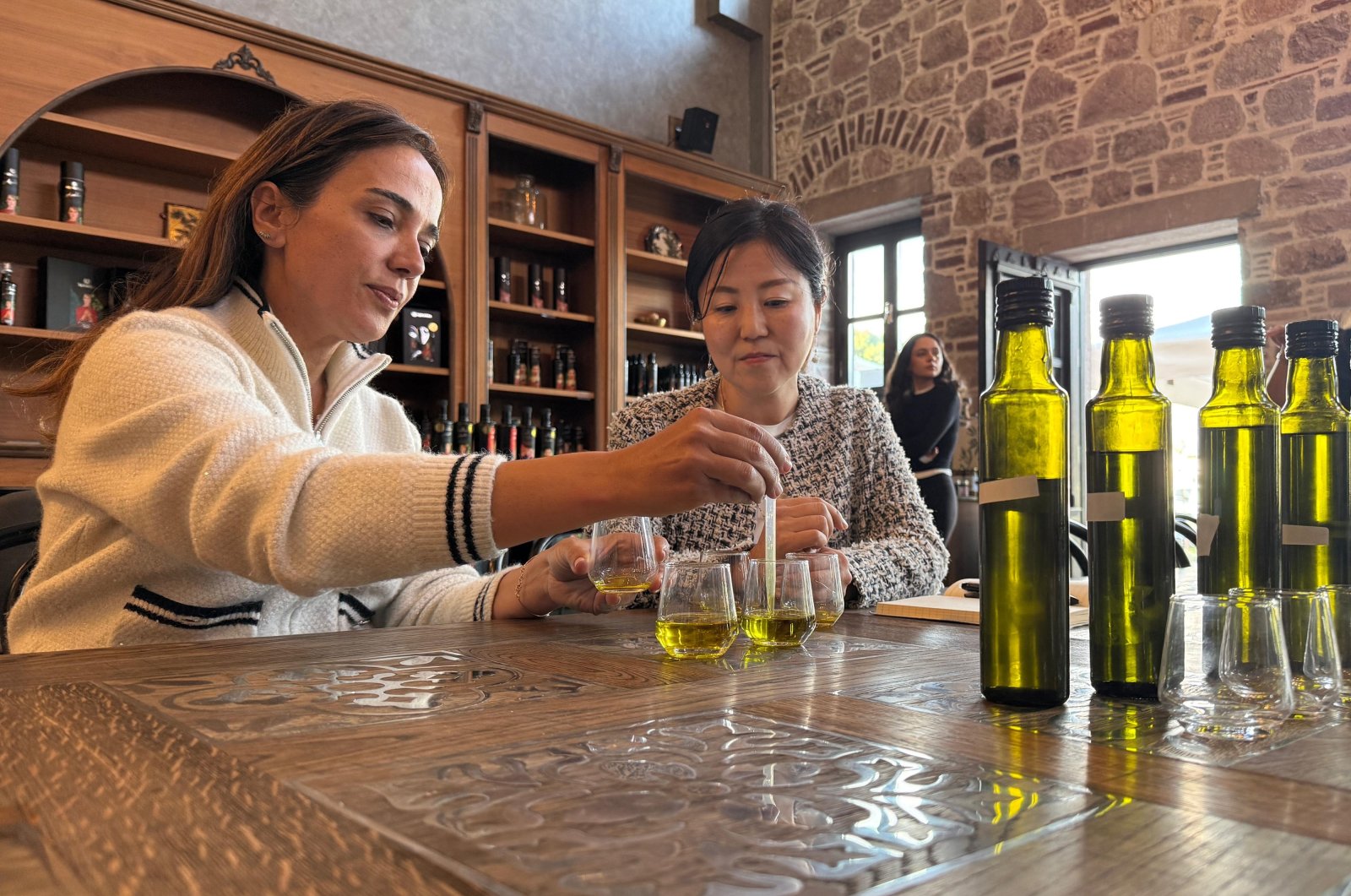
Japanese chef and olive oil tasting expert Hiromi Nakamura is introducing Turkish olive oils to the Far East under the brand name “ChefBlend,” blending local varieties to create a unique product for Japanese cuisine.
Nakamura teamed up with Turkish entrepreneur Bahar Alan, who has been working to bring Turkish olive oils to the global market. Together, they are fostering cross-cultural culinary collaboration between Japan and Türkiye.
Alan, who founded the NovaVera brand in 2017 and has since won international awards, began her journey by acquiring olive groves. She now produces high-quality olive oil that has received worldwide recognition.
At Nakamura’s invitation, Alan traveled to Ayvalık, Balıkesir, where the Japanese chef combined Memecik, Ayvalık, Trilye and other local olive varieties to create a signature olive oil intended for global promotion.
A tasting expert specializing in Japanese cuisine, Nakamura told Anadolu Agency (AA) that although sesame and soybean oils are more common in Japan, interest in healthy eating and the Mediterranean diet has grown significantly in recent years.
“I decided to develop this interest professionally,” Nakamura said. “By serving as a juror in international tasting competitions, I had the opportunity to evaluate olive oils from different regions. NovaVera’s production philosophy and the awards it has received caught my attention. I had encountered Turkish oils at some events, and NovaVera’s flavor profile was truly impressive. That led to our collaboration and the creation of the ‘ChefBlend’ project. Our goal was to develop a balanced, versatile olive oil that could complement Japanese cuisine.”
Nakamura explained the process of creating ChefBlend: “We combined Trilye, Ayvalık and Memecik olives, each with distinct characteristics. Trilye brings intense fruitiness, Ayvalık offers balance and Memecik adds a spicy note. Together, they create a multi-layered flavor profile suitable for both Japanese and Mediterranean dishes.”
Noting that Japan is now among the world’s largest olive oil importers, Nakamura described local trends: “Although sesame oil has traditionally dominated Japanese cuisine, olive oil’s health benefits and mild flavor make it increasingly compatible with our dishes. Its use has diversified, enhancing both traditional recipes and new creations. For example, a light drizzle of olive oil can refine the taste of sashimi or seafood in place of soy sauce. Olive oil is now also used in tempura, fried foods, ramen, and soups to add aroma and texture.”
Turkish cuisine shines
Nakamura highlighted the quality and diversity of Turkish olive oils, noting that Türkiye ranks among the world’s top olive producers and is home to distinctive local varieties. She emphasized that Trilye, Memecik and Ayvalık olives each bring their own remarkable flavor profiles.
For her, olive oil serves as a culinary bridge between Japan and Türkiye. She explained that while Japanese cuisine emphasizes simplicity and purity, Turkish cuisine is celebrated for its depth and richness. By blending these approaches, chefs can create innovative and harmonious flavors. Nakamura anticipates growing collaboration between the two culinary traditions and believes that olive oil will play an increasingly important role in global gastronomy.
Promoting Turkish olive oil
Bahar Alan, whose oils have won gold medals at the New York International Olive Oil Competition and other international contests, met Nakamura at these events five years ago. She explained that the Japanese chef has been using their oils in her cooking classes ever since.
“Last year, we began producing ChefBlend,” Alan said. “Hiromi created a blend that matches Japanese taste profiles using oils she prefers. Promoting Turkish olive oil globally is essential. However, we currently lag behind Italy and Spain, and Turkish oils have not yet received the recognition they deserve. In the past decade, high-quality oils have emerged, and with support for branding, Turkish olive oils can reach even greater heights.”
Alan emphasized their commitment to innovation and maintaining a leading role in international competitions: “Türkiye has around 100 commercial olive varieties, but many more exist locally. We include the names of all varieties on our bottles, which helps educate consumers. Each year, we try new varieties to raise awareness.”
Preserving olive trees
Alan also highlighted the importance of preserving olive trees as part of a broader ecosystem: “It’s not enough to protect the trees themselves. Olive trees host birds, worms, and surrounding flora. Natural propagation depends on this ecosystem – for instance, a bird eats the olive, disperses the seed, and a new tree grows. Planting seeds alone won’t suffice. Avoiding harmful chemicals and practicing clean, pesticide-free agriculture is essential. We aim to work in harmony with nature.”
She also emphasized the health advantages of high-polyphenol olive oils, mentioning that in their 8 years of production, they recently achieved a record level of 1,054 mg of polyphenols per 100 g, which she described as remarkable for such an antioxidant-rich product.
Dining and Cooking