

In 1999, winemaker Otto Dal Zotto and his wife Elena planted their first rows of prosecco grapes in Whitfield, in north-east Victoria, in a nod to his historic hometown in Italy.
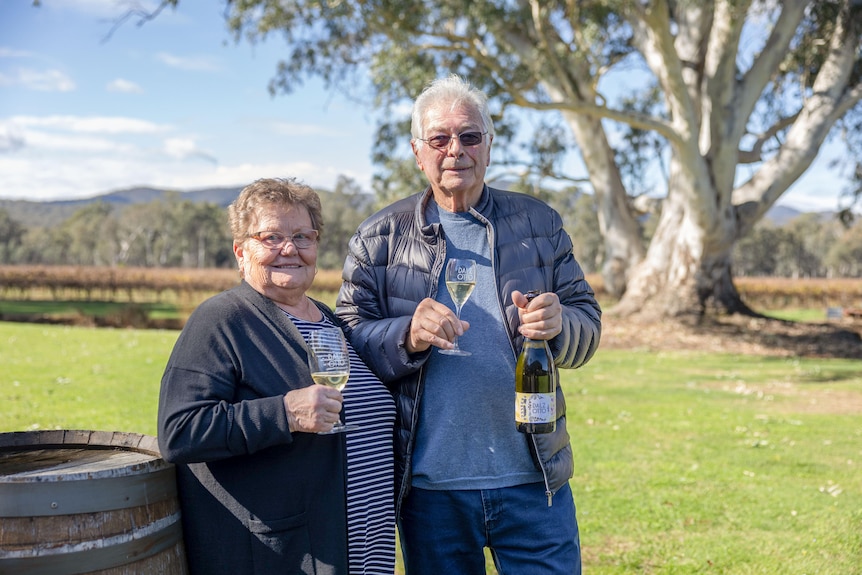
Elena and Otto Dal Zotto are pioneers of Australian prosecco. (ABC Rural: Annie Brown)
“I was born and grew up in Valdobbiadene, in a place where you can only drink prosecco,” Mr Dal Zotto said.
“There, prosecco is the most important, even more than water … I grew up with a bottle of prosecco on the table.”
Twenty-seven years later, prosecco is now synonymous with the King Valley in Australia.
More than 45 per cent of the country’s prosecco wine is produced in the cool-climate area just outside Wangaratta.

Prosecco was first planted in Australia at Dal Zotto Wines in 1999. (ABC Rural: Annie Brown)
But Australia’s success with the prosecco variety soon became a point of contention with its country of origin.
Seventeen years ago, the Italian government registered the prosecco production region as a geographical indication, restricting use of the name.
Australian growers feared they would have to give up the prosecco name altogether.
But they had a win of sorts in March this year, when a deal was reached in a new Australia-European Union Free Trade agreement (FTA).
Following years of stop-start negotiations, Australia retained the right to use the name prosecco, with some conditions.
“So many people said that we would never get there, and we would never win,” Mr Dal Zotto said.
“We showed that we can do it by sticking together and keep pushing forward.”

Prosecco contributes more than $200,000 to the local economy. (ABC Rural: Annie Brown)
New name for export
Australia is now the only country outside Italy that is legally permitted to use the name prosecco indefinitely.
But changes are coming for Australian exports.
Under the FTA, the Australian government agreed to phase out the use of the term prosecco on exported wines over the next 10 years.
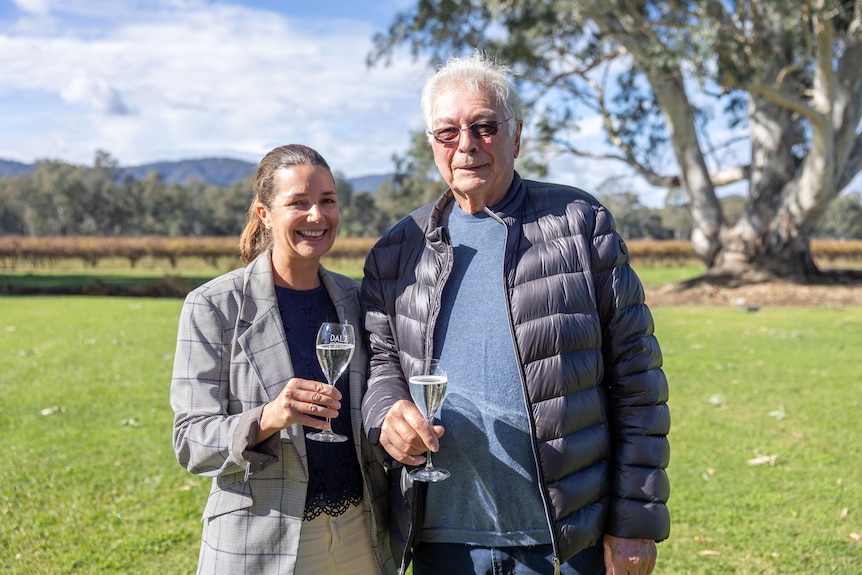
Katherine Brown and Otto Dal Zotto lobbied the federal government to retain rights to use the name of the grape variety, prosecco. (ABC Rural: Annie Brown)
Brown Brothers winemaker Katherine Brown said the industry is yet to land on a new name for prosecco exports.
“It’s just prosecco by another name — let’s see how creative we can get.”
Currently, 95 per cent of Australian prosecco is consumed domestically, with a small amount mostly exported to New Zealand.
With the EU negotiations now settled, Ms Brown said producers are keen to find new markets they have not been able to access before.
“There is a desire in these markets to drink sparking wine, [specifically] Australian sparking wine, so the opportunity is there,” she said.
“As soon as we have the right name to move into these markets, we will see a boom.”

King Valley winemakers with local MP Helen Haines. (ABC Rural: Annie Brown)
Rebranding prosecco for export will come at a high cost to the local industry.
The federal independent member for Indi, Helen Haines, is seeking support from the federal government for the change.
“This next piece now is to work with industry to come up with a very clear framework around how we make that transition into the export market,” Ms Haines said.
“It’s a huge opportunity, and we are aspirational in the King Valley.”
More plantings
For now, local winemakers and grape growers are celebrating their free trade agreement.

John Cavedon is a wine grape grower in the King Valley. (ABC Rural: Annie Brown)
“It gives us certainty to move forward and the confidence in the longevity of prosecco,” King Valley wine grape grower John Cavedon said.
“We will most likely plant more prosecco vines. Firstly, we have to talk to the companies we supply.
“The demand for prosecco is very strong — as a grape grower, it’s the one we get phone calls about.”
For Mr Dal Zotto, the pioneer of Australian prosecco, he is just happy to see a brighter future for his beloved wine.
“It took nearly 30 years to get to where we are now, and it’s just great, you know, it’s just unbelievable.”
Dining and Cooking