
Italy maintains a leading position in the export of high-quality roasted coffee, consolidating its role as Europe’s leading processor and an international benchmark for espresso coffee culture. The sector represents a cornerstone of the national agri-food economy, with the distinctive ability to transform imported raw materials into world-renowned finished products of excellence.
Italian coffee roasting: key players and structure of the sector
The Italian coffee roasting industry has approximately a thousand companies distributed throughout the national territory, with an estimated direct employment of over 7.000 employees (Coffitalia, 2025). The productive fabric includes over 300 artisanal roasters alongside large industrial groups, demonstrating the variety and richness of the Italian coffee scene.
The main industrial groups in the sector – Lavazza, Illy, Massimo Zanetti Beverage Group, and Segafredo Zanetti – represent approximately 65% of the domestic market and drive the international expansion of Made in Italy coffee:
Lavazza, in particular, operates in over 140 countries through 9 production plants distributed across 6 countries, with 70% of its turnover generated abroad (World Coffee Portal, 2025);
Illy Caffè, founded in 1933 in Trieste, closed 2024 with a turnover of 630 million euros, up 6% compared to the previous year, confirming its leadership in the premium segment (Il Sole 24 Ore, 2025).
Italian coffee: production and export
In 2024, the Italian industry produced approximately 431.000 tons of roasted coffee, with a production value of 4,73 billion euros and a significant growth in value (+8,5%), confirming the sector’s ability to maintain competitiveness even in the presence of strong pressure on raw material costs (Unione Italiana Food, 2025).
In 2024, Italy has exported 313,872 tons of green coffee equivalent (approximately 290 million kg of roasted coffee), recording a growth of 1,8% compared to 2023. In value, exports reached 2,665 billion euros (Italian Food Union, 2025).
third country in the world for green coffee imports (after the USA and Germany);
second in the European Union for roasted coffee exports (after Germany);
first European producer of roasted coffee, with 25% of the total EU production (ANSA, 2025);
world’s leading exporter of roasted coffee to non-EU countries, with a share of 32,9% of the European total (Mediobanca Research Area, 2023).
Coffee represents the fourth most exported agri-food product from Italy by value, after wine, pasta and olive oil (SIGEP, 2025).
Main destination markets
Italian coffee exports are mainly destined for European markets, which absorb approximately 60% of the total. Outside the EU, the most relevant markets include:
United States: a strategic market experiencing strong growth, with significant investments from major Italian groups. In 2024, Lavazza announced its intention to produce 100% of its products destined for the US market directly in the US, in response to the Trump administration’s tariff policies. Illy is also evaluating local production investments to consolidate its presence in the US market, where demand for quality espresso coffee continues to grow;
Germany: main destination market in Europe, which continues to absorb a significant share of Italian exports, confirming the traditional commercial partnership between the two countries;
France: second largest European market, with a consolidated demand for high-quality Italian blends;
other relevant marketsThe United Kingdom, Poland, Austria, Greece, Switzerland, Australia, Russia, and Canada represent strategic destinations for Italian exports.
Over the last decade, exports have almost doubled in volume, from 160,7 thousand tons in 2011 to 314 thousand tons in 2024, confirming their role as the true growth driver of the Italian coffee industry.
Global competitive positioning
Globally, Italy maintains a leading position in the high-quality roasted coffee segment. Among Europe’s leading exporters of processed coffee, Italy is strategically positioned behind Switzerland and Germany in terms of total global exports, but remains the undisputed leader in roasted coffee destined for markets outside Europe.
The Italian coffee sector demonstrates a strong international vocation: the 49 major Italian players export 55,5%of sales, a percentage significantly higher than the average of the Italian food sector (27,5%) (Mediobanca Research Area, 2023). The largest companies reach export shares of up to 69,1% of total turnover.
Market challenges
The global coffee market in 2025 faces significant and unprecedented challenges, as outlined below.
Record prices for green coffee
Green coffee prices experienced an exceptional year in 2025, with unprecedented fluctuations that reached historic levels not seen since the late 70s. According to the International Coffee Organization (ICO), price trends throughout the year showed extraordinary volatility:
First quarter 2025 – All-time records:
In January 2025, the ICO Composite Indicator Price (I-CIP) reached an average of 310,12 US cents/lb, recording an increase of 3,5% compared to December 2024 (ICO, 2025);
In February 2025, the I-CIP has surpassed all historical records, reaching an average of 354,32 US cents/lb(+14,3% compared to January), the highest level ever recorded, exceeding the previous high of 305,13 cents USD/lb in March 1977 (ICO, 2025);
The price of theColombian Arabica has touched i 410,64 US cents/lb in February 2025 (+16,7% compared to January), while the Robust physique reached 263,08 US cents/lb (+7,2%) (ICO, 2025);
since November 2025, the I-CIP remained in a range between 320,39 and 343,92 US cents/lb, with an average of 330,44 US cents/lb (+1,2% compared to October). Two key factors influenced the market: the removal of US tariffs on Brazilian coffee imports (a downside factor) and severe flooding in Vietnam’s producing regions (an upside factor), which essentially offset each other (ICO, 2025);
since December 2025, the I-CIP recorded a sharp decline, settling at 304,68 US cents/lb (-7,8% compared to November). The price dropped sharply from mid-November, falling from 343,92 US cents/lb on November 11 to a low of 283,21 US cents/lb on December 19, before partially recovering to 293,09 US cents/lb at the end of the year (ICO, 2025);
Variety Dynamics (December 2025):
Colombian Arabica: 382,32 cents USD/lb (-6,5%)
Other Milds (Arabica): 381,14 cents USD/lb (-7,1%)
Brazilian Naturals (Arabica): 355,38 cents USD/lb (-6,5%)
Robust physique: 190,53 USD cents/lb (-11,3%, falling below the USD 2/lb mark for the first time since August)
First days of 2026: In early January 2026, the market showed a recovery, with the I-CIP returning above 300 cents USD/lb for three consecutive days, reaching a peak of 307,11 US cents/lb January 7 (Comunicaffè, 2026).
Factors driving volatility:
The December 2025 ICO report attributes the sharp price drop at the end of the year to a combination of factors:
On the political front: the further postponement of the EUDR (European Union Deforestation Regulation) by one year (Dongo, 2025) and the removal of reciprocal US tariffs on coffee, including the specific one on Brazil, have reduced the uncertainty that weighed on the market;
On the production front: The upward revision to official estimates for the 2025/26 Brazilian crop, combined with a slight positive correction in the USDA’s global production forecast, has strengthened expectations of improving supplies;
On the financial frontThe depreciation of the Brazilian real against the dollar has spurred selling by Brazilian producers. Non-commercial traders’ net long positions on ICE Arabica decreased from 34.747 lots to 23.673 lots in the 14 days ending December 23.
Resumption at the end of the yearThe partial recovery in prices in late December was triggered by two developments: less rainfall in Brazil and widespread flooding in Indonesia, which could reduce the country’s exports by up to 15% in the 2025/26 coffee year (ICO, 2025; Comunicaffè, 2026).
Andrea Illy, president of Illy Caffè, declared that ‘The cost of raw materials has increased three times compared to the historical average. This is a result of financial speculation that is impacting farmers and consumers.’ (Il Sole 24 Ore, 2025).
Climate change and production crisis
Il BrazilBrazil, the world’s leading producer, faced its worst drought in seven decades in 2024, with temperatures above 35°C causing premature flower drop and shortening the average lifespan of the plants (ICO, 2024; Linkiesta, 2025). A 6% decline in total Brazilian production is expected for 2025-2026.
Il Vietnam , the leading producer of Robusta, recorded a 39,5% collapse in exports in December 2024, reaching the lowest level since December 2014. Severe floods hit producing regions, putting upward pressure on global prices (ICO, 2025).
Operating costs and logistical challenges
I high energy costs and inflationary pressures continue to weigh on the operating margins of roasters. Added to these elements are the pricing policies of the US administration, which applied duties of 25% on coffee from Colombia and threatened duties of up to 50% on Brazilian imports, creating uncertainty for operators in the sector (Quifinanza, 2025).
Giuseppe Lavazza, president of the Italian Coffee Committee, described the situation as a ‘perfect storm’ in which the combination of the climate crisis, financial speculation, logistical blockades and new European regulations (such as the EUDR, European Union Deforestation Regulation) risks compromising the competitiveness of Italian companies (Quifinanza, 2025).
Future perspectives
Despite the unprecedented challenges linked to the record prices of green coffee and the uncertainties of the geopolitical context, the Italian export sector maintains sustained growth prospects, supported by the global reputation of Italian espresso coffee and the innovation capacity of the national industry.
Il global coffee market, today valued at $138,37 billion, is expected to reach $174,25 billion by 2030, with a CAGR (compound annual growth rate) of 4,72%Distinctive competitive factors that will continue to support the growth of Italian exports include:
reputation of the Italian coffee brand’: Italian espresso culture remains a global icon, with consumers willing to pay a premium for the quality and authenticity of Italian blends;
innovation in formats: the growth of the single-serving segment (pods, compatible capsules) and ready-to-drink products offers opportunities for expansion on international markets;
demand for premium coffee: in both emerging and established markets, the demand for specialty and high-quality coffee continues to grow, favoring Italian producers positioned in the premium segment;
know-how in roasting and blending: the Italian art of blending, which combines coffees from different geographical origins to create complex and balanced aromatic profiles, represents a competitive advantage that is difficult to replicate;
sustainability and traceability: the growing focus on environmental and social sustainability is pushing Italian groups to invest in regenerative agriculture, quality certifications, and supply chain traceability, elements increasingly appreciated by global consumers.
Lavazza and Illy are also strategically investing in projects production localization in key markets (especially the USA) to overcome tariff barriers and respond more quickly to local demand, confirming the Italian sector’s ability to adapt to changes in the global competitive context.
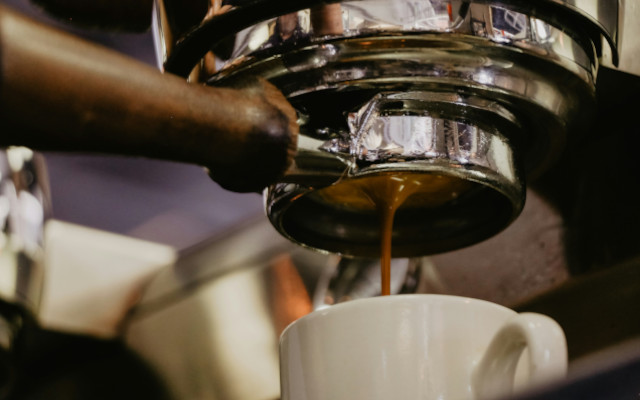
Picture of René Porter su Unsplash
Bibliography

Dining and Cooking