


In most U.S. grocers, the honey section tends to revolve around a familiar mix of clover and wildflower honeys, generic blends and maybe a few local jars. A lot of them probably come in squeezable smiling bears. That limited assortment can make honey seem like an interchangeable pantry staple, when in fact the ingredient’s flavor can be greatly shaped by climate, season and place. It wasn’t until I encountered sourwood honey that it became clear to me how much one jar can diverge from another.
“In the honey world, it’s a secret we’ve all known about.”
What is sourwood honey?
Sourwood honey, produced by bees from the nectar of sourwood trees, is a specialty of the southern Appalachian region of the United States, especially the mountainous areas around north Georgia, western North Carolina and eastern Tennessee. For an ingredient that has repeatedly earned top accolades at prestigious honey competitions, it has remained something of a regional secret.
“It’s a sleeping giant,” says Jay Williams, beekeeper at Southall Farm and Inn in Franklin, Tennessee. “But honestly, in the honey world, it’s a secret we’ve all known about.”

Close-up of sourwood tree. © MarinoDenisenko/Adobe Stock
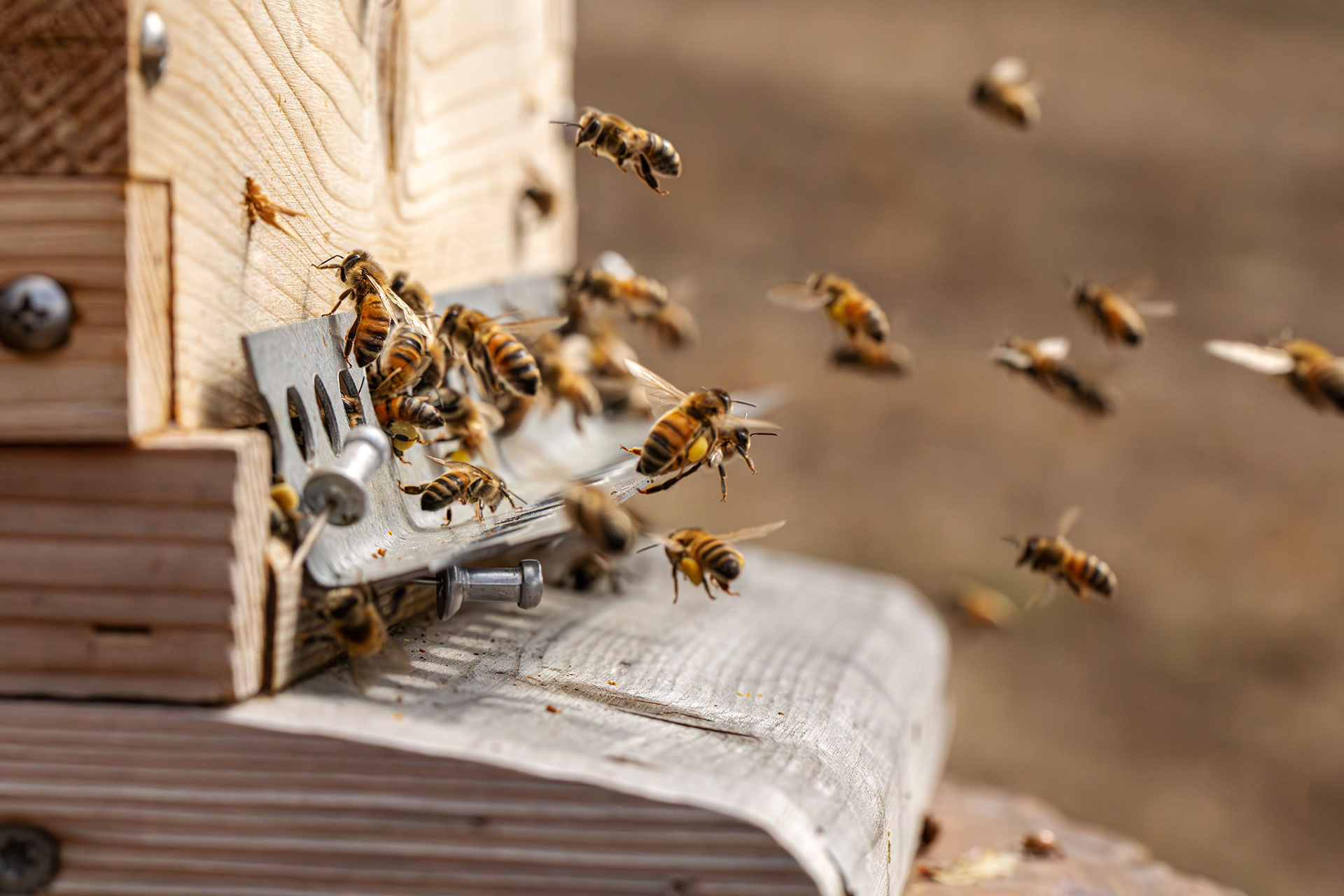
The bees that create some of what’s considered the best honey in the world. © Southall
What does it taste like?
For anyone whose exposure to honey has mostly been the mass-market varieties, sourwood honey widens the aperture of what honey can be. Williams describes it as less sweet than most people may be used to, with a buttery, savory quality and undertones of warm spice. “There’s an umami feel to it. It’s got caramel notes. It’s got spicy notes of cinnamon, and maybe a little anise,” he says. “Sourwood honey, to me, tastes like the holidays.”
For Williams, the honey’s savory undercurrent makes it a natural accompaniment to ingredients with a similar heartiness and heft — say, a drizzle over roasted root vegetables for a memorable finishing touch. Terry Koval, chef-owner of The Deer and The Dove in Decatur, Georgia, channels this instinct, serving it with sturdy, earthy vegetables like salsify, rutabaga and sweet potatoes.
Sourwood honey’s complex flavor profile can also include a faintly bitter edge. Jarrett Stieber, the chef-owner of Atlanta restaurant Little Bear, finds a pleasant bitterness to the honey that, coupled with its “brown sugar undertones,” as he puts it, remind him of amaro — and his bar program indeed uses it to sweeten amari and vermouth.
Contrary to its name, sourwood honey is not obviously tart (the name derives from the sour taste of the tree’s leaves), but Stieber points out that it does deliver a whisper of tang. At Little Bear, he marinates late-summer squashes in a blend of Korean chile flakes, herb-infused vinegar and sourwood honey, a dish in which the vinegar’s tartness plays off the honey’s faint tart notes. “It has a harmonious way of blending into a sauce,” he says, noting that the final dish doesn’t taste markedly sweet or honey-forward. “It just sort of falls in line with everything else.”
The honey’s well-rounded flavor can make it highly versatile in the kitchen. “I just loved the mildness of it,” says Trevor Stockton, executive chef at The Restaurant at RT Lodge in Maryville, Tennessee, recalling his first time tasting the ingredient when he first moved to the state around 16 years ago. “It lent just the right amount of sweetness.” He was inspired to serve the restaurant’s signature fried chicken dish with a fermented jalapeño hot sauce as well as a little jar of sourwood honey. “It doesn’t give you that overpowering clover honey flavor. It gives you a sweetness without changing what you’re eating too much.”
By that same logic, RT Lodge also uses it to glaze grilled-peaches for a pound cake, the honey imparting a mild nectarousness that doesn’t eclipse the floral, caramelized character of the stone fruit.

The bees hard at work on the hive. © The Nomadic People

Fried chicken from RT Lodge and marinated squash salad from Little Bear. © Jordan Hunter | © Little Bear
What makes it so rare?
In order to produce sourwood honey, beekeepers need enough flowering sourwood in the vicinity that its nectar dominates what the bees bring back to their hive. Sourwood trees flourish in the acidic soils of the southern Appalachians, where the trees’ abundance has helped cement the honey’s deep cultural association with this region. “It’s the soil, the rain, the temperature, the humidity. All those things work together,” says Williams.
Sourwood trees only blossom for a handful of weeks during summer — typically around June or July — giving bees a short-lived window to collect nectar and produce honey. The brevity of the season, together with the limited growing range where the trees thrive, naturally cap annual production. Weather conditions in a given year can also significantly impact nectar flow and what the bee colonies are able to gather. Much like vintage wines, each batch of honey ends up being a record and expression of that year’s conditions.
“We remember our years, at least at Southall, based on the honey,” says Williams. “It’ll tell you what happened during the season.”
For anyone well acquainted with these landscapes, sourwood honey can taste and feel like a distillation of that environment. “The sound of the cicadas and the tree frogs, and everywhere smells like honeysuckles and grass that’s been baking in the sun all day,” recalls Stieber, describing warm summer nights of his childhood. “There’s a lot of unique, nostalgic terroir that shows up in [sourwood honey] that people like me are really familiar with because it’s where we grew up.”
As coveted as the ingredient is, high-quality sourwood honey is unlikely to be distributed nationally on a wide scale anytime soon. Stockton advises that the best way to find it, and to ensure you’re getting the real thing, is to seek out Appalachian markets that source straight from local producers, or to buy directly from beekeepers (such as MtnHoney — whose sourwood honey has won many gold medals for “Best Honey in the World” — the Blue Ridge Honey Company or Baxter Hollow Farm). Or, of course, visit a restaurant that serves it.

Beekeeper collecting honey from the hive. © Southall

Beekeepers need enough flowering sourwood that its nectar dominates what the bees bring back to their hive. © Southall
Hero image: Sourwood honey is harvested during a fleeting Appalachian bloom and prized for its complex, savory flavor and hints of warm spice.. © Southall
Thumb image: RT Lodge Fried Chicken. © Jordan Hunter
Written by
Megan Zhang
Dining and Cooking