


Scientists aren’t the only people who participate in Japan’s Antarctica expedition program, which is celebrating its 70th anniversary. Helping to support the research conducted at Syowa Station are teams of engineers, mechanics and doctors.
And then there are chefs.
Their job entails not only keeping 30 fellow expedition members fed all year round but also delighting and uplifting them with occasional parties and events, as the group weathers one of the harshest living environments on Earth with few other forms of entertainment.
All this must be done while keeping limited food supplies in check and making sure that nothing goes to waste.
Despite those challenges, Junko Watanuki, 52, one of two chefs who ran the base’s kitchen in 2016-17, cherishes the experience like no other. She says it taught her invaluable lessons about a simple and sustainable way of living, and it leaves her yearning to go back.
“My values were turned upside down,” Watanuki recalls. “It has made me rethink my lifestyle, to reduce waste and just say ‘no’ to unnecessary giveaways.”
Watanuki, a native of the city of Hachinohe, Aomori Prefecture, has always loved spreading joy through her cooking. She became interested in going to Antarctica in 2003 when she saw an article featuring a female polar region correspondent for the Asahi Shimbun. At that time, Watanuki, who graduated from a culinary school in Tokyo, was a stay-at-home mom after resigning as a cook for the school’s employees.
Years later, she watched “The Chef of South Polar,” a 2009 comedy about a passionate cook stationed at a Japanese station in Antarctica, reigniting her interest in the continent. Now in her late 30s, she was completely overtaken by the desire to join an expedition.
Watanuki began frequenting an eatery run by a former Antarctic chef in Yokohama and listened to tales of culinary pursuits at Syowa Station. While she already had experience handling large volumes of food through her job at the cooking school, Watanuki took up a part-time job at an izakaya to train how to prepare a variety of dishes quickly.
It took her three attempts over three years to pass the exam to join the expedition, which included a high-pressure interview with a National Institute of Polar Research panel.
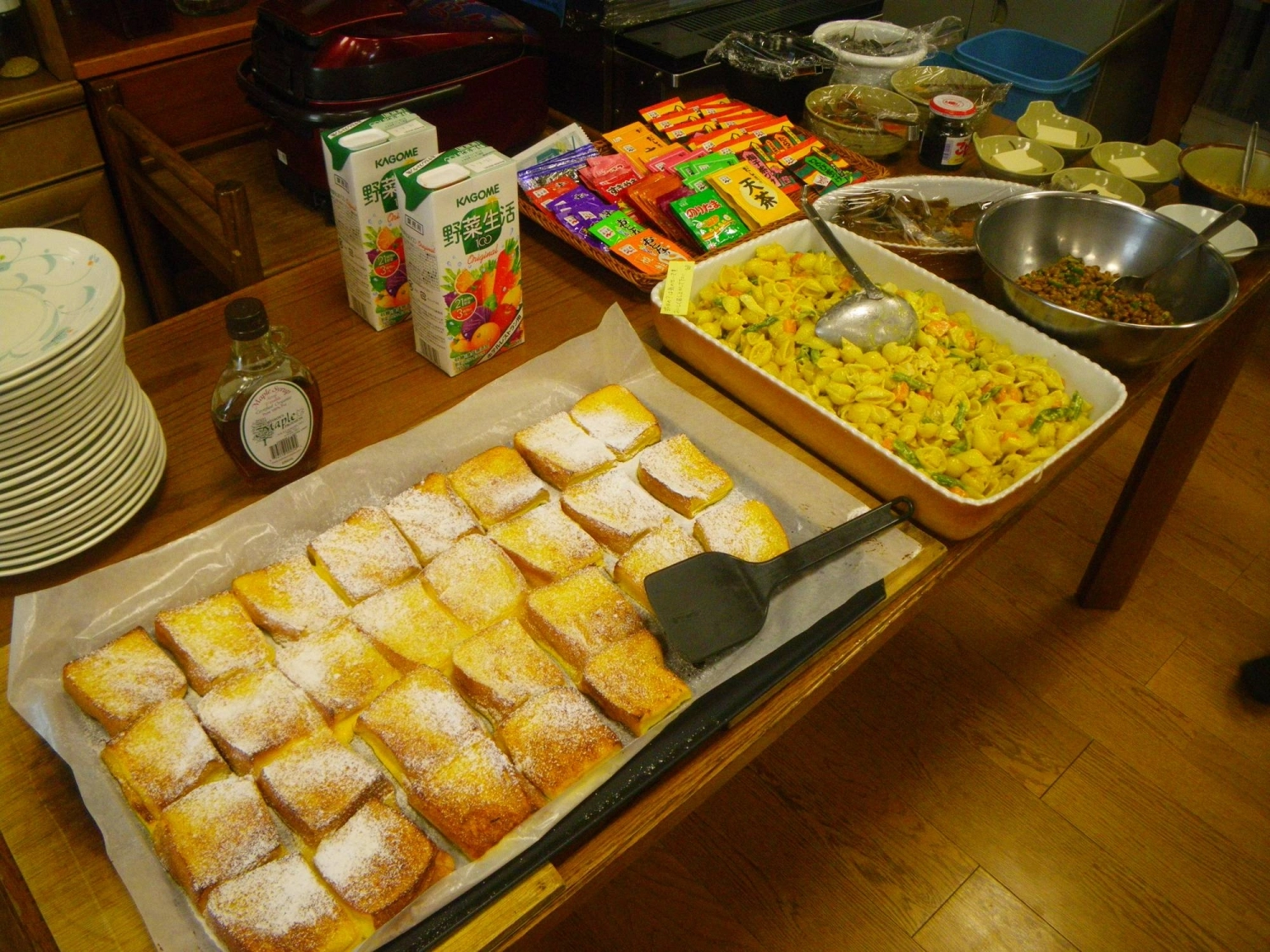
A morning buffet at the cafeteria of Syowa Station
| COURTESY OF JUNKO WATANUKI
After months of training and pre-ordering ingredients to ship from Japan, she flew out in the winter of 2016 and boarded the icebreaker Shirase at Fremantle, Australia. On the base, the first couple of months were the hardest, she says, as she had a hard time figuring out how much food she could use each day.
“In Japan, you never experience ordering an entire year’s worth of food and controlling the stock without replenishing it halfway through,” she recalls. “The fear of running out of food was always there, and I would use items conservatively, like 20 eggs at a time instead of 30. After a while, I could grasp the pace of consumption and felt OK.”
She also organized seasonal events, working with other expedition members to prepare food for special occasions such as New Year’s, Halloween and Christmas. She even recreated the famous Jiro ramen shop on the base at the request of a team member.
That project involved months of planning, including visiting the actual Jiro ramen shop while in Japan for research, making chicken broth from scratch and growing 8 kilograms of moyashi bean sprouts in the greenhouse at the Syowa base.
To preserve Antarctica’s natural environment, expedition members must bring all of their waste back home.
Seeing how other members conserved energy and resources — including water — had a profound influence on her.
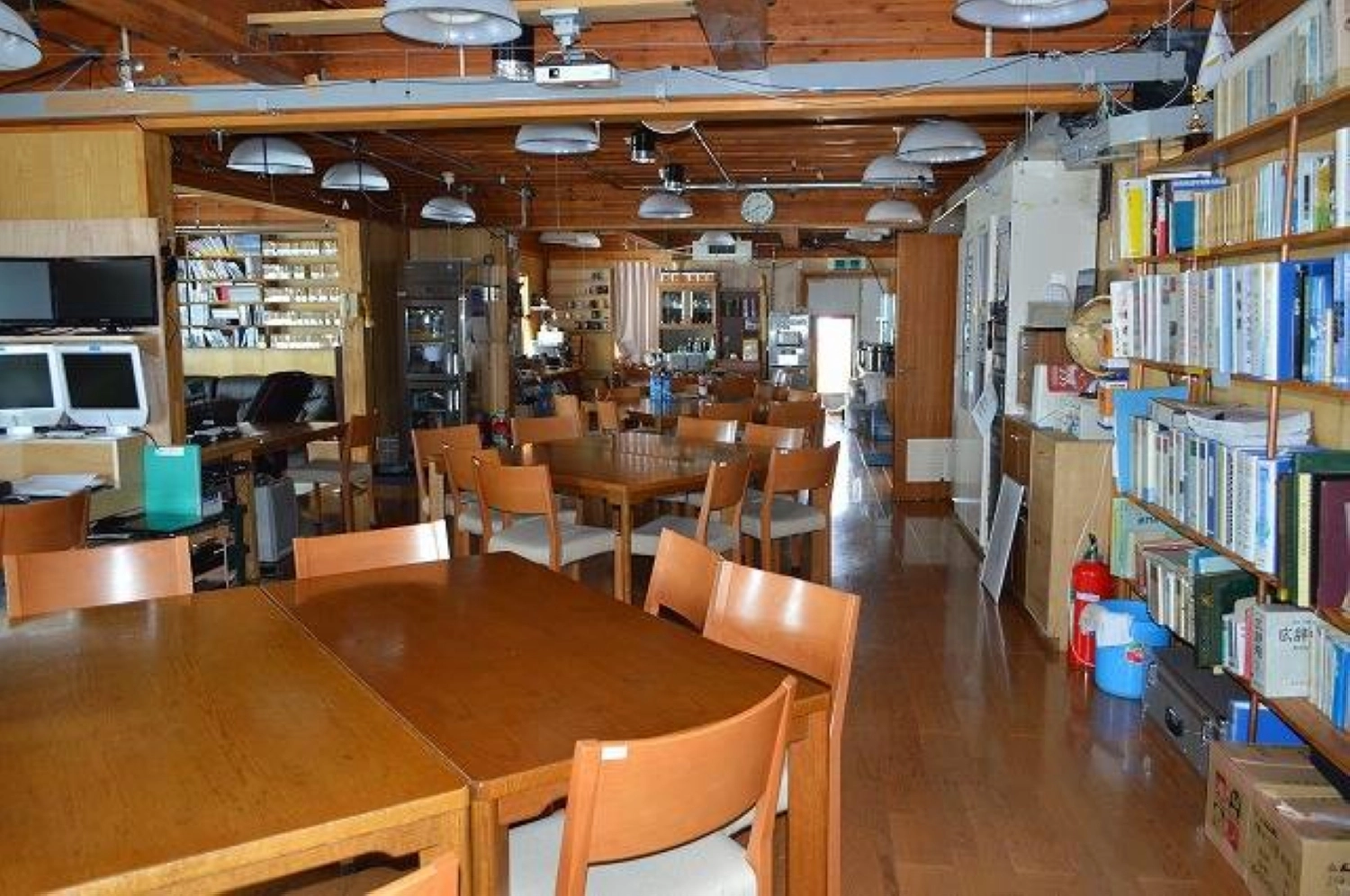
The cafeteria at Syowa Station, where expedition members dine and relax
| National Institute of Polar Research
“In Antarctica, you can instantly understand … how much humans are polluting the environment,” she says. “For example, researchers monitor the atmosphere in real time, displaying data from the observation equipment on their PCs. If a ship approaches Antarctica, you can see carbon dioxide levels go up, even before the ship is visible.
“Also, in Antarctica, the breath you exhale is not white, as there are few aerosols in the air. But the air does look white when exhaust is released from snowmobiles and near power generators. Just by living there, you become aware that you are burdening the environment.”
That sense of guilt haunted her after she came back to Japan. She felt emotionally troubled by the excesses of modern life, and even found herself crying in a supermarket’s deli section, imagining how much of the unsold food there would be discarded after the expiration date.
She also felt disoriented by fast-moving television screens and the bustling streets of Tokyo.
“I learned in Antarctica what it means to know when you have enough,” she says. “I realized that I could get by with just the things I had. I found everyday life back in Japan, where things seem to keep piling up without limit, incredibly suffocating.”
Nearly 10 years on, she remains focused on avoiding waste, from food right down to tissue paper.
Watanuki frequently shares the lessons she learned in Antarctica through lectures on sustainability and food loss. She wrote the 2023 book “Nankyoku no Shokutaku” (“The Antarctic Table”) about her experience cooking in the planet’s most remote region.
“If you are asked to reduce waste from 100 kg to 50 kg, it sounds like such a daunting task,” she says. “But If you just try to reduce the amount of tissue paper you use from two sheets to one at a time, you can also reduce waste by half.
“I also don’t want to waste my experience of going to Antarctica. I want to make full use of it.”
Dining and Cooking