

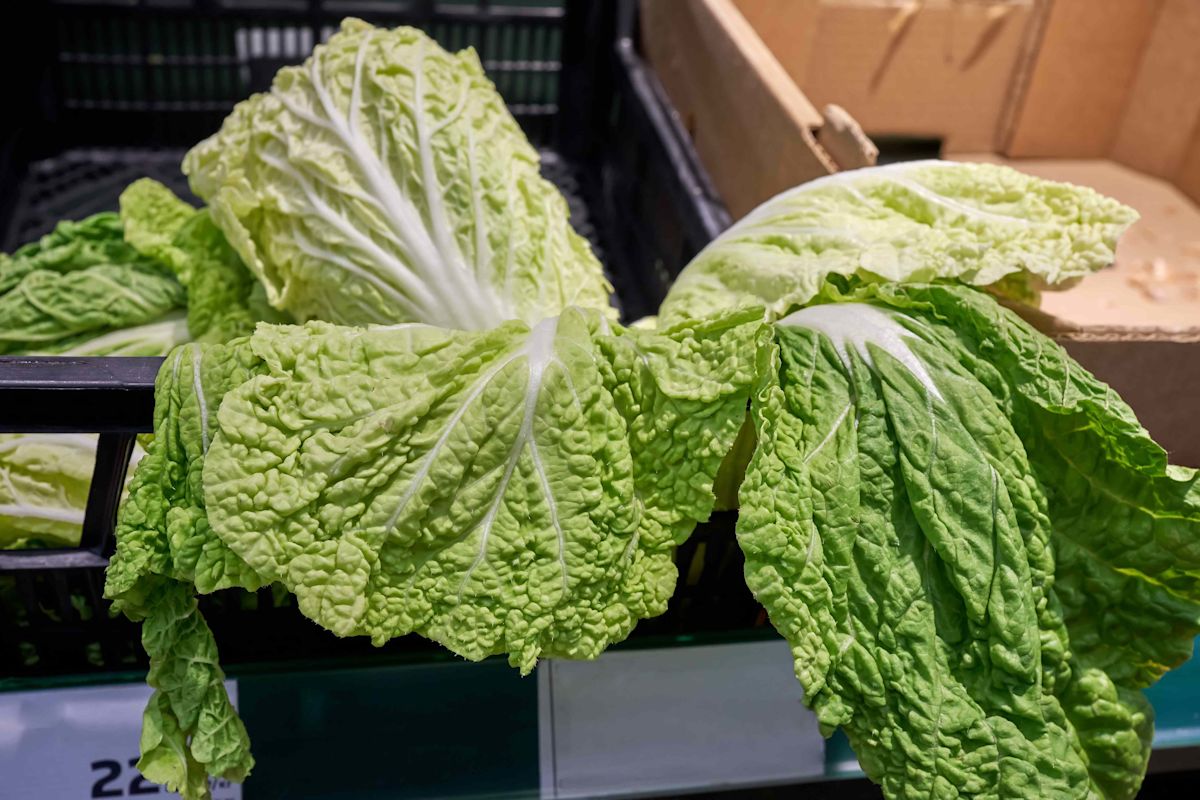
There are few things more disappointing than reaching into the refrigerator for the vegetables you bought earlier in the week, only to find that your once-crisp lettuce is limp, your celery is bendy, or your herbs are looking a little sad. But before you toss everything in the trash, take a closer look, because a wilted vegetable isn’t necessarily a spoiled vegetable.
“Wilting by itself does not necessarily mean a vegetable has spoiled,” Chef Tom DeRosa, associate professor in the College of Food Innovation & Technology at Johnson & Wales University’s Charlotte Campus, tells Southern Living. “In many cases, it simply means the vegetable has lost moisture, which affects its texture and appearance but not necessarily its safety.”
That means your wilted vegetables may still have plenty of life left in them as long as they’re free from other signs of spoilage.
How To Tell If A Wilted Vegetable Is Still Good
Instead of judging a vegetable solely by how limp it looks, DeRosa recommends looking at several characteristics. A vegetable that still smells fresh, has its normal color, and is free from mold, excessive sliminess, or significant decay may still be perfectly usable.
On the other hand, a sour or unpleasant odor, visible mold, extensive discoloration, or a slimy texture are all signs that it’s time to throw it away.
The important distinction is between wilting and spoilage. Wilting is often a quality issue caused by moisture loss, while spoilage indicates that the vegetable is deteriorating.
“The biggest mistake is assuming that ‘wilted’ and ‘spoiled’ mean the same thing,” says DeRosa.
Which Wilted Vegetables Can You Still Eat?
Quite a few vegetables can be worth saving when they’re simply past their peak of crispness. DeRosa says leafy greens such as lettuce, kale, spinach, and Swiss chard can often still be used, as can celery, carrots, broccoli, asparagus, and many fresh herbs.
“The important distinction is whether the vegetable has lost moisture or has begun to decay,” DeRosa explains. “Vegetables that are very slimy, moldy, develop an unpleasant odor, or show rot should be discarded. I would not try to ‘rescue’ a vegetable that is clearly showing signs of spoilage to avoid food waste.”
How To Revive Wilted Vegetables
If your vegetables are still wholesome but have lost their crunch, there’s a simple chef-approved trick worth trying.
“Submerging wilted vegetables in very cold or ice water lets them reabsorb some of the moisture they have lost and restore some crispness,” DeRosa says of ice-water baths.
He says this works particularly well for leafy greens, celery, carrots, and certain fresh herbs. Depending on the vegetable and how wilted it is, let it sit in ice water for about 10 to 30 minutes. Then drain and dry the vegetables thoroughly before using them.
Just remember that an ice bath can restore moisture and texture, not safety. If a vegetable is already spoiled, soaking it in ice water won’t make it safe to eat.
When Should You Throw Wilted Vegetables Away?
The goal isn’t to save every vegetable at all costs. If you see clear signs of spoilage, it’s better to let it go.
“There’s a point when a vegetable has moved past its prime and begun to spoil,” DeRosa says.
If your vegetables or herbs have visible mold, significant decay, excessive slime, an unpleasant or sour smell, or extensive discoloration, don’t try to revive them or cook them into something else. Throw them away. That said, if they have just lost some firmness or started looking a little wilted, don’t assume they’re destined for the trash. With a quick inspection, an ice-water bath, or the right recipe, that tired-looking vegetable may still have plenty to offer.
“Once a vegetable has lost some of its crisp texture, I generally look for a preparation where that texture is no longer important,” DeRosa says. “Soups, stews, stocks, sauces, casseroles, braises and purées are all good possibilities. Wilted spinach or kale, for example, can be sautéed or added to a soup, while slightly soft carrots, celery and onions can still work very well in a mirepoix, soup or stock.”
Read the original article on Southern Living
Dining and Cooking