

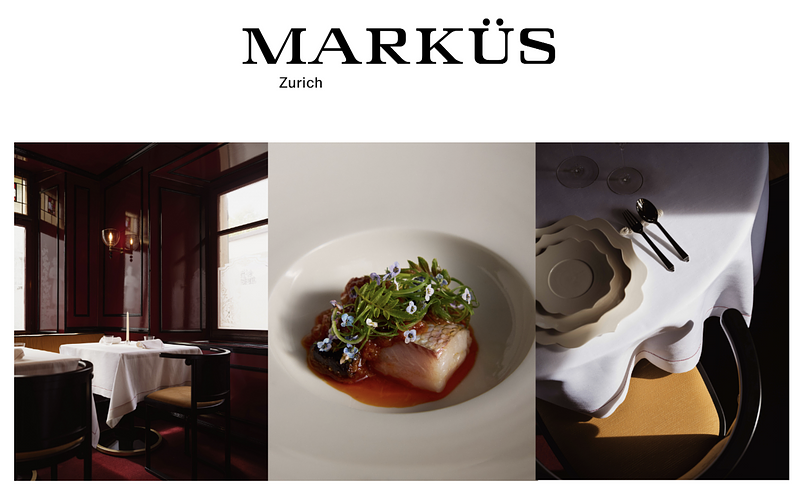
Acclaimed chef Markus Stöckle opens Marküs, an intimate and vibrant new restaurant situated at Glockengasse 7 in Zurich’s Altstadt. Housed in one of the city’s oldest surviving structures, Marküs represents the most personal and creative chapter of his career to date.
Named as a playful nod to his nickname, Marküs bridges Stöckle’s impressive culinary arc: from his roots in the traditional Bavarian inns of southern Germany to some of the world’s most influential kitchens, most notably Heston Blumenthal’s legendary The Fat Duck in England. The result is a hyper-seasonal, joyfully unrestrained menu grounded in a deep sense of place, time, and respect for his Zurich home.
Dishes reflect close relationships with local producers, with in-house fermentations and an ongoing scientific collaboration with ETH Zurich. The tasting menu is deliberately paced and balanced to leave guests feeling contented rather than weighed down, creating a holistic experience that melds food, wine, and atmosphere.
Highlights include “From Raw Nature to Cooked Culture” featuring seasonal vegetables from Martin Blum, Hof Blum, Samstagern on Lake Zurich’s southern coast; or a reinterpretation – ‘à la Stöckle’ – of Switzerland’s traditional mountain dish and a cornerstone of Swiss food culture, Älpler Makkarone; and Whitefish (Felchen) from Lake Zurich by Samuel Weitmann, served with doubanjiang made from fermented beans by Beatrice Peter & Jorge Vasquez (Grüthof, Wildenbach), scallions and fresh sansho pepper from Esther Ratgeb & Matthias Brück (Zurich Oberland).
The building that now houses the restaurant was first constructed in 1260, during the Early Middle Ages (476-1500AD). Today, it is immediately notable for its external sgraffito decoration by artist Wilhelm Hartung (1878–1957) featuring vines that rise from the Vaud coat of arms to entwine the innkeeper and guests within the wine tavern.
Enjoying this article? Sign up for our FREE newsletter!
This contrast between past and present continues with the interiors created alongside Milan-based design team Studio Dragó. While the ground floor makes a striking statement with its lacquered red walls and bold black trim, the upper level – the historic Goethe Room, where Johann Wolfgang von Goethe once stayed – retains its original 13th-century wood panelling. The design delivers a dining environment that is simultaneously loud yet intimate, historic yet undeniably contemporary.
Touchpoints in ceramics, including plates and candle coasters, have been designed by Markus and made in collaboration with the local design company Studio Idakumori; porcelain cutlery rests have been adapted from a technique used in the restaurant’s delicate pastry work and hand-piped by Markus and his team.
Glassware includes vases and carafes by the historic Viennese glass house, J. & L. Lobmeyr, founded in 1823.
Music, a key component of the dining experience, is a curated mix of artists: chosen for feeling more than genre. It is intentionally vocal-free, built to underscore the experience rather than compete with it, supporting the room but never performing for it.
“It’s a true honour to cook in this location and feel the energy and history of the building”, says Chef Markus Stöckle. “There’s an incredible sense of freedom here for me. I see myself as a caretaker of a 700-year-old story of hospitality, and I can’t wait to share our vision with our guests.”
Want to get more great stories from across the hospitality industry sent straight to your inbox? Click here to sign up for our weekly newsletter!
Dining and Cooking