


Cracking cardamom pods, hand rolling pasta, cooking chicken, and folding eggs into mascarpone for tiramisu are all in a day’s work for many chefs. But set top culinary talent from across the Pacific to those tasks and they are transformed with distinctive flavours, traditional techniques and local interpretations.
That cardamom is folded into decadent Indian barfi fudge, gnocchi made with breadfruit flour takes on a vibrant violet hue from kümara, chicken is cooked to perfection using hot stones; and banana-infused tiramisu gains a smoky depth after elements are cooked over a wood fire.
Exchange of skills, identity and creativity
Such was the case at the recent OCEAN of FLAVOURS event, which brought eight top chefs from across the Blue Pacific to Auckland for a three-day exchange of culinary skills, cultural identity and creativity.
Hosted by Pacific Trade Invest NZ in partnership with the Ministry of Foreign Affairs and Trade New Zealand and Pasifika TV, the event united chefs from Solomon Islands, New Caledonia, Fiji, Samoa, Papua New Guinea and Tonga with leading New Zealand chefs and students from Auckland University of Technology and Manukau Institute of Technology.
The three-day programme culminated in a five-course dining experience for 140 people where the chefs showcased cuisine from their country, but there was an abundance of joy, connection and experimentation along the way.
 The Pacific chefs with New Zealand chefs and students.
Led by renowned Kiwi chef Peter Gordon, day one saw the Pacific chefs join 16 leading New Zealand chefs, including Nadia Lim, Michael Meredith and Wallace Mua, to spontaneously create dishes using a selection of Pacific sourced and local products.
On day two, selected media joined the chefs to share in kitchen creation, before the chefs created their signature dishes for the OCEAN of FLAVOURS dinner.
Day three took the chefs beyond the kitchen, with a tour of local farms and food producers.
Unique ingredients prove sourcing challenges
Beyond the colourful dishes created OCEAN of FLAVOURSe offered plenty of opportunity for learning and sharing. Unique culinary techniques and favoured flavour profiles became talking points, as the chefs eagerly discussed their different approaches.
 Chef Israel Gapi of Papua New Guinea.
Each chef submitted their ingredients list for the dinner prior to arriving in the country.
Gordon admits he needed to call on his network to ensure everything was on hand for an authentic recreation of the dishes. “I did a social media post with images of three things, and I said, ‘Is there anyone out there who can help me find these?’”
The most challenging ingredient to source was pitpit, the flower of a type of sugarcane edible in PNG and Fiji. The unopened flower heads are featured alongside banana, taro, coconut cream and chicken in PNG chef Israel Gapi’s Tolai Chicken Aigir – a traditional dish cooked in a pot with heated river stones.
Alongside the pitpit, island cabbage and green amaranth were sourced through Gordon’s posts and PTI networks, while other ingredients also needed consideration.
“Soane’s famous dish back home is an octopus carpaccio,” Gordon explains of Tongan chef Soane Fakatava’s creation, served with a herb reduction and tomato crostini. “It was like okay, what size octopus? There’s a 9kg octopus, 3kg octopus and a two,” he says. He hedged his bets and offered Soane a mix. “He was happy. It’s been cooked and it’s served in very thin slices and you get this little part of the tentacle.”
Even translating ingredients offered a fascinating insight into the locally specific produce found across the Pacific, with many conversations to ensure everyone was speaking the same culinary language. “Just trying to get an understanding from the chefs – is a white yam different from a white sweet potato?”
The response was emphatic: “Yes, obviously!” Gordon laughs, adding that it was enlightening to understand the differences and similarities between the nations, and how these nuances can influence the end result of each dish.
 Chef Tracy Powell of Fiji.Connection replaces kitchen competition
High-pressure kitchens often foster competitive egos, but this gathering proved warm, joyful, and deeply collaborative. In professional environments where leading experts are gathered, an ‘elbows out’ atmosphere of one-upmanship can sometimes be evident.
As an invited media guest asked to stir, chop and pour alongside these talents as part of the occasion, I can attest there was far more jovial banter and wide smiles than any side-eyeing going on!
Students from Auckland University of Technology and Manukau Institute of Technology worked alongside the experienced chefs, sharing their own stories and family traditions.
 Chef Tracy with students in the kitchen.Pristine island pantries offer fresh flavours
Artisan ingredients shaped by pristine natural environments provided plenty of opportunity for experimentation.
The chefs were intrigued by Auckland’s The Wild Fermentary and its püha kimchi, with smoky notes inspired by traditional hängi and umu earth-oven cooking. Püha is a leafy green native to NZ and often used in Māori cuisine.
Niue Honey, an organic honey from a bee sanctuary on the island that has a rich malt and caramel flavour, was used on site in dressings and marinades. The honey is made by bees foraging on the island’s abundant, pesticide-free tropical flora, and has been untouched by diseases that have affected production elsewhere.
Blue prawns produced by sustainable aquaculture in the tropical lagoons of New Caledonia joined an abundant selection available to the chefs: pork belly and chicken thighs, more readily accessible than that elusive pitpit; and mahi mahi, and albacore tuna sourced directly from Fiji by PTINZ.
Solomons Gold chocolate made in New Zealand from cacao sourced from the Solomon Islands; Noni Moana noni juice from Samoa; Fiji ginger syrup, Fiji Fire hot sauce and Bula coffee from Fiji as well as Sea Salt from French Polynesia were among the array of Pacific flavours on offer.
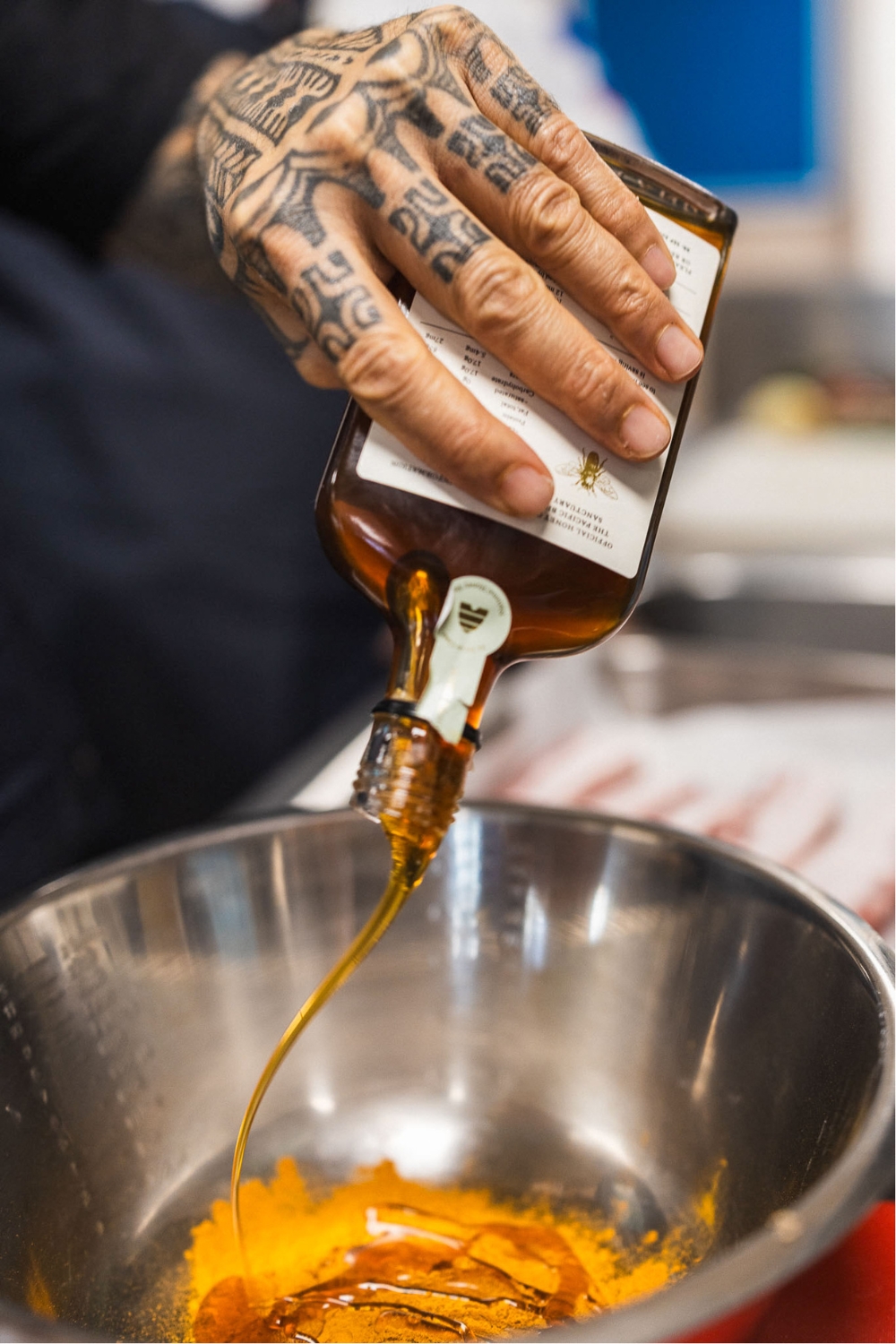 Niue Honey was used in a a selection of dishes.Every plate empowers local communities
Dinner guests were also served Cucumber Gin from 83 Islands Distillery in Vanuatu and whiskey made from Samoan taro.
“Behind every producer is a community,” says Glynis Miller, Trade Commissioner for Pacific Trade Invest New Zealand, highlighting how the success of these products creates ripple effects that extend far beyond a single business.
“Take 83 Islands,” she says of the Vanuatu distillery. “They employ more than 60 people in their factories, but beyond that, there are the growers and farmers supplying the sugarcane to them, and so on.”

The scale may be small, she says, but the ambition and quality are anything but, as demonstrated by the enthusiastic response from the chefs at the OCEAN of FLAVOURS event. The idea is that these chefs share and exchange knowledge but also take their learnings (and some delicious new ingredients) away with them. “We also hope to see a twinning system where Pacific chefs invite other top chefs across to spend some time with them at their establishments in the Pacific and vice versa.”
To learn more, visit pacifictradeinvest.com.
Dining and Cooking