

Listen to the article
8 min
This audio is auto-generated. Please let us know if you have feedback.
Editor’s note: This article is based on a virtual event hosted on Aug. 12, 2026 with Restaurant Dive, CX Dive, Hotel Dive and Marketing Dive titled “Lasting Loyalty: Winning and keeping today’s customer.” The event playback is available here.
Punch cards are becoming a thing of the past, as experts say loyalty programs can no longer be seen as transactional.
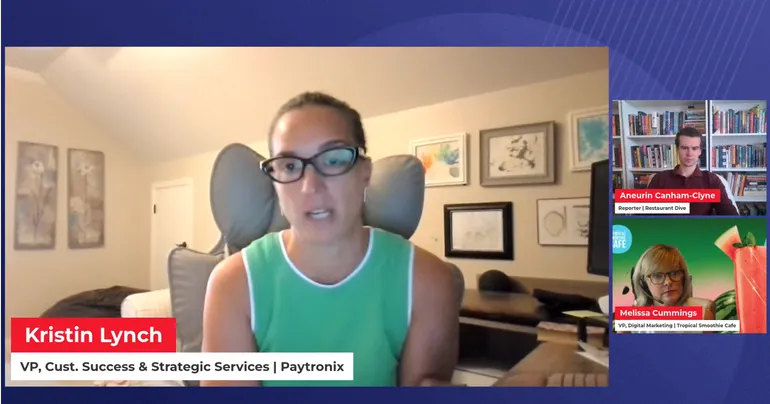
To win diners, points-based systems that offer personalization and an extra something special to guests are key, said Kristin Lynch, vice president of customer success and strategic services at loyalty program software provider Patronix.
“The loyalty program used to be about the math behind the points program. Spend X dollars get Y free,” Lynch said during a virtual event with Restaurant Dive highlighting various elements of loyalty. “Now, it’s about understanding your customers well enough that at every single touch point, it feels personal to them.”
Artificial intelligence is also unlocking additional opportunities for chains to enhance their loyalty programs, Lynch said.
“Whether they’re small, medium, or large brands, AI is allowing these brands to be capable at scale of driving these different things around gamification or recognition within layering onto the points-based programs,” she said.
But the next evolution of that type of program is emerging. Instead of just offering points for rewards, loyalty programs have to become more personal and add an element of gamification to keep customers engaged, Lynch said.
Dutch Bros and Jimmy John’s offer badges, for example, which has added an element of excitement, she said.
How Tropical Smoothie Cafe’s rewards captures customers
Tropical Smoothie’s Tropic Rewards program has found a way to incorporate various elements of gamification and tiers.
Tropic Rewards allows members to earn 10 points for every dollar spent. Points can be accrued for free smoothies or food items, Melissa Cummings, VP of digital marketing at Tropical Smoothie Cafe, said during the virtual event.
Members can redeem a free smoothie topping for as low as 150 points, or a free smoothie at 1,200 points, she said. But Tropic Rewards goes beyond a simple point-for-redemption strategy, it also is helping the smoothie chain build retention.
New members receive a free smoothie after their first purchase, which Cummings said helps drive that second return visit. Points never expire if customers place an order every six months and members receive a free smoothie on their birthdays. Members also receive access to digital exclusives, such as certain menu items.
The chain is also using these exclusive menu items to encourage members to order ahead through the app, which allows operators in the cafe to work more efficiently, Cummings said.
One of the chain’s capstone events is Tropic Fan Fest, which is a members-only weeklong event that offers a free smoothie every day.
“Every time we run it, our loyalty mix spikes,” Cummings said. “It stays there until we run the next one and it spikes again.”
Members also have the ability to unlock “Tropic Mode” after ordering two times in a month. This gamification element allows guests to pick an unlimited reward that can be used throughout the month, she said.
“As long as you keep ordering twice a month, you get to keep that unlimited reward alive,” Cummings said. “That choice element has really helped us be breakthrough and unique in the industry.”
When loyalty programs fail
Loyalty programs have to work for the franchisees, Cummings said. That means it’s profitable, drives incrementality and guests see the value.
“When you see companies change their loyalty points structure every year, … it’s off in one of those levers and that’s so painful to have to keep readjusting to have it work for all three,” Cummings said.
Guests should not have to return so many times before they can earn something, she said. But at the same time, programs shouldn’t offer too many rewards, otherwise it impedes on franchisees’ ability to make money.
Tropic Rewards has been able to keep the balance between profitability and value. Cummings said when the chain first created the program, a cross-functional team of stakeholders came together on a common vision, which has helped provide a roadmap. They also came up with a common language for franchisees and an understanding of the role loyalty will play in the future.
“This North Star vision statement … says we leverage guest insights to create easy breezy guest experiences that build brand love, maintain long-term financial growth and profitability and that everything we do inspires our guests to live better, experience the fun and freedom of a tropical getaway in their everyday lives,” she said.
Successful programs segment members based upon frequency and purchase history. If an adult likes purchasing kids meals, then a loyalty program can use that data to push kids meals to that guest, for example, Lynch said.
“One of the other key things about the winning loyalty programs versus the losing loyalty programs is it’s not a one size fits all,” Lynch said. “Treating every member the same is the losing loyalty program.”
Cummings added that personalization is “the real behind-the-seasons reason for a loyalty’s success” and can help drive the incrementality for a business and provide the most impact to the guest.
Tropical Smoothie Cafe uses its rewards program to capture a customer’s name, the time of day they entered a store and what they ordered, allowing for more personalized communication.
“Any level of personalization for us equates to five times the amount of conversion from that message, so that’s five times the amount of orders versus when we send a mass message,” Cummings said. “That is so incredibly powerful, and why we drive home stopping at the register and asking people to identify for loyalty or sign up for loyalty is so critically important.”
But the level of data collected can’t make guests feel like they are being monitored, so there needs to be a balance so the personalization feels special, Lynch said.
Loyalty can create value without discounting
The point of loyalty also isn’t to provide steep discounts on products, Lynch and Cummings said. For Tropical Smoothie, it will offer promotions using a specific formula.
Cummings said it uses gated and pulsed promotions, both of which use a data-driven approach and testing that allows Tropical Smoothie to understand the return on investment, the cost of that discount and if the incremental sales and profit outweigh the cost. That data is then shared with franchisees.
She added that even missteps have been critical to sharing to the franchise system as such discussions help establish trust that corporate is trying different tactics and only sticking with what works.
Tropical Smoothie relies on three pillars for gated promotions. The first is leveraging promotions in its owned digital channels that can drive incremental behavior with existing members. The second is ensuring new members are added into the program through promotions. Finally, promotions are pulsed, which means that they are short term, usually a week or less.
While loyalty can help bring in new and existing customers, Cummings said that the most important thing to customers is that their orders are completed correctly and consistently taste the same. Chains could have the best rewards program, but if operations don’t also operate efficiently and accurately, then much of that frequency could be lost.
“Loyalty is the job of every single person in your organization, every franchisee, every cafe owner, to delight them,” Cummings said. “The entirety of the experience is what makes people truly loyal to a brand.”
Paytronix will tell its customers that it’s not the discount that matters, but the consistent experience across channels.
“Every customer is wanting to have the same loyalty, identity and rewards in-store, on the app and through delivery,” Lynch said.
Members want to be recognized at the drive-thru and recognized for their progress in a tier, which means having an employee addressing if they are a VIP member.
“If you think about that behavior, it’s basically coming at a zero incremental cost,” Lynch said. “It’s not costing you anything to have your frontline worker recognizing that they’re a high level tier within the program.”
Dining and Cooking