
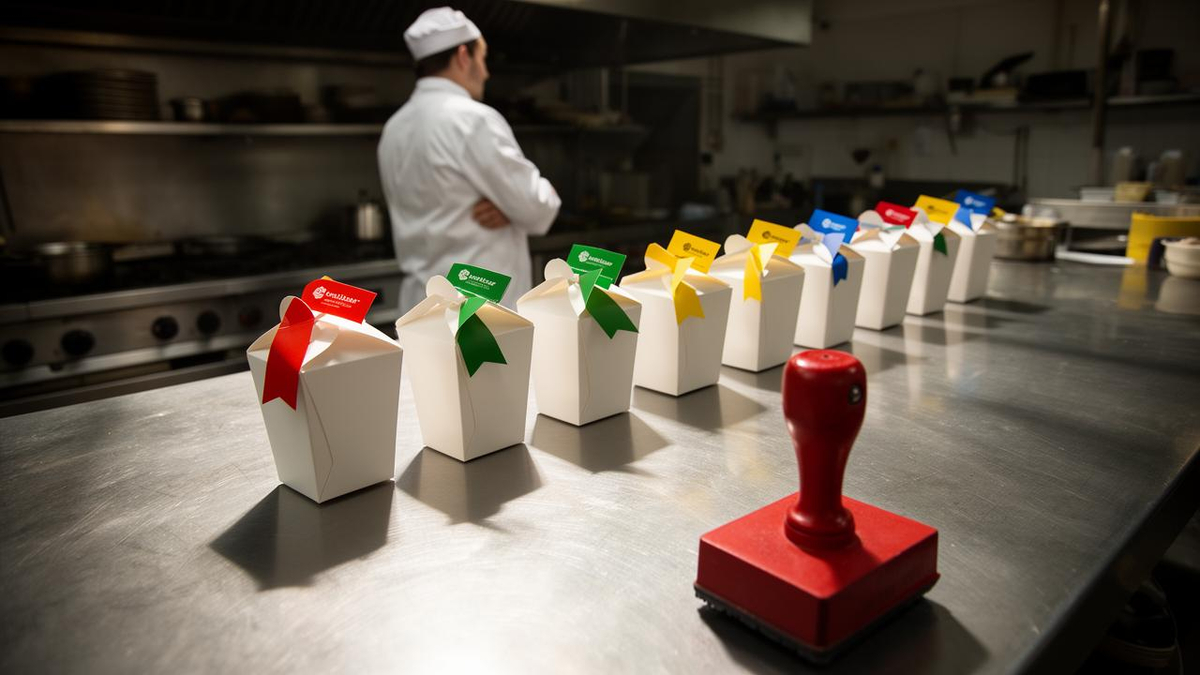
Six Foreign Brands “Remarried” Within a Single Year
In 2026, China’s restaurant market is undergoing a quiet transfer of power. Burger King China sold 83% of its equity to Source Peak Fund; Starbucks China saw 60% of its equity go to Game Capital; Pizza Hut’s brand ownership was fully acquired by Yum China for $1.2 billion; and Häagen-Dazs’s China store operations were snapped up by the local tea beverage brand Linji. Combined with earlier deals involving McDonald’s and Subway, within just a few years, virtually every foreign restaurant brand that is a household name in China has seen its controlling stake transferred to Chinese capital.
Speaking with Richer on the podcast Crazy Money Circle, Huang Hai identified McDonald’s China as the pioneer of this model. When it was sold in 2017, McDonald’s global retained only about 20% equity, while CITIC Capital became the controlling shareholder with a 52% stake. But after watching Golden Arches grow to nearly 10,000 stores in China, McDonald’s global has in recent years increased its stake back to 48%. “This suggests they may have felt, oh dear, we sold it too cheaply back then.” Carlyle Group, meanwhile, achieved a six-to-seven-fold return on capital in the process, emerging as one of the biggest winners in the deal.
The Subway case reveals the typical predicament of foreign brands failing to adapt to the Chinese market. A brand that rivals McDonald’s and KFC in the U.S. market entered China thirty years ago yet remained stuck at a few hundred stores. After being handed to a Chinese master franchisee in 2023, it opened a thousand new stores within three years. Huang Hai’s assessment was blunt: “The previous team was genuinely incapable. It was probably a typical American multinational where the China team had little decision-making authority.”
From Playlists to Store Formats: What Changed After Chinese Capital Took Over
The most visible change after the transfer of control is in Starbucks’ background music. The globally standardized English playlist has been adjusted to feature a large number of Mandarin pop songs, with song selection authority delegated to individual store managers, who can make decisions based on the commercial district where their store is located. Huang Hai cited a lesson learned from entrepreneurs in a previous episode: “The greatest common denominator of Chinese musical taste is Zhou Lin Wang Tao (Jay Chou, JJ Lin, Wang Leehom, David Tao)”—precisely the kind of localization adjustment Starbucks needs for its lower-tier market strategy.
A more emblematic case is the “Cantonese Intangible Cultural Heritage Reception Hall” themed store Starbucks opened in Yongqing Fang, Guangzhou, incorporating Cantonese opera costumes and stage settings into the store design. Huang Hai noted that this kind of “aggressively courting” local culture would have been unimaginable during the period of American control—in 2007–2008, Starbucks’ opening of a store in the Forbidden City caused a major uproar, whereas now, under Chinese controlling ownership, such attempts “can be made with virtually zero pressure.”
Richer emphasized that Starbucks’ localization is not simply a pivot toward low-priced delivery to compete with Luckin Coffee, but rather a continued push on the spatial and experiential attributes: “It is actually still focusing on the spatial attribute and the experiential attribute, rather than selling a very cheap 9.9-yuan delivery to fight Luckin.” Huang Hai attributed this to the “experiential consumption” trend—against the backdrop of slowing economic growth and widespread social anxiety, experiential brands that enhance consumer well-being will be a long-term growth track.
The Tragedy of Häagen-Dazs and a Rival That Refuses Delivery
The sale of Häagen-Dazs’s China store operations is viewed by Huang Hai as a classic case of foreign brands “waning as others wax” in China. The brand’s history in China is itself steeped in localized innovation: in European and American markets, Häagen-Dazs has always been a packaged food brand sold in supermarkets, never opening stores. But in China twenty years ago, because expensive ice cream wouldn’t sell in supermarkets, the China team had a flash of inspiration and opened offline experience stores, using high in-store prices (50–60 yuan) as a price anchor to drive sales of the packaged products (30 yuan) in supermarkets. The spectacle of “Starbucks on the left, Häagen-Dazs on the right” at the main entrance of Tee Mall in Guangzhou lasted for more than a decade.
However, Häagen-Dazs’s decline stems from its nature as “industrialized ice cream”—store products and packaged foods share the same supply chain, lacking freshness and product innovation. The rise of the local brand Mr. Savages, by contrast, precisely captured a need Häagen-Dazs failed to satisfy: the “emotional value” of ice cream—the “bonding agent” when families (especially those with children and the elderly) gather in shopping malls to enjoy time together.
From this, Mr. Savages derived a counterintuitive business decision: absolutely no delivery, with delivery accounting for zero percent of sales. Huang Hai commented: “Over the past year, the delivery wars among major platforms have been raging fiercely. Under these circumstances, a brand with zero delivery share has actually been one of the most impressive, rapidly expanding brands of the past year. The very fact that this happened is somewhat counterintuitive.” The reason is that ice cream delivery severely degrades texture, and ice cream consumption fundamentally occurs in social settings rather than as a functional need. After Häagen-Dazs was acquired by Linji, signs of localization have already appeared: small cart formats without dedicated seating space have appeared in shopping malls, with prices reduced to 19.9 yuan. But Huang Hai believes that whether it can turn things around depends on whether it can resolve issues of pricing, store format, freshness selling points, and health image within the next year. “If these problems cannot be solved within the next year, the window will essentially have closed.”
The Extreme Localization of Eating vs. the Universality of Wearing
Huang Hai proposed a cross-industry analytical framework: whether an industry will be dominated by local or foreign players in the future depends on two dimensions—whether demand is globally universal, and whether core capabilities upstream in the supply chain are held by foreign players.
On the demand side, restaurants are the most thoroughly localized industry because Chinese people have extremely high standards for food, with incredibly rich regional cuisines and flavor variations. By contrast, foreign brands in the athletic footwear and apparel industry have not sought to cede controlling stakes in China. Huang Hai’s explanation: “In the realm of wearing, there doesn’t seem to be the same magnitude of localization demand as in eating.” Clothes that Americans find soft and comfortable when running are also liked by Chinese people; leggings that American women like to wear are similarly popular among Chinese women. Nike and lululemon only need to make minor adjustments such as Asian sizing to succeed in China, without needing to seek Chinese controlling shareholders as restaurant brands do.
Who Is Monopolizing Your Sense of Smell
The supply chain analysis is the most paradigm-shifting part of this episode. Huang Hai pointed out: “If we look at the perfume and fragrance market and only see the rise of domestic brands, that may be a biased view.” While domestic fragrance brands such as To Summer and Documents are thriving in the end market, global fragrance supply is monopolized by four major chemical giants (two Swiss, one German, one American), the largest of which generates annual revenue of 100 billion yuan. These giants not only supply perfume brands (Chanel, Dior, Jo Malone, Diptyque, Byredo, etc.) but also cover all scented consumer products including shampoo and snacks.
Barrier TypeSpecific ManifestationR&D BarrierChemical molecules protected by extensive patents; brands can only purchase finished products and cannot access formulasTalent BarrierOnly a few hundred top perfumers worldwide, requiring more than a decade of training spanning science and artCustomer Stickiness BarrierBrands have no incentive to switch suppliers—fragrance costs are a small proportion of total cost, and switching carries flavor risk
Huang Hai’s summary was razor-sharp: “Brands each have their moment in the spotlight for two or three years, but over the past hundred years, these four giants have stood unshaken. These are companies that have monopolized your sense of smell.” Richer’s prediction was equally clear: the upstream fragrance supply chain will be difficult for Chinese companies to surpass in the short term, due to both technical barriers and market logic issues. Brand owners (including international names like Chanel and Dior) are essentially assemblers of scents rather than developers, and the rise of domestic perfume brands has not changed the upstream bottleneck.
Financial Investment: Foreign Advantages Remain Solid
Huang Hai and Richer concluded by applying their analytical framework to their own field of financial investment, reaching the opposite conclusion from restaurants: the level of development in the financial industry remains dominated by overseas players. The reason is that the richness of investable assets available globally far exceeds that of the domestic market, and the stability and certainty of long-term growth in overseas capital markets are superior. Sophisticated financial instruments and product portfolios remain scarce domestically—not because they “cannot be made,” but because of a lack of operational experience and market environment.
From this, the two hosts recommended Hong Kong savings participating insurance as a vehicle for personal overseas asset allocation. The core logic: individual investors find it difficult to allocate complex global investment products on their own, whereas insurance companies, through professional actuaries and investment teams, can package and allocate global assets, while also offering trust-like attributes (intergenerational transfer, pre-marital asset arrangements, etc.) at a threshold far lower than traditional trusts. Huang Hai specifically cautioned that such investments are only suitable for “money that will not be needed for at least three to five years in the medium term,” for long-term goals such as retirement, children’s education, or intergenerational wealth transfer.
This episode provides a highly actionable analytical framework: to determine who will dominate an industry in the future, one must examine both the degree of localization on the demand side and foreign control on the supply chain side. The restaurant industry, due to extreme localization of demand and relatively low supply chain barriers, has already completed the “foreign handover.” The fragrance industry presents a split state of “localized brands, foreign-controlled supply chain.” And in financial investment, foreign advantages remain solid on both the demand and supply sides. For practitioners and investors across different industries, this framework can be used to assess the evolution of competitive dynamics in their own sectors. Developments worth continued attention include: whether Mr. Savages can hold its ground against competition from tea beverage brands like Chagee, Heytea, and Mixue Bingcheng crossing into the ice cream track; whether Häagen-Dazs can complete its transformation within a year after being acquired by Linji; and whether Starbucks China, under Game Capital’s leadership, can rebuild differentiated advantages in its localization overhaul amid competition with Luckin Coffee.
Dining and Cooking