

A Denver restaurant specializing in Native American fare has joined the “food is medicine” movement, working with researchers and Indigenous communities to produce medically tailored meals for delivery.
Tocabe, located at West 44th Avenue and Lowell Boulevard, serves cuisine inspired by the Osage nation — a Great Plains tribe now based in Oklahoma — but is partnering with other tribes to develop meals that incorporate their traditions while meeting specific nutritional needs, such as lower sodium for people with heart conditions.
While it isn’t feasible to make the delivery meals in their Denver kitchen while continuing to run a restaurant, Tocabe coordinated with Native farmers, ranchers and chefs across the western United States, co-owner Matt Chandra said.
Doing so means that the broader community will benefit, because producers who know they have a market can expand, making fresh food available in places without access, he said.
“It shows what can happen when these systems connect,” he said.
The restaurant was part of a recent trial testing whether medically tailored meals could lead to better health outcomes for people with heart failure who live on the Navajo reservation, which includes parts of New Mexico, Arizona and Utah. The reservation has 13 grocery stores and 110 other outlets with limited food choices for an area of 27,000 square miles – slightly larger than the state of South Carolina.
A dietician who is Diné — the name Navajo people use for themselves — helped develop recipes suitable for people with heart failure using traditional ingredients, such as mutton, corn and squash, Chandra said. Tocabe then worked out the logistics of creating meals that would meet all of those criteria and still taste good after flash-freezing and reheating.
Initially, some of the participants were skeptical of the low-sodium frozen meals, but most ultimately enjoyed them, Chandra said. Knowing that the recipes came from their culture and that farmers and ranchers from their community contributed ingredients was nourishing in its own way, he said.
“We wanted to create an experience and make people excited to eat,” he said.
“Food is medicine” trials had shown benefits for heart failure patients in other places, but the Navajo reservation had unusual challenges, including that many people lack electricity and that delivery service is almost nonexistent, said Dr. Lauren Eberly, an assistant professor of cardiovascular medicine at the University of Pennsylvania who led the study.
The idea was to prove not only that medically tailored meals were feasible in that community, but that designing them based on recipients’ culture would help with the high drop-out rates seen in previous trials, she said.
“A lot of people doubted it was possible,” she said.
The researchers reached out to Tocabe because they’d heard about the restaurant and marketplace’s model of buying from Native producers first, Eberly said. Chandra was “completely on board” with their vision to use food to support Indigenous communities in multiple ways, she said.
The trial, which started in May 2025, divided about 200 people living with heart failure on the reservation into two groups, with one receiving two daily medically tailored meals made from traditional recipes, and the other getting standard advice about how to eat with heart failure. Those who didn’t have basic appliances such as a refrigerator and microwave received them as part of the trial.
The group that received meals was about half as likely as the control group to need hospital care during the 12 weeks the trial lasted, and also lost some weight, lowered their blood pressure and reported less financial strain.
“If there was a medicine that was this effective in preventing hospitalizations, payers would be rushing to cover it,” Eberly said.
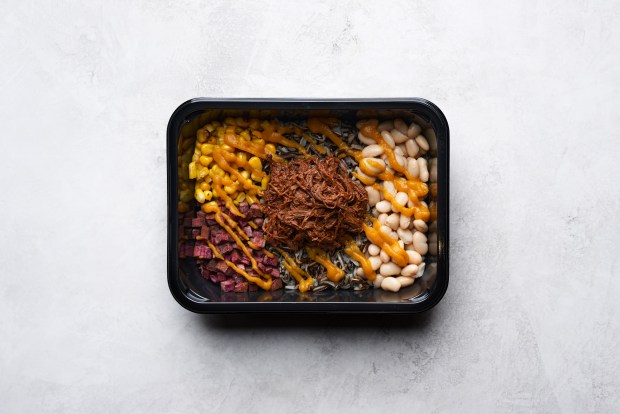 A ready-to-eat Bison Posu Bowl delivery meal developed by Denver’s Tocabe restaurant. (Photo courtesy of Tocabe)
The team worked with community leaders to design the trial. The leaders brought up practical considerations, such as the lack of appliances, as well as cultural ones, including how eating traditionally sacred foods is inherently healing for Diné people, Eberly said.
When the U.S. government forced Indigenous people onto reservations, it largely destroyed their existing food systems. The act of taking back part of their culture is empowering, which has benefits that go beyond nutrition, she said.
The trial didn’t determine the best way of using medically tailored meals for all contexts, but showed the importance of designing any program with the community it will serve, Eberly said.
“I think there are lessons that are relevant across any geographic and cultural context,” she said.
Sign up for our weekly newsletter to get health news sent straight to your inbox.
Dining and Cooking