
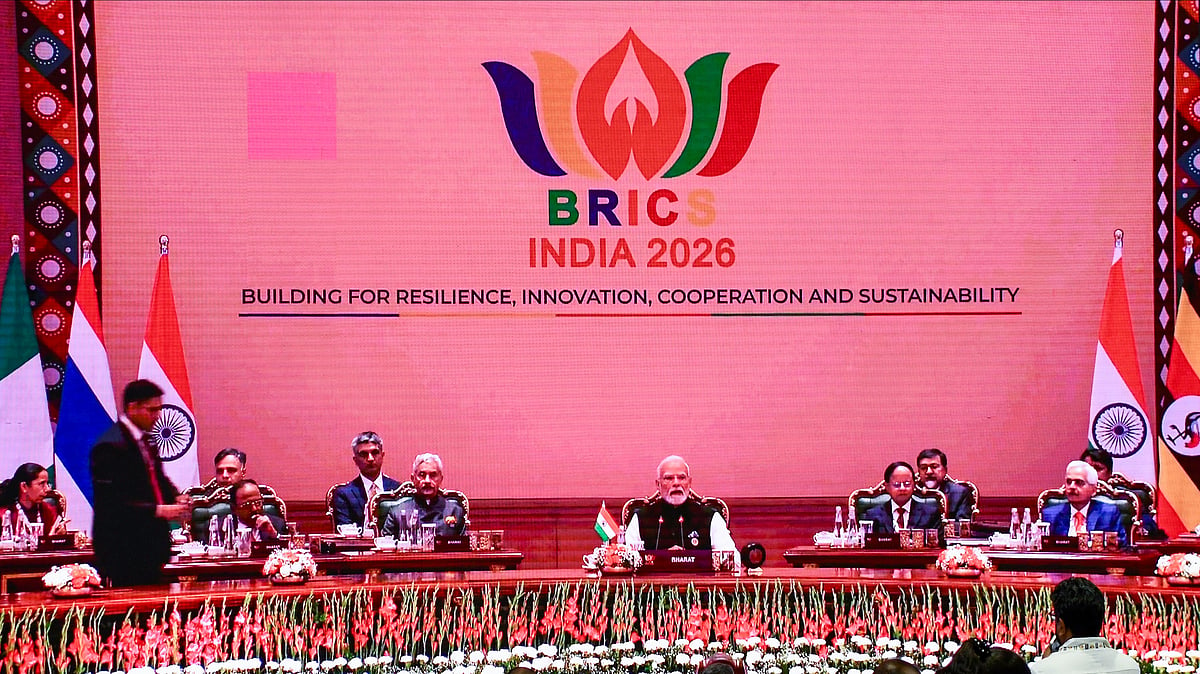
Rajma has made it to the high table.
The familiar comfort of a bean curry, the regional calling card of Dum Aloo Banarasi, the versatility of bajra and ragi: India’s culinary introduction to visiting BRICS dignitaries begins with ingredients that millions of Indians already know.
Their setting gives them a different assignment. At a summit where countries discuss how they trade, cooperate and see one another, the kitchen gets to offer its own introduction.
Sign up for Open Magazine’s ad-free experience
Enjoy uninterrupted access to premium content and insights.
On Saturday, ITC Hotels’ Rajneesh Maller and corporate chef Manisha Bhasin outlined a spread that combines regional Indian specialities, signature restaurant traditions and international options. Millets run through it, appearing in breakfast preparations, pulao and barnyard millet kheer.
There is a tempting way to describe all this as diplomacy over dinner. But the more interesting story begins with what the hosts have chosen to put on the plate: familiar food carrying a carefully considered message about India.

Open Magazine Latest Edition is Out Now!
The Identity Project
11 Sep 2026 – Vol 05 | Issue 37
Amit Shah leads the mission for a national demographic correction
Read Now The Identity Project
A Country Too Large for One Curry
Maller identified rajma and Dum Aloo Banarasi among Saturday’s lunch dishes, explaining that the selection drew on cuisines from across the country, with particular attention to spices, ingredients and millets.
That regional emphasis matters. “Indian food” is a convenient international category for an enormous range of cooking traditions. Naming Banaras on a menu gives a dish an address. Presenting different grains and preparations gives guests a glimpse of how much changes from one Indian kitchen to another.
Bhasin described an Indian offering drawing on ITC’s Bukhara and Dum Pukht traditions, alongside kebabs and curries.
Those names carry distinct culinary identities. Bukhara is ITC’s North-West Frontier restaurant brand; Dum Pukht draws on Awadhi traditions and the technique of slowly cooking food in sealed vessels, allowing ingredients to develop in their own juices. They introduce different approaches to flavour, texture and time.
Together with the regional dishes identified by Maller, they give the spread a useful range: everyday familiarity, local specialities and elaborate culinary traditions can all represent the country.
A bowl of rajma belongs in that portrait as comfortably as a preparation associated with a royal kitchen.
The Small Grain With a Big Assignment
The most deliberate continuity with India’s previous summit hospitality is the presence of millets.
Bhasin linked the BRICS preparations to the millet emphasis during the 2023 G20 Summit. This time, she identified millet pulao and barnyard millet kheer, while Maller referred to breakfast dishes involving bajra and ragi.
The choice is clever because the dishes are recognisable. Pulao provides a familiar savoury format; kheer offers a familiar route to dessert. Guests can encounter a different grain through something they already understand.
At the 2023 G20 dinner, millets appeared in leaf crisps, accompaniments and a pudding. Their place across courses demonstrated versatility as much as symbolism. The grain could do several jobs on an elaborate menu.
Now it has another invitation.
The significance goes beyond novelty. Millets have long been cultivated and eaten across parts of Asia and Africa. The UN Food and Agriculture Organization describes them as traditional staples for millions, with varieties capable of growing in heat, with limited water and in poor soils. Their resilience makes them relevant to the food-security pressures confronting many countries.
That gives a millet preparation two stories to tell: one about culinary heritage, another about the future of farming.
The summit table also confers prestige. An ingredient presented by a leading hotel chef to international guests is being offered as something worth discovering, ordering and enjoying. For grains that have often been overshadowed by other cereals, that change in presentation has value.
After the Summit, Who Orders It Again?
Bhasin told ANI she was pleased to see more people adding millets to their diets since the G20 push.
Her observation points to the larger test for this kind of culinary promotion. Attention at a summit is the beginning. The lasting opportunity lies in repeat orders, accessible products and reliable markets for growers.
FAO made that distinction explicit when the International Year of Millets formally closed in March 2024. Its director-general called for investment across breeding, cultivation, processing and marketing, alongside stronger value chains and new products that could appeal to urban and younger consumers.
A beautifully served kheer can create curiosity. Keeping that curiosity alive requires the grain to work in ordinary kitchens, restaurant menus and shopping baskets.
This is where chefs have a practical role. A guest rarely asks for a second helping because an ingredient appeared in a policy speech. Taste has to finish the job.
Why the Menu Also Speaks Chinese
For all the emphasis on Indian culinary identity, Bhasin’s account also included global, Asian and Chinese options.
She explained that international guests needed familiar choices to fall back on. That detail reveals the balancing act involved in hosting a diverse gathering: the food should encourage discovery while allowing people to eat comfortably.
A summit spread has to accommodate different palates and preferences. Serving Indian specialities alongside international dishes gives guests room to explore at their own pace.
It also keeps hospitality attentive. The host has something to share, and the visitor has tastes of their own.
Bhasin’s remarks described a wider catering offering, including food for people attending from around the world. They should therefore be understood as an account of that spread, rather than a record of what any individual head of state ate.
Thailand Has Been Taking This Route for Years
India’s use of food to introduce itself belongs to a wider practice often called gastrodiplomacy: building familiarity with a country through its cuisine.
Thailand offers a particularly useful comparison because its effort extends well beyond meals for visiting dignitaries.
In a January 2024 account, the Thai government described support for overseas Thai restaurants dating to 2002 and highlighted Thai SELECT certification as a way to promote standards and authenticity. The programme connects food with tourism, commerce and the country’s international image.
The distinction is scale. A summit meal reaches a small, influential audience. Restaurants abroad can introduce a country to customers every evening.
Thailand also uses the more intimate format. At a November 2025 diplomatic gala in Bangkok, chefs presented contemporary dishes built around local ingredients, accompanied by cultural performances explaining their inspiration. The event explicitly linked culinary heritage, chefs’ skills and international perception.
For India, the opportunity suggested by the BRICS spread is similarly broad: let regional identities travel with the food. Give the guest a dish to remember and somewhere, some ingredient or some tradition to become curious about.
The Second Helping Is the Review
The strongest feature of the menu described by the ITC team is its range. Rajma shares the story with Banarasi potatoes. Restaurant traditions sit alongside millet preparations. International choices make space for visiting palates.
No single dish can represent India. A thoughtful spread can, however, persuade a guest that there is much more to discover.
The official conversations will produce statements, proposals and arguments over wording. The kitchen has a shorter route to its verdict. Would anyone like some more?
Dining and Cooking