
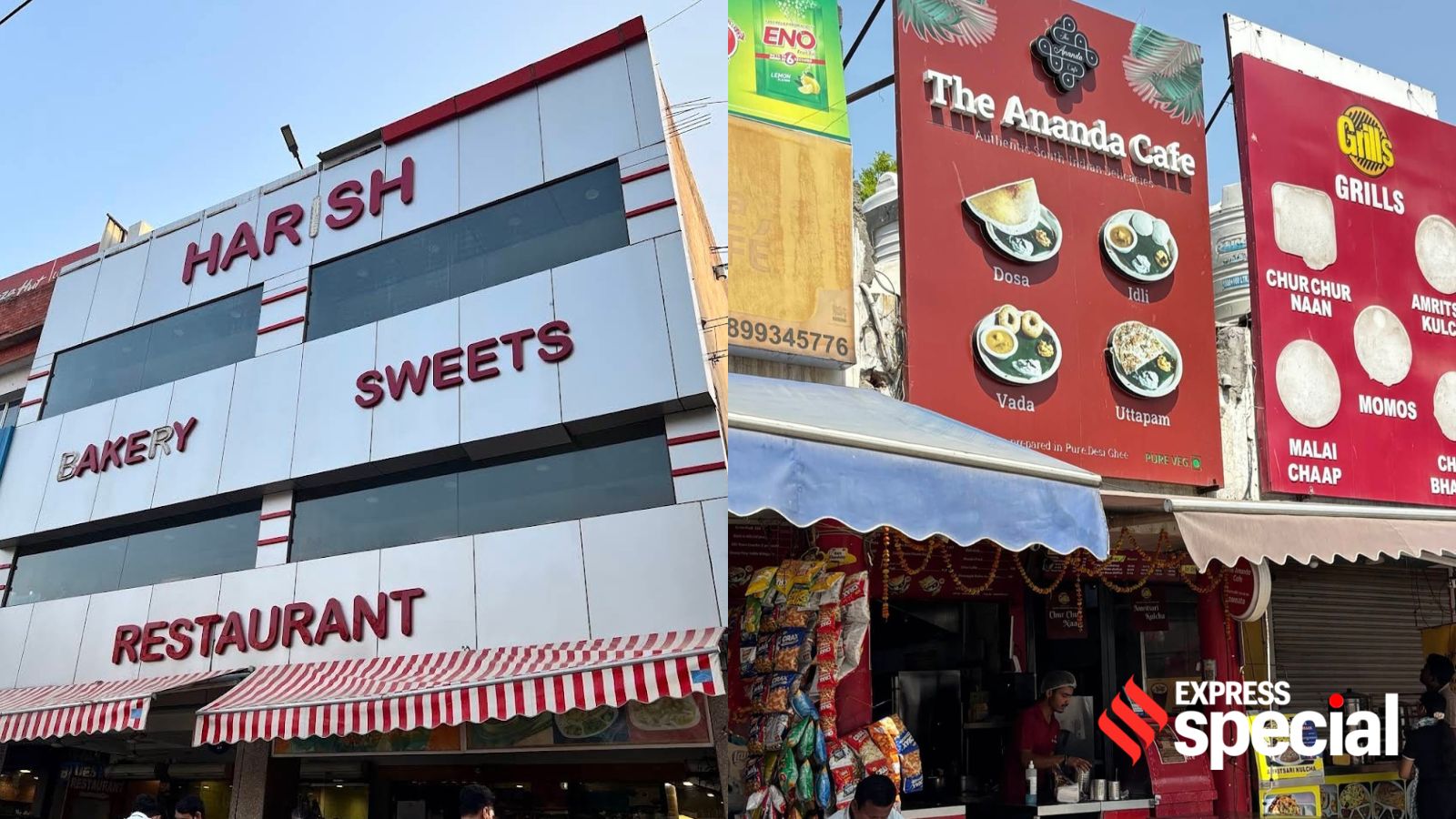
For the past week, restaurants across Gurgaon have been undergoing physical inspections by Zomato after the food aggregator’s decision to ban analogue dairy dishes from its platform.
The delivery platform has been sending representatives to partner eateries to verify that kitchens are not using synthetic substitutes, The Indian Express has learnt. It is also tightening vendor audits and scrutinising supply chains.
In Sector 56, staff at the popular Harish Bakery confirmed that inspection teams arrived last week. “Zomato folks came to check the use of analogue paneer. We use natural paneer, so we didn’t face any issue,” a personnel from the management said.
In Sector 23, Pramod Kumar, the manager at Grills, said their daily operations were unaffected as they cook exclusively with standard dairy.
Staff at the nearby Ananda Cafe, a South Indian restaurant, said the vendor across their outlets in the city is reliable and they had never faced the issue of receiving analogue paneer instead of the proper one.
The Haryana government has banned analogue paneer for one year.
According to food safety norms, any product made by wholly or partially replacing milk fat or milk solids with vegetable oil, vegetable fat, or other non-dairy components is classified as analogue or non-dairy paneer.
Story continues below this ad
Restaurants step up checks amid price rise
Players in the space are intensifying their own internal verification protocols. At Khadak Singh Da Dhaba, the management is revisiting vendor supply chains to safeguard ingredient integrity.
“We already had checks in place with our vendors, which we made more stringent when videos of people testing for analogue paneer went viral. We will review and strengthen those now,” said Akshit Behl, their growth and investment head.
Behl added that the enforcement addresses market disparities created by competitors who cut costs using substitutes: “Some of our competitors were undercutting us by using analogue paneer; now, there will be a more level playing field. Yes, the costs of paneer have been rising in recent times, though, but we had already hiked prices earlier to account for this.”
Asked about their suppliers, Behl said: “All our dairy vendors are registered with the Food Safety and Standards Authority of India (FSSAI). We have asked them to ensure compliance from their end. All the checking (for analogue dairy) happens at a local/restaurant level only than in a centralised way.”
Story continues below this ad
Other popular outlets emphasised that verifying invoices and sourcing from certified dairies has become essential, even as wholesale prices rise.
Vivek Thacker, owner of the original Civil Line Wala chole bhature outlet at Sector 15, noted that procurement costs have surged alongside public scrutiny of dairy substitutes. “We only buy fresh paneer from a dairy that also supplies to five-star hotels. We have been paying rates up to Rs 380 per kg wholesale for it, as costs have risen since the whole awareness about the analogue variety,” Thacker said.
Thacker stressed that supply audits protect both the brand and consumers. “We are billed for fresh natural paneer and keep checks accordingly on the supply… We don’t cheat customers; we will charge Rs 10-20 more, but not cheat.”
Their supplier too is FSSAI registered, he added, and does not offer any cheaper variant of paneer to begin with.
Story continues below this ad
What the food business aggregator said
The drive follows an announcement by Zomato on August 31, instituting a zero-tolerance policy on the sale of analogue dairy items. The company immediately delisted all dishes that restaurant partners had declared as containing dairy substitutes.
Under the policy, kitchens must transition to natural dairy products or take analogue items off their menus entirely if an immediate switch is not possible. Restaurants have also been directed to review supplier packaging and declarations to verify ingredients, with Zomato warning that non-compliant outlets face complete delisting.
Aditya Mangla, CEO of Zomato, said in a statement: “At Zomato, our core mission is better food for more people, and that means safeguarding customer health and upholding clear standards for what’s listed and served by our restaurant partners. This policy reflects that commitment, one we’re taking together with partners who share it.”
Zomato did not respond to questions by The Indian Express on how it would ensure compliance and check whether analogue paneer was in use across restaurants, and about any proposed timeline or assistance with the transition.
Smaller suppliers hit by public fear
Story continues below this ad
Harsh Gadariya, an erstwhile dairy supplier to clients across the National Capital Region (NCR) and based in Noida, said he has shut shop since the ban on analogue paneer across the region last month.
“Even though we use normal paneer, customers and clients are suspicious of any paneer sold in the open/without packaging, so our sales dropped drastically. So we had to close. We do not want to face jail time due to false allegations,” Gadariya, who supplied Khadak Singh Da Dhaba among others, said.
A couple of suppliers to smaller outlets across Delhi NCR confirmed this trend, requesting anonymity.
“All the attention on analogue paneer has increased the wholesale rates of regular paneer. We have had to increase wholesale costs to over Rs 330/kg as input costs have also gone up,” a Gurgaon-based vendor said.
Dining and Cooking