
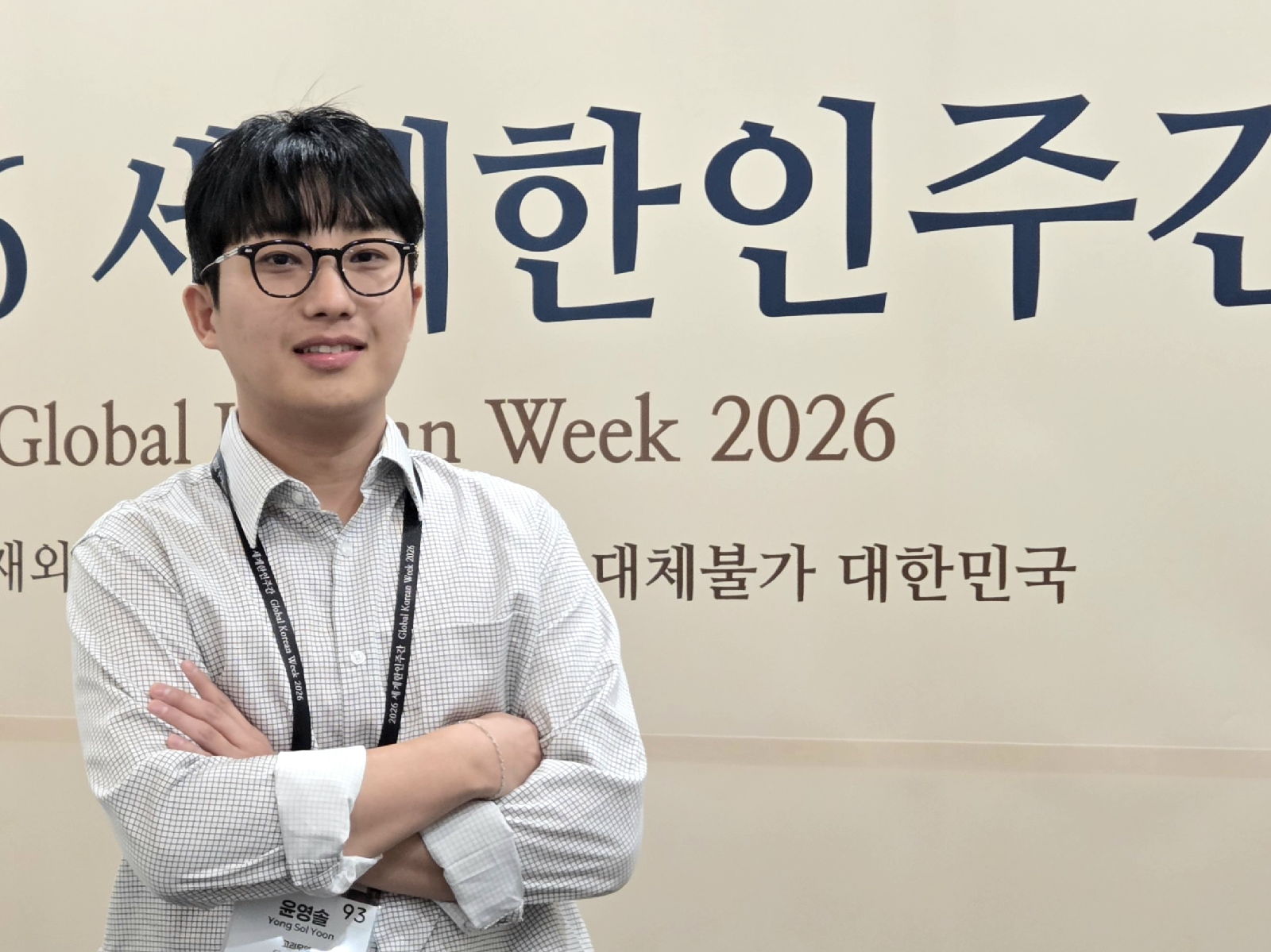
Yoon Young-sol, director of Korea Trade & Industry Department of ‘K Food Distribution’
Nine Korea Mart stores and 150 Korean restaurants
Ramen and Kimchi are also popular
“We need to check the responses there first”
![Yoon Young-sol, head of Korea International Trade, met with Maekyung AX at the 24th World Trade Conference held in Songdo, Incheon, on the 29th of last month and conducted an interview. [Reporter Kim Hyejin]](https://www.diningandcooking.com/restaurants/wp-content/uploads/2026/10/news-p.v1.20261002.66324f7dcffa461599c3dc073484d17e_P1.png) 사진 확대 Yoon Young-sol, head of Korea International Trade, met with Maekyung AX at the 24th World Trade Conference held in Songdo, Incheon, on the 29th of last month and conducted an interview. [Reporter Kim Hyejin]
사진 확대 Yoon Young-sol, head of Korea International Trade, met with Maekyung AX at the 24th World Trade Conference held in Songdo, Incheon, on the 29th of last month and conducted an interview. [Reporter Kim Hyejin]
No matter how popular food is in Korea, it is not the same box office overseas. On the contrary, products that are viral and even supported by actual taste along with content familiar to local consumers are sold steadily overseas even after domestic trends.
Yoon Young-sol, head of Korea International Trade, met with Maekyung AX at the 24th World Trade Conference held in Songdo, Incheon, on the 29th of last month and said, “If you bring a product recklessly because it is popular in Korea, you sometimes fail. We need to first look at how local consumers will encounter the product and actually purchase it.”
Korea Trade also brought dried pollack, which was so popular that it was sold out in Korea, to Singapore, but the response was not as great as expected. In Korea, it was widely known through social networking services (SNS), but it was speculated that there was not enough viral effect in the English-speaking market.
“On the other hand, there are consumers who are constantly looking for Dubai chewy cookies even though they are expensive,” Director Yoon said. “It has become a hot topic not only in Korea but also in the English language, and the taste of the product itself has been communicated to consumers.”
Korea Trade is a company that grew when Chairman Yoon Deok-chang moved to Singapore in 2001 to acquire local food distributors. Currently, it has supplied food materials to more than 150 Korean restaurants and has established a Korean food distribution network by operating nine of its own Korean marts. The annual sales amount to about 13 million dollars.
Large distribution channels and e-commerce account for about 20% of total sales and 9 store businesses account for about 30% of total sales, while the remaining 50% comes from food material distribution. It is establishing a B2B distribution network by supplying food materials not only to local Korean restaurants but also to general restaurants and ships.
The Korean food handled also ranges from products from large companies to products from local small and medium-sized enterprises. Products from major food companies such as Ottogi, Daesang, Nongshim, and Cheongwon, as well as local specialties recommended by local governments, are introduced to the local market.
The best-selling Korean food in Singapore, picked by Director Yoon, is ramen. Kimchi, seaweed, and seaweed products are also showing high sales. He said, “Ramen is the number one product that does not change. Next is kimchi, he said. “Recently, seaweed-related products such as lunch laver and laver snacks are also high sales categories.”
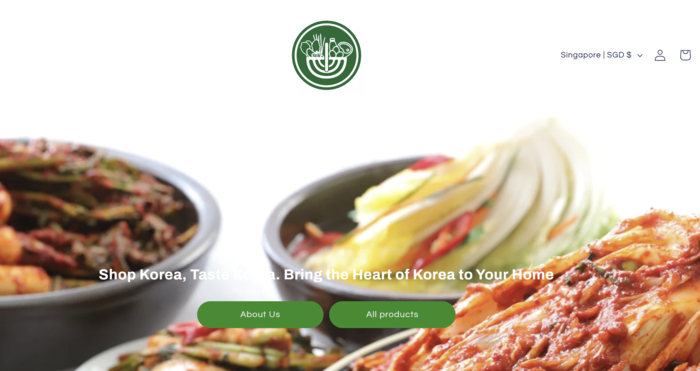 사진 확대 Korea Mart Singapore website
K-food’s status has also changed significantly from the past, he said. Director Yoon said, “It wasn’t that Singapore didn’t have K-food 10 years ago, but it felt different from now. In the past, it used to be a kind of niche product, but now it is one of the basic food groups for Singaporeans, he said. “Now, it seems to be playing a role in the mainstream beyond the trend.”
In fact, demand for K-food has recently been expanding beyond representative products such as ramen and kimchi to healthy foods and premium foods. In Singapore, as consumption of Korean food has become commonplace, distribution channels are expanding not only to supermarkets but also to B2B areas such as online, restaurant companies, hotels, and shipping.
“The characteristic of the Singapore market is that it is a good place to test,” Yoon said. “As consumers of various nationalities are gathered and food consumption is high, it is suitable for introducing new products and checking reactions.”
However, the cost of entering the market is not high. Director Yoon said, “Singapore has high overall costs such as rent and labor costs,” and recommended checking marketability first by using online or pop-up store operations rather than recklessly opening stores.
Korea Trade is also expanding its pop-up business as well as in-store sales. Recently, it held a pop-up with “Umji’s Cockle” and also sold a “bizarre tteokbokki” product in the form of a frozen meal kit.
Director Yoon said, “It is better to check the response first on platforms such as Shopee or pop-ups rather than to come into the country at all costs from the beginning,” adding, “It is also a way to collaborate with retailers located locally.”
In Singapore, exports of agri-food, including food, are also continuing to grow. According to the Ministry of Agriculture, Food and Rural Affairs, K-food exports rose 5.3 percent year-on-year to $8.32 billion as of the end of July this year, with ramen exceeding $1 billion in exports in seven months.
“Korean food is now becoming one of the pillars of Singapore’s food market beyond simple trends,” Director Yoon said. “In the future, the process of making local consumers actually experience and continue to purchase will be more important.”
Dining and Cooking