

Items that must be bought on overseas trips can be easily found on social media. It is not just a phenomenon to be dismissed as a term ‘mart attack’. This is what happens because travelers want to infiltrate their daily lives there. Medicines and snacks, various sauces, toothpaste and butter, jam. Rather than bringing symbols of famous travel destinations, it brings the lifestyle of them. What I bought from the destination is instantaneous, but it is proof that I have lived there.
 사진 확대 Image [Getty Images Bank]
I recently had a meal at an Italian restaurant in Mt. Shinyoung. It’s a very occasional place to go for business lunch. Among the food descriptions on the menu there, I found a phrase that I had not recognized before. It was a ‘butter-baked chicken brisket cooked in the pyrenche trattoria sauce shell method’. In January last year, I visited Souttar, a restaurant that has been running for 100 years in Florence, where the men’s fashion fair “Piti Warmo” is held twice a year.
It was a traditional Italian restaurant where the autographs of artist Chagall were left behind, making all dishes the old way in a single pot hanging over a charcoal fire. Looking at the menu with memories of visiting there, the food I ate in the old space and the table with paper sheets were summoned in an instant. “Oh, this sauce-tanja is the sauce-tanja.” It’s another moment of discovery that I didn’t know before.
 사진 확대 (Illustration Getty Images Bank)
Usually, when we return from a trip, we buy souvenirs with the name of the place on them. If you go to Paris, you buy a model Eiffel Tower key ring, refrigerator magnet, and a T-shirt with the city name on it.
It was kind of like a certificate recording where I’d been and showing off to someone. However, when you open the bags of travelers these days, you can feel that the scenery is different. Once I open my travel carrier, it’s like that.
 사진 확대 Pixabay
Pharmaceuticals and snacks purchased at Fukuoka Don Quixote, various sauces purchased at Bangkok mart, toothpaste and snacks bought at Nha Trang mart, butter and chestnut jam from Lafayette grocery store in Paris. These are not things bought from souvenir shops for tourists.
Therefore, it is meaningful that they are everyday items used by locals and consumed by people there. From some point on, our way of travel is more focused on this side. Rather than bringing the symbol of the destination, it’s about bringing the lifestyle of the place.
place one’s lifestyle above the symbol of one’s destination
 사진 확대 (Photo by Getty Images Bank)
SNS Redefines ‘Where, What to Buy, Why to Go’
According to Expedia’s October 2024 survey of 25,000 travelers, the term “Goods Getaways” is found. I searched and found that this term is explained as follows. “Goods Get Away refers to the phenomenon of travelers planning and purchasing trips in search of unique specialties that represent local culture or lead the trend,” it said. It is necessary to take a closer look at the characteristics of this trend.
First, travelers go on a trip to find chocolate from Dubai, butter from France, and beauty products from Korea. Second, according to the survey, 39% of travelers visit local grocery stores or supermarkets while traveling, and 44% buy local products that are hard to come by in their own country.
 사진 확대 (Illustration Getty Images Bank)
According to AI search results, as many as 73% of Koreans are likely to prioritize visiting local grocery stores while traveling. If you had searched a Vietnamese city even once on social media, the following results would soon be reduced. ‘What to buy at Nat and Lotte Mart,’ ’10 things you must buy when you go to Vietnam,’ and so on.
A trip to Paris is not much different. There are as many contents about what to buy in the library as department store shopping information. There are also numerous lists of beauty products such as essential items to buy at department stores such as Lafayette and Bon Marche, and cream to buy at Paris pharmacies. In the case of Japan, it is introduced into a more detailed category. Even Don Quixote, pharmacies, convenience stores, and airport duty-free shops have separate lists of essential purchases.
 사진 확대 Pixabay
What is interesting here is the role of SNS such as Instagram. In the past, when I went to Paris, I stopped by the Louvre Museum and told them what luxury brand products could be bought cheaper than Korea. But now SNS tells us to buy that butter at this mart and that cream at this pharmacy. The priority of travel information has changed.
So travelers (my wife did too) store a list of things to live there on a mobile platform even before they leave the country. At the same time, they start their journey by knowing information about where and what to buy and how much cheaper to buy than Korea.
 사진 확대 Pixabay
“The trend of travel around the new generation is that they are tourists and they do not want to travel like tourists. I know I can’t be a complete local, but it’s a practice to infiltrate their lives for a while. The results of such daily lives are products purchased locally and contained in my carrier. If the refrigerator magnets, keychains, snowballs, etc. we bought on our past trips were proof that we went there, the products we bought now are fleeting but proof that we have lived there.”
People don’t want to travel like tourists
In Nha Trang, a recent summer vacation destination, my wife stored a list of things to buy at Lotte Mart, what to buy at a local pharmacy, and what to buy at the local market, Dam Market, as well as local and Korean prices.
 사진 확대 Pixabay
So, I also confirmed with my family that the trend I’m talking about now must be a national movement rather than a simple trend. After preparing like this, people gain a certain sense of accomplishment the moment they find products on social media at the mart they stop by at the destination. In other words, the exclamation, “This is it!” is expressed in some way.
I take a picture of what I put in my cart, and when I get home, I organize my purchase list. In other words, two contents were created through one purchase at the same time. “Searching – Save – Find – Buy – Show – I recommend it again”. This is a kind of circular loop in which shopping through travel is created through SNS. If this cycle is repeated, it will be listed on the ‘must buy’ list. So, the SNS we are using is making the daily life of travel destinations a shopping list soon.
 사진 확대 Photo by Pixabay
In fact, if you go to domestic department stores, you will find all the products you bought like this. It’s just a little expensive. These days, there are not many local items that cannot be purchased through overseas shipping or purchasing agencies. Nevertheless, we infiltrate the daily space of the destination and find them ourselves. Perhaps this is a change in our perception or perception of travel.
In the past, ‘What should I see?’ was important on ordinary trips. However, in the current trip, it is important to experience firsthand ‘how are people living there?’ Like Seoul’s N Tower and Gyeongbokgung Palace, the city’s landmarks are the faces of those places you want to show to outsiders.
 사진 확대 Pixabay
On the contrary, local markets or supermarkets can be seen as a reflection of how people there actually live. Although it is a short time, contemporary travelers seem to want a ‘first-hand experience’ of what they eat, drink, and buy. This is the new perception of travelers.
Those who can afford time try to make it their daily life in a way such as living a month. However, most travelers are not given time for such deviations. Nevertheless, rather than being tourists at their destinations, they want to spend the day like locals in Tokyo, Paris, Nha Trang, Bali, Bangkok. For those who have visited Tokyo several times, Tokyo Tower or Shibuya Scramble is not very attractive.
 사진 확대 Pixabay
For them, it might be more attractive to sit in a small Kitsaten (formerly a cafe) in Kitch George and have a cup of coffee. For many visitors to Paris, buying a loaf of cheese at the market and drinking a cup of espresso at a small cafe may feel more like a trip to Paris than at the Louvre.
“Now people are tourists, but they don’t want to travel like tourists. People want to be residents there, even though it’s temporary and temporary. So, rather than a hotel, I take a house as an accommodation, and in the morning, I stop by a local cafe. In the afternoon, I walk in the market or mart and spend time visiting shops located in alleys. I know I can’t be a complete local, but it’s a practice to infiltrate their lives for a while.”
Collecting fragments of a local person’s life instead of collecting attractions
 사진 확대 Pixabay
The experience I brought from Trattoria Sostanza in Florence is also part of a story like this. At the time, it ended up as just a great meal at a historic restaurant. However, the moment I find the name on the menu of a Korean restaurant a year and a half later, my personal experience turns into a symbol.
It must be a name that needs explanation for someone who doesn’t know the source. But for someone who has experienced it, these four letters become a magical spell to bring back one landscape or scene.
 사진 확대 [Illustration Getty Images Bank]
The local experience and the meaning of the objects brought from it have a complex multiple meaning that is not simple. There is certainly a part where the perception of Italian food has changed since experiencing sauces. The experiences of sitting in Tokyo’s retro Kitsaten cafe, buying groceries from Bangkok’s markets, and browsing the Parisian food halls change the way we live in our own cities little by little.
This trend does not allow travelers to collect attractions, but rather collects fragments of life that locals have expressed. So our lifestyles gradually change multinational. At the same time, our experiences there begin to affect our way of life, even in small ways. The SNS you look into every day constantly stimulates this desire and makes a list of the next trip.
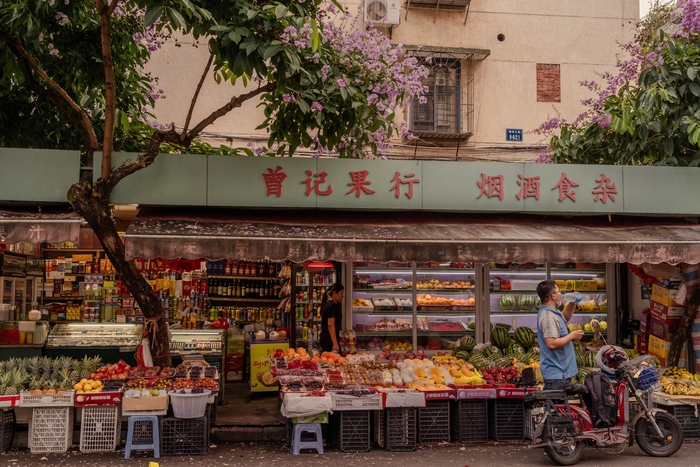 사진 확대 Pixabay
Under the title of “Must-Buy Things Here,” a lot of content is rich in our mobile. And those contents transform the world’s marts and markets into new tourist destinations for us. The trip that you’ve been on creates content again.
Just as I recognized the name ‘Sauce Tanja’ at an Italian restaurant in Seoul and had a clear understanding of the dish. Our travelers’ local attacks continue today. While looking for a local mart and organizing the purchase list.
[Lee Joo-young (Lifestyle Columnist) Photography and Illustration Getty Images Bank, Pixabay]
[This article is about Mail Business City Life No. 1050 (26.10.13)]
Dining and Cooking