
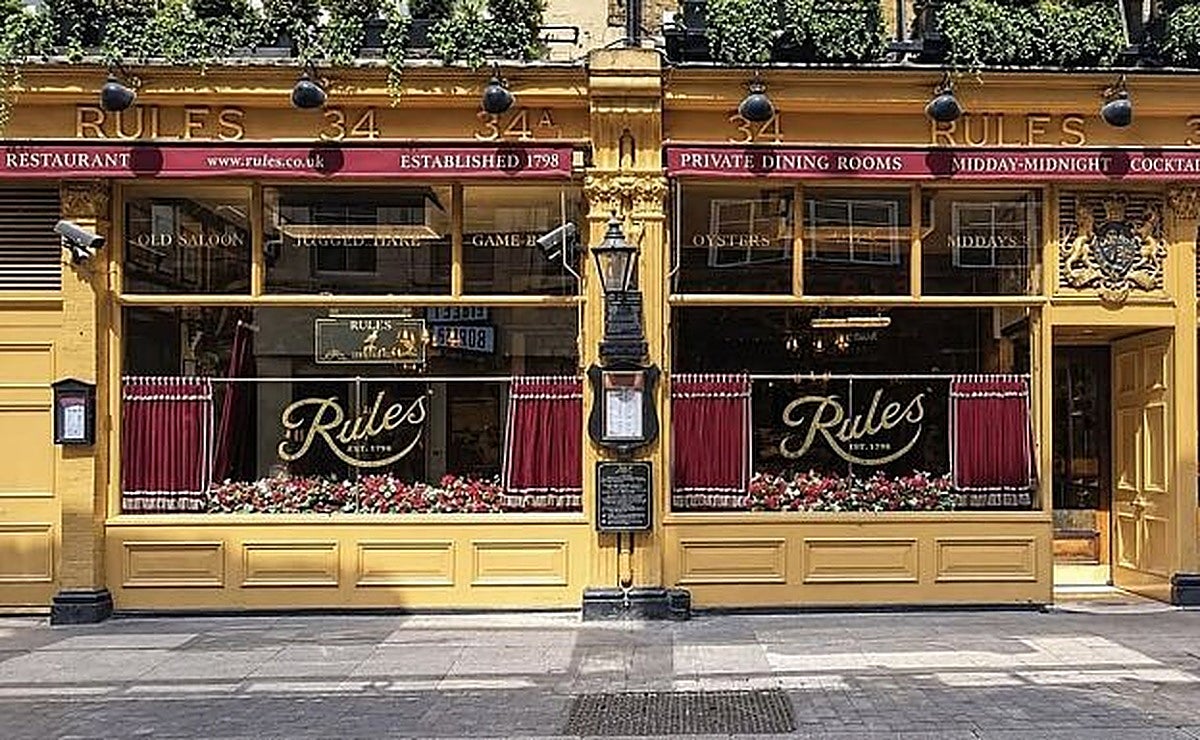
Charles Dickens and William Makepeace Thackeray were regular patrons at its tables. Graham Greene made it the setting for a novel, and today a corner of the dining room bears his name. Edward VII chose it for his clandestine meetings with the actress Lillie Langtry during his time as Prince of Wales. Stars such as Charlie Chaplin, Ava Gardner, David Bowie and Madonna have likewise made Rules their London sanctuary. Now, the capital’s oldest restaurant, founded in 1798, has secured its future: its owner has gifted it to the National Trust, the charity dedicated to conserving British heritage.
This does not mean Rules will be turned into a museum. The gift, valued at more than £11 million, includes the Maiden Lane freehold, its collection of fine art and historic furnishings, and even the caricatures of illustrious patrons lining its walls. It also encompasses the rental income paid by the restaurant, which will remain under the stewardship of Ricky McMenemy, its long-standing managing director. The vision is for it to remain a living institution, retaining the central role in London life it has enjoyed for centuries.
Rules began life as an oyster house opened by Thomas Rule, at a time when Covent Garden was a bustling hub of market stalls and playhouses, and oysters were food for the masses. Over time, it evolved into an embassy of traditional British cuisine: game, roasts, steak and kidney puddings, and puddings such as treacle sponge, which remains on the bill of fare today. During the Second World War, it stayed open despite rationing, adapting its dishes to more modest ingredients such as rabbit and pigeon.
In the 1970s, when redevelopment threatened Maiden Lane, Rules was designated a listed building, yet heritage listing could never guarantee that the business would survive or that its contents would remain together. The handover to the National Trust provides a further safeguard: the Trust becomes the landlord, with the rent paid by the business helping to fund conservation. This ensures that the ‘invisible atmosphere’ celebrated by the poet Sir John Betjeman will endure—an intangible quality beyond any inventory of furniture and paintings, forged by generations of diners who make the city’s historic dining rooms part of its very soul.
Spain possesses establishments with a comparable sense of history. Sobrino de Botín in Madrid has traded continuously since 1725, during the reign of Philip V. Lhardy has formed the backdrop to the Spanish capital’s political, literary and culinary life since 1839. A similar role has been played in Barcelona by 7 Portes, established in 1836, whilst El Rinconcillo in Seville dates its origins back even earlier, to 1670. All have maintained their identity to this day, yet none is completely immune to the risk that a future owner—even if legally bound to conserve the historic building—might choose another use and call time on a centuries-old conversation that still connects diners with their ancestors.
comentarios
Reportar un error
Dining and Cooking