
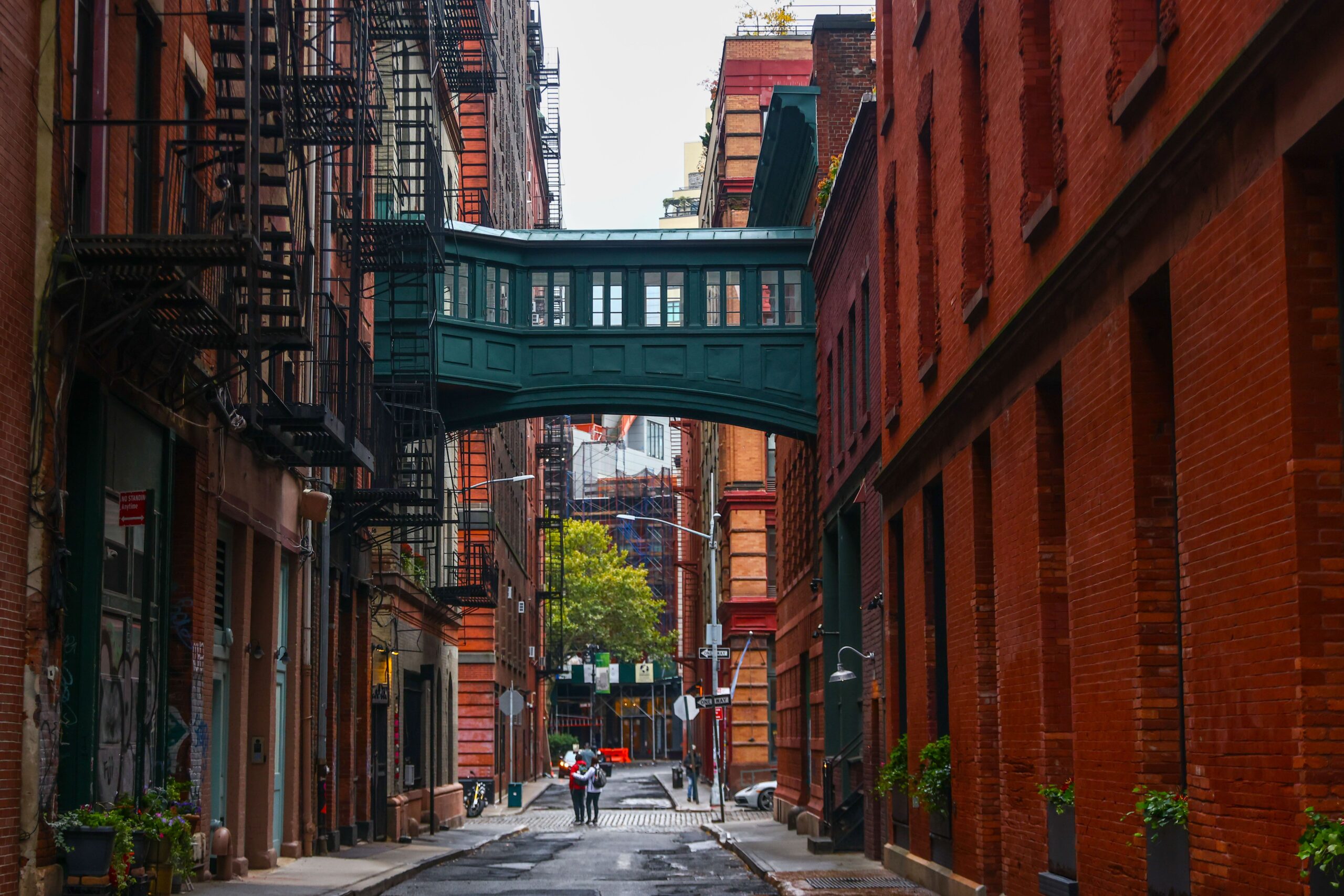
In Tribeca, the clearest sign of money is often how little a building tells you from the street. A brass plaque or unmarked entrance may lead to a private elevator and full-floor home upstairs, with a serious restaurant or gallery below. Cast-iron columns and oversized windows preserve the neighborhood’s earlier life.
Before the name Tribeca, a 1970s portmanteau of Triangle Below Canal Street, came to be, this was Washington Market, New York’s principal food market from the mid-19th century. Produce and dry goods moved through Italianate and Romanesque Revival warehouses whose loading bays and broad, daylit floors were designed for constant traffic.
When wholesale trade left, artists began taking over empty lofts in the 1970s, often living illegally in buildings still classified for commercial use. High ceilings and open floors that once accommodated crates became studios and apartments without losing their industrial proportions. Tribeca’s inexpensive period passed quickly. By 1983, The New York Times was already reporting that soaring real estate values had limited the neighborhood to higher-income tenants. Families followed by the end of the decade as Washington Market Park and neighborhood schools made the former warehouse district workable for children. Historic district designations in 1991 and 1992 protected much of the cast iron and masonry that had drawn residents in the first place. The result is an unusual Manhattan luxury: immense private interiors behind an intact commercial streetscape.
The same roominess is now serving another trade. Galleries began opening in Tribeca in earnest around 2016, then arrived in waves after the pandemic, drawn to deep storefronts and large upper floors within a short walk of one another. According to Vanity Fair, on one Wednesday night in September 2026, at least 70 major shows opened in or near the neighborhood. Walker and White streets now form one of the city’s densest gallery circuits. An opening can end at a restaurant on the same block, with the art crowd settling into dining rooms whose patina took decades to acquire. Toward the end of 2027, Major Food Group plans to turn the former Tribeca Grill into an American tavern and steakhouse, returning a marquee dining room to an address that helped make downtown a destination for 35 years. The guide begins with the tables and bar seats worth planning around, then follows the independent shops, galleries and discreet rooms that are easy to miss from the sidewalk.
Dining and Cooking