
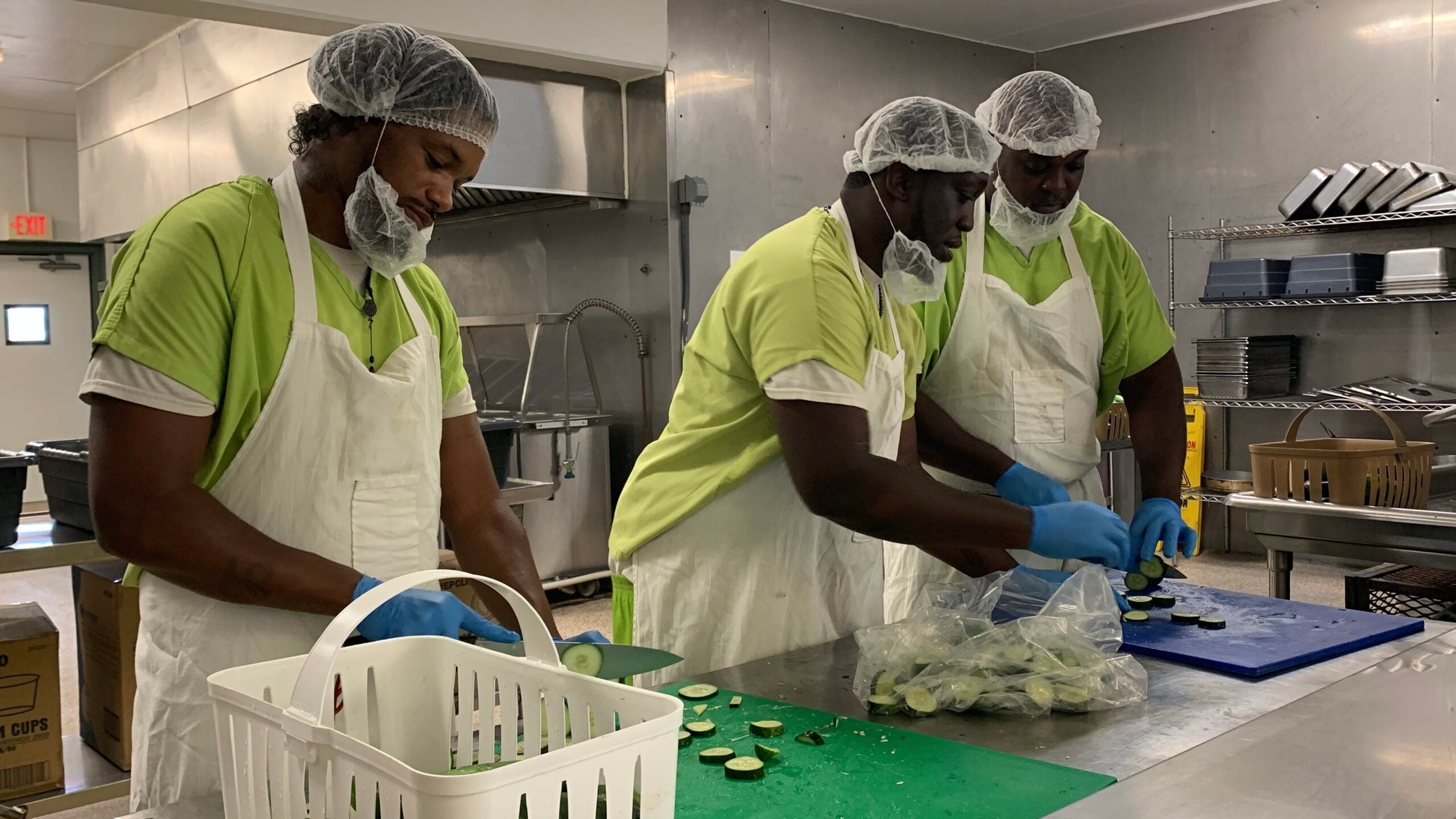
The state Department of Corrections Commissioner Terra Taylor said that the training also helps correctional residents contribute to their community.
“For many of our participants, this may be the first time in a long time that they have been able to directly help someone in our community. I’m sure we all agree that there is a tremendous value and knowing that your work matters,” Taylor said.
Taylor also said the program teaches the correctional residents who volunteer about nutrition and food handling skills that are desirable to employers in the food service industry.
Participants receive credit toward community service hours that can be later applied to their financial obligations. According to Taylor, correctional residents participating in the program who have a “realistic pathway to employment” are less likely to reenter the criminal justice system.
“It’s good to know that the food is going to a good place. Plus, it gives us the time to go ahead and get some training for when we go home,” Anthony McGuire, one of the volunteering correctional residents, told WHYY.
Produce processed at the corrections center includes cauliflower, asparagus, broccoli, strawberries, cantaloupe and cucumbers. According to Nancy Staisey, the chair of the Delaware Farm and Food Council, the program currently works with three local farms on supplying produce.
“It’s a win for our farmers because we’re buying local products, and when everybody buys local products from local farmers, those dollars don’t just help our farmers, who are Delaware small business people, but those dollars also get spread into the local economy,” Staisey said during the briefing.
 Outside the Sussex Community Corrections facility in Georgetown, Del. (Google Maps)
The Sussex Work Release Building at the Corrections Center houses the kitchen used for the program. About 18 correctional residents currently volunteer for the program, working roughly six hours a day.
Dining and Cooking