


Volunteers Mingmei Lumetto (left) and Cindy Chen place items on a shelf at the Coralville Community food pantry on Friday.
Nick Rohlman/The Gazette
Whitney Burnell, of Cedar Rapids, was overjoyed when she learned Iowa would resume its participation in the federal Summer Electronic Benefits Transfer food program this year.
“I was freaking out, and I was like, ‘Oh, my god, this is gonna help out so much,’” Burnell said. “Anybody knows when you have children at home during the summer, they eat you out of house and home.”
The week before she got the news, she said, she’d had to decide between paying rent and buying groceries. She decided to pay rent and visit food pantries for groceries instead.
State participation in the Summer EBT program — also called Sun Bucks — has been in transition since it started during the expanded Pandemic EBT program in 2020-2023. Iowa declined to participate in 2024 and 2025, and ran a pilot substitute program called Healthy Kids Iowa in 2025.
The return of the regular Summer EBT program this year comes with restrictions on what foods can be purchased — a number of snack foods are no longer covered — but it’s the best option available, families and advocates say.
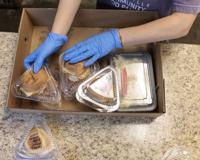
Shané Ahmedoska packs leftovers from the free lunch program at the Coralville Community food pantry on Friday. Leftover items were taken to the community fridge at the Coralville Public Library.
Nick Rohlman/The Gazette
Feeding kids during summer
Summer EBT is an income-based federal program in which participating families receive a card loaded with $40 per child, per month, that they can use to buy food while schools are out of session. It began as a pilot program in select areas in 2011 and became a permanent, nationwide program in 2024.
Summer EBT is designed to tackle a summer hunger spike, said Paige Chickering, the Iowa manager for Save the Children Action Network.

Paige Chickering, Save the Children Action Network
Submitted
“That is when children who access free and reduced-price meals during the school year get out of school for the summer, lose access to those free and reduced-price meals, and we see their rates of food insecurity really jump,” Chickering said.
Estimates for the number of children who qualify for Summer EBT vary, but Iowa Health and Human Services predicted it would serve 220,000 children this summer in an application it filed with the federal government.
Summer EBT is federally funded, with states paying half the costs to administer the program, Chickering said. In Iowa, that translates into the state spending $1.3 million to bring $26 million in food assistance to participating families in Iowa.
Chickering called it one of the best returns on investment available to the state.
In Iowa, the program is administered by the state Department of Health and Human Services.
Healthy Kids problems
Iowa first started participating in a version of Summer EBT during the COVID-19 pandemic. From 2020 through 2023, Pandemic EBT food assistance was provided year-round to families whose children qualified for free or reduced-price meals at the schools they couldn’t attend for many months.
The state declined to participate in the federal Summer EBT program in 2024. The cited reason was the program didn’t address barriers to healthy eating, according to a news release quoting Kelly Garcia, the Iowa HHS director at the time.
Officials made the same decision in 2025, when Iowa piloted a state-based program called Healthy Kids Iowa, where families had to pick up boxes of food at distribution points rather than using EBT cards at grocery stores or farmers markets.
CEDAR RAPIDS — The $40 worth of food Brandy Lowery got this month for each of her children through the new Healthy Kids Iowa program is “actua…
That program had some problems, according to John Boller, executive director of the Coralville Community Food Pantry.
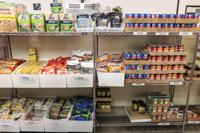
Items sit on shelves at the Coralville Community food pantry.
Nick Rohlman/The Gazette
First, he said, food pantries like his weren’t aware of the Healthy Kids Iowa program until late May when school was nearly out of session.

John Boller, executive director, Coralville Community Food Pantry
Submitted
After the pantry got the word out, the next challenge was coordinating food distributions. Unlike Summer EBT — where food assistance is provided electronically — participants in the Healthy Kids Iowa program had to drive to distribution sites at participating food pantries and schools to pick up supplies. Transportation was a problem for some families.
Then came the logistics.
“The amount of in-kind labor that was required to actually implement these distributions was obscene,” he said.
At the distribution sites, families received a box of food equivalent to $40 for each child, mimicking the Summer EBT benefits but without the ability to choose. Instead, food banks had to plan menus and make purchases for their clients without knowing their likes and dislikes, their dietary needs or their cultural preferences.
Boller said some pantries weren’t equipped for the amount of food coming into and going out of their buildings and had to throw away items that spoiled.
And then there was, as Burnell puts it, “the whole chicken nugget thing.”
At Burnell’s food distribution site, she qualified for four to six huge bags of chicken nuggets, each of which could last more than a month. With three children in the house for the summer, she ended up with 12 bags of nuggets.
“I was like, man, my kids don’t eat that many chicken nuggets, so I was just handing them out … or I’d take them to random food banks,” Burnell said. “I started asking, do I have to take that much?”
Since Burnell had a car, she said she often picked up and delivered boxes of food for her neighbors who didn’t have transportation.
DES MOINES — Iowa announced on Monday that it will return to a federal summer food assistance program, while tying the program’s $40 per month…
On top of all the pilot program’s logistical challenges, its reach also was hindered.
According to an Iowa Department of Health and Human Services report evaluating the program, 66,786 individual children received distributions, fewer than one-third of the 220,000 children the department predicts the 2026 Summer EBT program will serve.
“They set their goal at 65,000 kids reached, which to us was a major point of frustration, knowing we could have had (Summer EBT), which would have reached anywhere from 200,000 to 240,000 kids, and, at best, this pilot program will serve 65,000 kids,” Boller said.

Volunteer Marilyn Olson (left) talks with family services coordinator Shané Ahmedoska as they pack up leftovers from the free lunch program at the Coralville Community food pantry on Friday. Leftover items were taken to the community fridge at the Coralville Public Library.
Nick Rohlman/The Gazette
Only some snacks allowed
The state returned to the Summer EBT program under the condition the state’s Healthy SNAP guidelines — which took effect in January — also would apply to Summer EBT purchases. Under those restrictions, food benefits can’t be used to buy taxable items like candy, soda and sugary drinks with less than 50 percent fruit or vegetable juice.

The U.S. Department of Agriculture approved a waiver submitted by Iowa Gov. Kim Reynolds to bar the use of Supplemental Nutrition Assistance P…
Burnell said she’s heard from others that their kids are upset they can’t buy drinks like Hawaiian punch, Kool-Aid or Sunny D. Plus, the restrictions prevent kids from having seasonal treats.
Chickering, with Save the Children Action Network, said her organization generally opposes “food restrictions for SNAP. Past data has not proven them to be incredibly effective. Instead, we see other programs, like nutrition incentive programs, like Double Up Food Bucks, for example, to be far better alternatives to support healthy eating.”
A study published in JAMA internal Medicine in 2016 randomly assigned participants to four categories: receiving an incentive for purchasing fruits and vegetables, being restricted in purchasing unhealthy food, both receiving the incentive and being restricted and a control group. Of the four, the group that was incentivized to purchase healthy foods saw the greatest change in their eating behaviors.
The Healthy SNAP restrictions ensure Summer EBT and SNAP are supplementing families’ nutritional needs, an Iowa HHS spokesperson told The Gazette.
“Iowa requested and received USDA approval to apply these same nutrition standards to Sun Bucks so families have consistent access to healthy foods during the summer months,” the spokesperson wrote in an email. “By using a unified set of nutrition standards, Iowa aims to ensure food assistance not only addresses hunger but also supports the health and development of children and families year‑round.”
While Boller isn’t enthusiastic about the SNAP restrictions, he said anti-hunger advocates must work within the system they operate in.
“We’re very happy to have Summer EBT back, and we want to see it back forever,” Boller said. “We have our thoughts as advocates as to why those SNAP restrictions aren’t actually helping with what the stated goal is, but if it gets us summer EBT back, which is going to put really vital food into the hands and bellies of our youngest neighbors, that’s well worth it for us.”
More Information
Families can apply for Summer EBT up until August 14, 2026. Families can apply online on the MyAccessIowa site by going to www.benefits.stateofiowahhs.org or printing an application from the Iowa HHS website.
Free, pre-made summer meals for kids are also available at select sites around the state. Find the one closest to you at www.fna.usda.gov/sfsp/sitefinder.
Dining and Cooking