

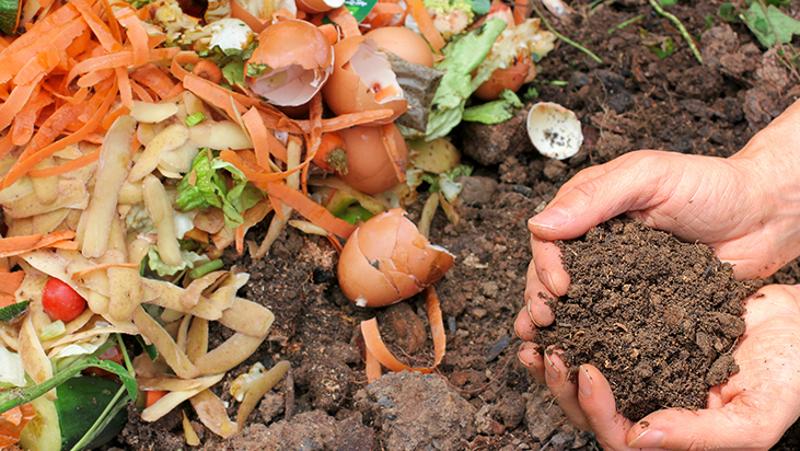
Composting is one method of food waste diversion. | Photo: Pexels

Composting and donating excess food used to be the domain of particularly sustainability-minded businesses looking to shrink their environmental footprint. Now, in municipalities across the country, keeping waste out of the landfill is shifting from a “do-good” perk to a requirement.
New York City is the latest city to shift more of the responsibility of food waste diversion onto business’ shoulders. In July, the City Council passed a law expanding the business categories that will be required to separate organic waste.
The city’s compliance landscape is changing from a system based on square footage (aka, larger businesses) to a universal mandate. Under the new law, all restaurants or establishments that generate food waste, regardless of size, must divert organic waste.
That means New York City restaurants will have to separate their potato peels and lemon rinds from inorganic waste and either donate, compost, or find a creative second life for unused trimmings and leftovers.
New York City is one of several municipalities now requiring more businesses to help tackle the 133 billion pounds of food waste the U.S. generates annually. Other recent regulatory changes include:
New York State: Lowered the mandatory compliance threshold for organic waste diversion from 2 tons a week to 1 ton a week, now capturing some large high-volume restaurants, chains, and dining halls. In 2029, the threshold drops further to half a ton (1,000 pounds) per week.Denver: In September 2025, the Denver City Council approved updates to its recycling and composting ordinance, now requiring foodservice establishments to provide recycling services for employees and customers; composting services for employees and contractors; and clear signage of proper waste sorting.Washington State: Starting in January 2026, Washington expanded its food waste diversion requirements to include businesses that generate 96 gallons of organic waste per week (the size of one standard rolling garbage bin).
The challenge is that there is no single national playbook for food-waste compliance. And corporate teams may not know there’s a problem until a surprise audit happens.
“Across restaurant portfolios, that inconsistency, not the diversion itself, is usually the hardest part to manage,” John Ayvas, CEO of Lincoln Waste Solutions by Reconomy, said. “For restaurant operators, the important thing is not trying to predict exactly where or when the next requirement will come, but instead to focus on having a process in place to monitor changes and understand how they apply across all of their locations.”
Restaurants concerned about changing food waste compliance laws in their area — or who simply want to get ahead of the trend of eliminating food waste — will want to follow a few simple steps, according to Michael Oshman, founder and CEO of the Green Restaurant Association. His tips include:
Use pictures to convey where food waste, recycling, and compostable items should go. Don’t overcomplicate it, “make it a picture, post it at eye-level and put it wherever someone is going to make the decision [about where to put their potential trash].”Make it easy for people to do the right thing: “Don’t make the garbage nice and convenient, and the composting and recycling out of the way,” Oshman said. Don’t overcomplicate the rules: “Instead of telling people to compost their leftover burger, recycle the bottle, and put the forks and spoons in a reusable bin, just label it ‘Bin A’ and ‘Bin B’. You have to make it easy for people,” he added.
Besides simplicity and clarity on the consumer end, it’s also crucial for restaurants to get organized. Operators should understand their local waste compliance laws, audit their actual waste stream and get guidance on sorting and distributing compostables and reusables to the proper facilities.
“The connection between corporate oversight and location-level execution is critical,” Ayvas said. “When those pieces are connected, restaurants have a strategy that can be managed consistently across a portfolio while still adapting to local requirements.”
Contact Joanna at joanna.fantozzi@informa.com
Dining and Cooking