
Indiana farmer Donnie Lawson is heading into one of the busiest times of the year — but this harvest season, getting his corn and soybeans out of the ground is coming with a much higher price tag.
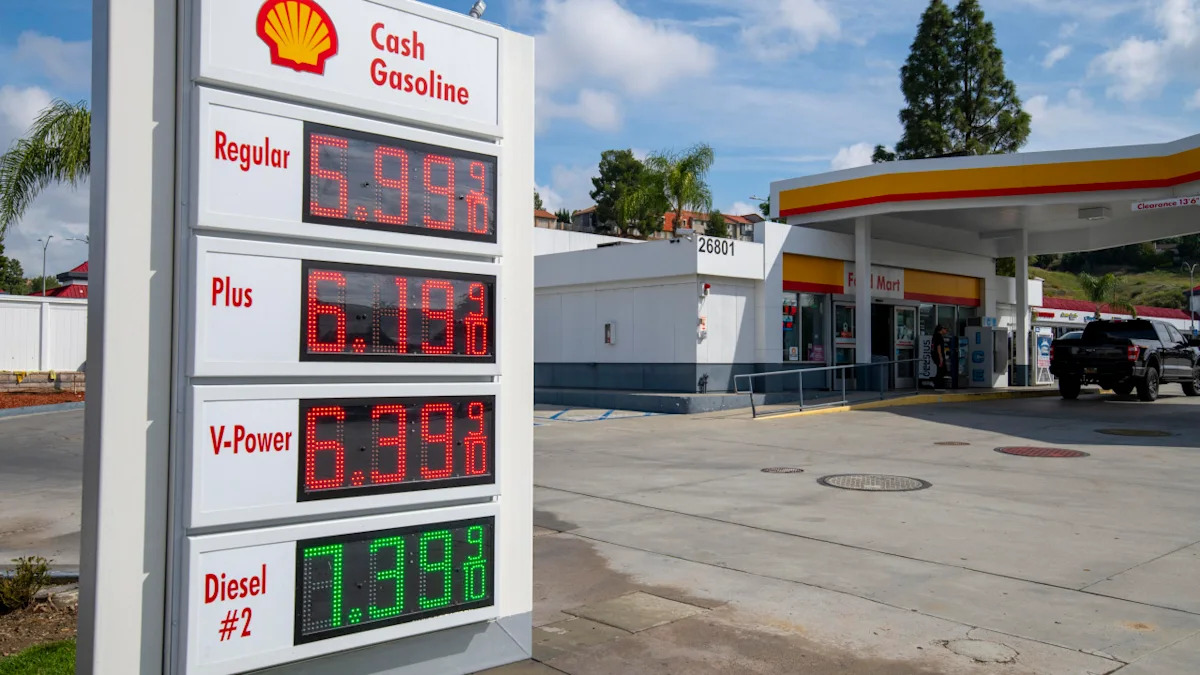
Lawson, co-owner of Lawson Land and Cattle Company in Thorntown, Indiana, relies heavily on diesel during harvest to power the machinery that keeps his operation moving. With prices topping $7 a gallon at some stations across central Indiana, fuel is suddenly swallowing up a much larger share of his operating costs.
Must Read
“To me, it doesn’t make sense to go buy a whole bunch of fuel at $7 a gallon,” Lawson, told FOX59/CBS4. “But maybe that’s the best thing to do because it may be at $8 a gallon here in a week or two.”
While Lawson may be feeling the sticker shock first, he says it won’t necessarily stay on the farm.
“It’s not just us on the farm,” Lawson explained. “It affects every person in the United States because we supply the food.”
A costly harvest for farmers
As of Sept. 21, the average gallon of diesel in Indiana costs about $6.82, according to AAA, roughly 80% more than the $3.78 drivers were paying a year ago. Nationally, diesel has also reached a record $6.51 per gallon.
For farmers, the timing is particularly painful. Harvest season means long days running fuel-hungry equipment, so a rise in diesel prices can quickly add thousands of dollars to operating costs.
“This is the toughest it’s ever been in agriculture,” Lawson told the news outlet. “And that’s from top to bottom.”
The USDA expects U.S. farmers’ fuel and oil expenses to climb by $4.8 billion, or 28.8%, in 2026 compared with last year. Fertilizer, lime and soil conditioner expenses are also projected to rise 15.3%.
And Lawson isn’t the only Indiana farmer watching fuel costs eat into his harvest. In Posey County, farmer Randy Kron told 14 News that his combine burns about 25 gallons of diesel an hour, pushing his fuel bill above $1,500 on some harvest days, before accounting for the trucks needed to haul grain.
After more than 40 years in farming, Kron said he can’t remember diesel prices putting this much pressure on his operation.
“It’s going to make it a challenge to have a profit this year in the farm,” Kron said. “And I told our son that helps on the farm, our goal is just to break even this year let’s try not to lose any money.”
Read More: Vanguard reveals what’s coming for U.S. stocks — and it could be bad news for this group of investors
From farm to table
The pressure doesn’t stop once crops leave the farm. Diesel also keeps much of the country’s freight system moving, meaning higher fuel prices can follow food all the way to the grocery store.
Mike Bender, a CDL-A driver, told FOX59/CBS4 that those costs eventually have a way of reaching consumers. And given how much of the country’s freight moves by truck, even a sustained jump in diesel prices can have a wider impact. Trucks carried roughly 72% of all U.S. domestic freight by weight in 2024, according to the American Trucking Associations.
Higher diesel prices can show up more than once in the cost of food, first when farmers run their equipment, and again when those products are shipped to processors, warehouses and stores.
For shoppers, that doesn’t mean every grocery item is suddenly about to jump in price. But with Americans already paying more at the supermarket, another increase in the cost of getting food from the farm to the shelf certainly doesn’t help. Keeping an eye on unit prices, shopping around weekly sales and stocking up on pantry or freezer staples when they’re discounted can give your grocery budget a little more breathing room if those higher costs eventually make their way to the checkout.
What To Read Next
Get Warren Buffett’s best investing lessons, free. Join 250,000 readers getting Moneywise’s sharpest money reporting every week. Subscribe and we’ll send you our guide to the ideas that built Buffett’s fortune as a welcome gift.
This article originally appeared on Moneywise.com under the title: Indiana farmer stares down $7 diesel at harvest, up from $3.78 last fall — and warns grocery shoppers will feel it next
This article provides information only and should not be construed as advice. It is provided without warranty of any kind.
Dining and Cooking