

New Jersey lifting its minimum wage to as high as $19.48 for some workers is more than a local policy move. It channels extra cash toward households that tend to spend quickly, which can reshape demand for everything from quick meals to low-cost retail. Investors looking at this shift may not want to sit on the sidelines. This article walks through three stocks from our screener that are directly exposed to this wage story and explains how that link might matter for your portfolio decisions.
The three stocks below are a starting sample only, as the full screen surfaced 12 more U.S. consumer discretionary companies with equally compelling wage-linked stories that are not covered here.
If you want to identify and analyze your own highest-conviction angles on this theme, head straight to the U.S. Consumer Discretionary Stocks Benefiting from Rising Low-End Wages screener.
Shake Shack (SHAK)
Shake Shack gives this wage-focused screen a clear real-world expression, since fast casual burgers and shakes often capture extra spending when paychecks stretch a bit further.
“The company’s strategic focus on urban expansion and accelerated domestic and international store openings, especially in untapped markets and through new formats such as drive-thru and licensed partnerships (e.g., casinos, Panama), directly taps into growing urbanization and demand for experiential fast-casual dining, supporting long-term, system-wide revenue growth.”
What really matters for investors is how this growth push interacts with one unresolved cost pressure that could reshape the margin story.
Shake Shack runs and licenses fast casual “Shacks” selling burgers, chicken, hot dogs, fries, frozen custard, beer, and wine, generating about US$1.6b from company-operated restaurants and carrying a market value near US$2.5b.
That margin tension is exactly what the full narrative for Shake Shack unpacks, showing where wage pressure could collide with Shake Shack’s expansion plans and where earnings power might quietly accelerate.
 NYSE:SHAK Revenue & Expenses Breakdown as at Sep 2026 Darden Restaurants (DRI)
Darden Restaurants sits closer to the heart of this wage theme, since higher pay for lower earners often shows up in affordable dinners out. Its mix of value-focused brands and broader casual dining reach makes the New Jersey wage moves especially relevant.
Darden Restaurants runs full-service chains such as Olive Garden and LongHorn Steakhouse, drawing most of its US$13.4b in sales from Olive Garden at about US$5.6b, LongHorn at roughly US$3.5b, and other concepts and fine dining at around US$2.8b and US$1.4b respectively. This gives the group a market value near US$22.4b.
“Olive Garden’s rollout of Uber Direct delivery service has been seamless and is now available in nearly all locations, providing a meaningful sales-building opportunity over time as consumers increasingly opt for convenience. Despite the delivery channel rollout, the incrementality of delivery orders is still relatively low (40-50%), and the increase in operational complexity could pressure net margins if it fails to scale efficiently.”
The real question for investors is how one quiet shift in the mix of in-restaurant and off-premise demand could ripple through those margin outcomes.
That margin mix shift is exactly what the full narrative for Darden Restaurants unpacks, revealing where delivery complexity, wage pressure, and demand could be quietly decoupling for Darden Restaurants.
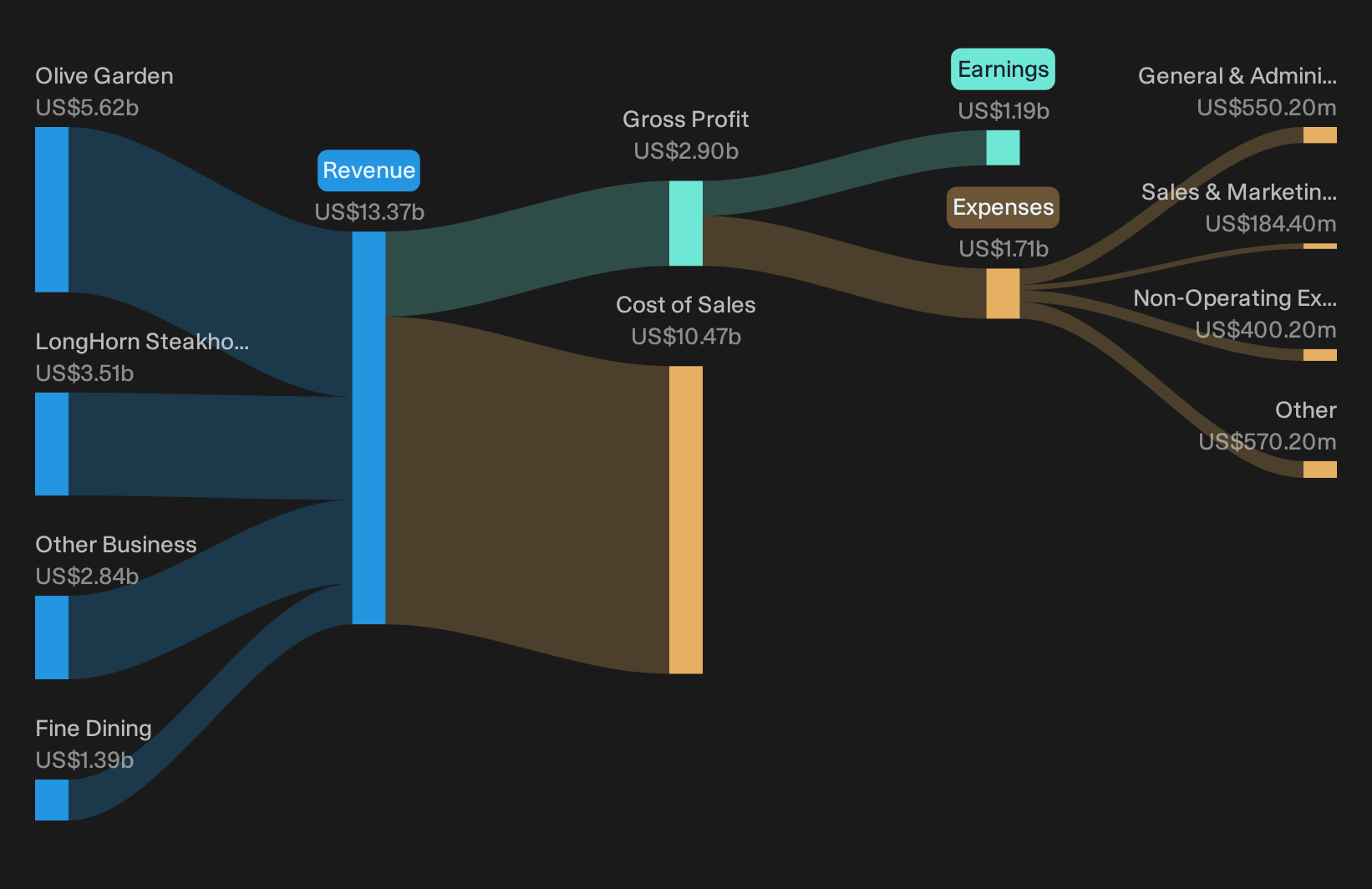 NYSE:DRI Revenue & Expenses Breakdown as at Sep 2026 Portillo’s (PTLO)
Portillo’s taps directly into the screener theme as a fast casual, value-focused chain where small pay bumps for hourly workers can quickly turn into extra hot dogs, beef sandwiches, and shakes across its restaurant network.
Portillo’s runs fast casual restaurants across the United States, generating about US$749 million in restaurant sales and carrying a market value near US$267 million.
“The company’s ongoing adoption of digital technology, including an expanding loyalty platform (Portillo’s Perks, now 1.9M+ members), growing kiosk usage (>33% of in-restaurant orders), and AI-powered drive-thru enhancements, is increasing restaurant efficiency, enabling targeted marketing/promotions, and improving guest retention and order frequency, which should support future same-store sales growth and higher overall revenue.”
What investors will watch now is how one pressure on unit economics interacts with that digital engine if wage-driven demand really starts to bite.
If that pressure point on unit economics matters to you, the full narrative for Portillo’s maps where accelerating wage-fueled demand could still be masking meaningful upside or risk.
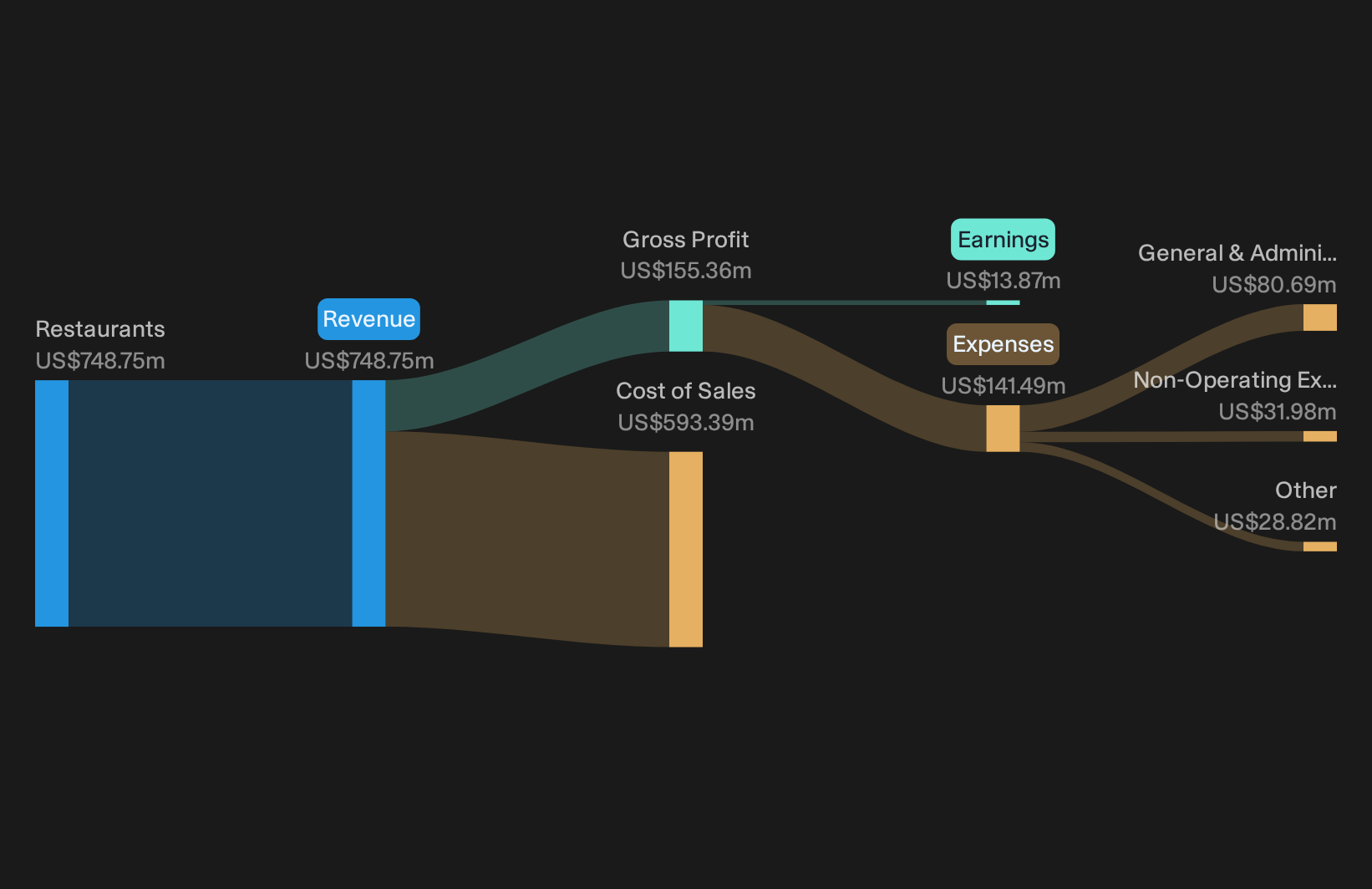 NasdaqGS:PTLO Revenue & Expenses Breakdown as at Sep 2026 Seeking Alternatives Before Everyone Else?
Fresh ideas move first, prices move next. Before the next breakout gains momentum and the best entry points get caught flying away under the radar for now, consider looking earlier.
This article by Simply Wall St is general in nature. We provide commentary based on historical data
and analyst forecasts only using an unbiased methodology and our articles are not intended to be financial advice. It does not constitute a recommendation to buy or sell any stock, and does not take account of your objectives, or your
financial situation. We aim to bring you long-term focused analysis driven by fundamental data.
Note that our analysis may not factor in the latest price-sensitive company announcements or qualitative material.
Simply Wall St has no position in any stocks mentioned.
New: Manage All Your Stock Portfolios in One Place
We’ve created the ultimate portfolio companion for stock investors, and it’s free.
• Connect an unlimited number of Portfolios and see your total in one currency
• Be alerted to new Warning Signs or Risks via email or mobile
• Track the Fair Value of your stocks
Try a Demo Portfolio for Free
Have feedback on this article? Concerned about the content? Get in touch with us directly. Alternatively, email editorial-team@simplywallst.com
Dining and Cooking