

 New Mexico Voices for Children is a nonprofit, nonpartisan public policy advocacy organization which works to improve child well-being in New Mexico. (Courtesy of New Mexico Voices for Children)
New Mexico Voices for Children gathered with health and youth, youths development representatives from all over the county Friday to discuss key policies and issues facing the state’s kids.
In June 2026, NM Voices published the New Mexico Children’s Roadmap, a report looking at various areas of child well-being in the state. Key points of interest include early childhood education, childcare and healthcare, and economic security.
The goal was not only to identify and measure progress that has been made, but to ensure implementation of policies that have been passed are made real for New Mexican children and see what areas still need improvement.
“We’re a state that has incredible resources and resiliency and wealth and the systems,” said Jacob Vigil, chief legislative officer at New Mexico Voices for Children. “We want to understand how systems succeed or fail in supporting our children and families.”
Recent data released by Gov. Michelle Lujan Grisham’s office shows that poverty in New Mexico has fallen by 1.2 percentage points, which is a decrease at triple the national rate, and moves its official child poverty ranking from 50th to 48th among all states. However, there is still plenty of room for improvement in the state’s child welfare, as laid out in NM Voices’ Roadmap.
Since the Roadmap was released, the group has been engaging state lawmakers, advocates, and community leaders in conversations about the future of child well-being in the state of New Mexico. In pursuit of this, the Children’s Roadshow takes the organization and its research on five locations across the state, including Farmington’s San Juan Center for Independence, to share its findings and discuss next steps directly with communities.
“I think the timeliness of it is really about this next phase in New Mexico’s future,” Vigil said. “We’re about to have a new governor. What should that governor see, or be looking at, or listening to when they’re thinking of ‘How can I improve life for children in our state?’ All these issues are interconnected, they’re not separate. So this road map kind of examines all of them. It examines the progress that’s been made to kind of chart a path forward for improving child well-being.”
 Chief Executive Officer Jacob Vigil acknowledged that, “reports don’t change policies, relationships do.” (Courtesy of New Mexico Voices for Children)
This data is important to show various local communities across the state what the real numbers are. While there are a variety of priorities and issues, Anna Krutsky, executive director of San Juan County Partnership, said that having the data distributed in a public forum creates an opportunity of deeper exploration for attendees.
“I’m hoping it informs their practices,” Krutsky said. “It gives them knowledge, so they feel more confident and comfortable sharing specific information or knowing where to access it … It can inform how you vote. It can inform how you talk to other groups, policymakers to make positive change and give an avenue for that.”
Farmington’s Community Conversation’s audience included educators, county and tribal representatives, healthcare workers, and more. This variety of voices gave the opportunity for attendees to identify the needs and gaps in child support, as well as give them more knowledge and agency moving forward, according to Megan Cullip, community health and social services director for San Juan County.
“It’s very clear to professionals in the field that improving the lives of adults actually starts with improving the lives of children, and with the understanding that children are vulnerable, and it’s our responsibility as adults collectively to take care of them,” Cullip said.
This continued focus on children would come not at the expense of adults in the state, but benefit them as well, through bulking up programs and support for pregnant women, young parents, and struggling families, which Cullip says, would ultimately lead to a better life for children and adults alike.
One of the most significant aspects of the report was the inclusion of the multiple ethnic groups that make up New Mexico’s demographics. However, Denisa Livingston, lead food and health justice organizer for the Diné Community Advocacy Alliance, said that she would like to see more partnerships and strategies from the Indian Health Service included in future reports to ensure that the voices of Native and underrepresented communities are heard.
“We in New Mexico, we have a unique culture here, but also a diversified culture, many different groups,” Livingston said. “We can also set the standard of how we use traditional medicines, traditional food, heirloom foods, and seafood as medicine as one concept, but also a practice to the rest of the nation. Instead of only seeing the negative report and seeing us as liabilities when we have so much to offer.”
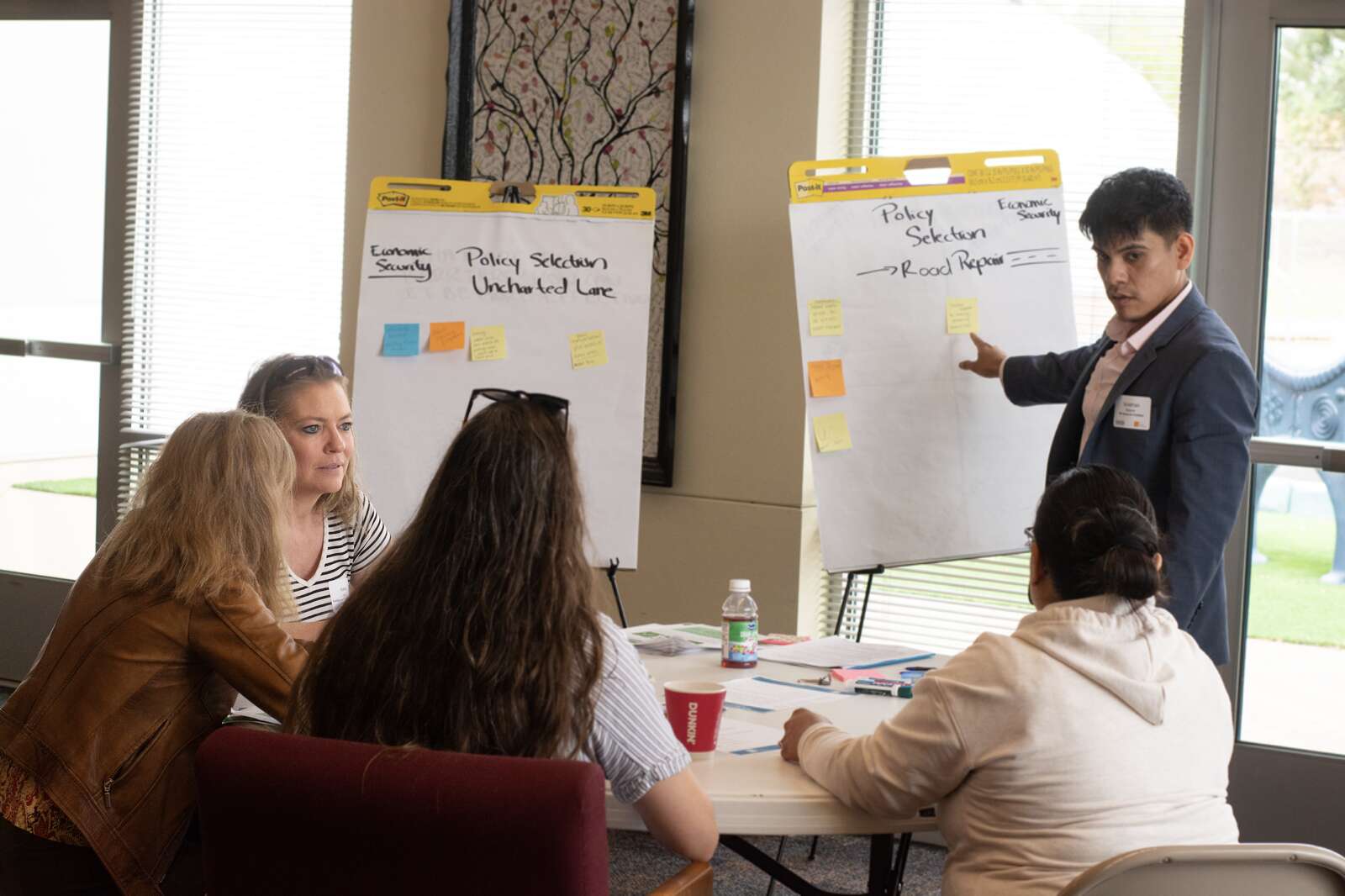 Attendees received takeaway information for utilization to support positive policy changes, growth, and community initiatives. (Courtesy of New Mexico Voices for Children)
In keeping with this goal, one of the biggest takeaways from the Farmington Children’s Roadshow meeting for the attendees is that there need to be more meetings. These continued conversations will assist with building relationships among local experts and lawmakers, sharing data and implementing policies, and teaching how to advocate for a brighter future for New Mexican children.
“My hope going forward is that we actually would keep a laser focus on children, because again, flourishing kids are going to yield a flourishing society, and those are generational shifts,” Cullip said. “And so if we’re helping our current generation flourish, then they’re going to have children that are flourishing. Then they’re going to have children that are flourishing.”
atriplett@tricityrecordnm.com
Dining and Cooking