

When a food recall is announced, the instructions for shoppers are generally straightforward: Do not eat the product.
But before an alert reaches consumers, food safety officials may rely on inspections, laboratory testing, food companies, retailers and coordination with federal agencies to identify and remove potentially unsafe products.
At the New York State Food Laboratory in Albany, experts test food collected by inspectors as well as samples from manufacturers, distributors, farms and dairy operations.
“We test for ready-to-eat food that inspectors collect. We also take products from the manufacturer,” said Dr. Maria Ishida, director of the New York State Food Laboratory. “We test milk from the farms and dairy products.”

Experts testing sulfates. (Spectrum News 1/Corey James)
The state’s food-safety system covers a broad range of products, including produce, dairy, ready-to-eat foods and processed products. State officials say inspectors look for sanitation concerns, labeling problems and other signs that may require additional testing.
“Our inspectors are at these establishments that are looking for sanitation, of course, but they’re taking the bags and looking at the labels and looking to see if there’s any reason to believe that there’s something going wrong with this product,” said Dan McCarthy, director of the Division of Food Safety and Inspection at the state Department of Agriculture and Markets.
If inspectors identify a potential concern, such as a labeling problem, chemical issue or possible contamination, they can submit samples to the Food Laboratory for testing.
The laboratory tests for potential pathogens, including Salmonella, E. coli, Listeria, and Campylobacter, as well as chemical concerns such as sulfites and dyes, officials said. Testing can also help determine whether colors used in food products are approved and properly identified on labels.
New York’s Department of Agriculture and Markets says it initiates approximately 300 recalls each year, most beginning with an observation by a food inspector or dairy-products specialist. The department posts alerts for Class I and Class II recalls and allows residents to sign up for notifications.
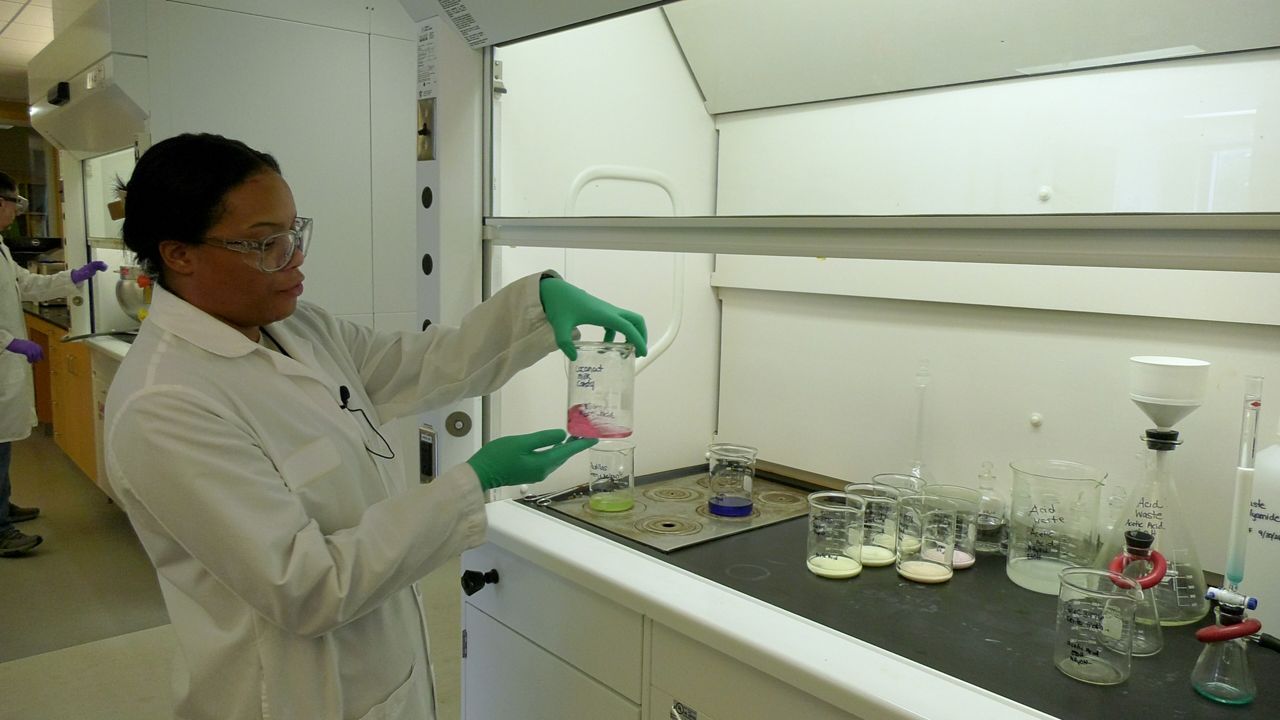
Experts test dyes in foods. (Spectrum News 1/Corey James)
Once a problem is confirmed, officials work with retailers, manufacturers and state and federal partners to trace the product and remove it from circulation.
Mike Durant, president and CEO of the Food Industry Alliance of New York State, said retailers move quickly after they are notified of a potential problem.
“There’s an immediate hold on that product,” Durant said. “Then there are notifications that need to go out to all the different stores that may have received that product.”
Recalls are classified according to health risk. A Class I recall involves a product that could cause serious health problems or death and requires immediate action. Ishida said many recalls involving pathogens fall into that category.
“Most of the pathogens is Class I, meaning that product needs to be taken from the shelf immediately,” Ishida said.
Recent federal food recall notices have included products recalled over potential Shiga toxin-producing E. coli contamination, Salmonella, elevated lead levels, undeclared allergens, foreign objects and elevated patulin levels. FDA’s recall list includes notices involving raw milk cheeses, peppers, cinnamon, pasta, alfalfa seeds, applesauce and potato chips.
Katie Howard, deputy commissioner of the state Department of Agriculture and Markets’ Laboratory and Food Safety Division, said increased attention to food recalls may reflect faster action when an issue is found.
“What you’re seeing is folks being more cognizant and taking quicker action when they find that there is a problem,” Howard said.
For shoppers, officials say the product name alone is not enough when checking a recall. Consumers should compare the brand, package size, UPC, lot code and date against an official recall notice.
If the product matches, consumers should not eat or serve it. They should follow the recall instructions to dispose of it or return it for a refund.
New Yorkers can find state food safety alerts and sign up for recall notifications through the Department of Agriculture and Markets. The Food and Drug Administration also posts recall notices for most FDA-regulated foods.
Dining and Cooking