
.jpg)
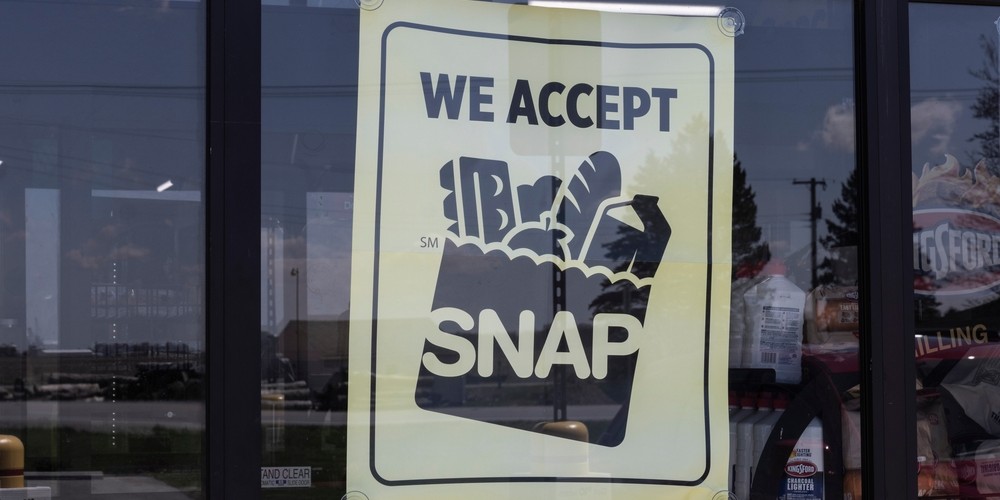
SNAP benefits may no longer extend to restaurants. | Photo: Shutterstock
While the current federal SNAP program is mostly confined to grocery store purchases, there is a voluntary provision that affects restaurants: the Restaurant Meals program.
Currently, the program is available in only nine states and allows certain eligible individuals (including the elderly, disabled, and homeless) to use their SNAP EBT cards in select restaurants.
However, a new bill introduced to the House could eliminate the program entirely.
In other government-related news, a California bill requiring chain restaurants to offer at least one kids meal meeting specific health standards heads to Gov. Gavin Newsom’s desk, and more.
Proposed bill would eliminate restaurant purchases under SNAP
While under current federal law, most SNAP (Supplemental Nutrition Assistance Program) purchases must be made at grocery stores, there are some exceptions.
Nine states (California, Illinois, Arizona, Maryland, Massachusetts, Michigan, New York, Rhode Island, and Virginia) participate in the Restaurant Meals Program to some degree, which allows eligible participants, including the elderly, disabled, and homeless, to purchase prepared meals at certain restaurants.
However, H.R. 10268, recently introduced to the U. S. House of Representatives by Rep. Brandon Gill (R-Texas), and cosponsored by seven Republican Congresspeople, would eliminate the Restaurant Meals Program from SNAP by amending the Food and Nutrition Act of 2008.
Why should foodservice care: Many popular quick-service chains participate in this program, including McDonald’s, Wendy’s, Taco Bell, and Burger King. The program has also been expanding in recent years and could be active next in multiple states, including Colorado.
California could soon require healthy kids meals
California Bill 977 was introduced to the state Senate earlier this year, and would require chain restaurants (those with 20 or more locations) to offer healthier children’s meal options that meet specific nutritional standards.
If passed, all chain restaurants would have to offer at least one children’s meal that’s a maximum of 550 calories, and meets specific lower sodium, added sugar, and saturated fat requirements. Additionally, the meal would have to include at least a half-cup of fruit, a half-cup of vegetables, a half-cup of dairy, a serving of meat, and of whole grains. Menus would also have to be clearly labeled to show the meals meeting these nutritional standards.
The bill was passed in the California state Assembly and Senate and now heads to Gov. Gavin Newsom’s desk for signing.
Why should foodservice care: If passed, fast-food chains will ostensibly need to research and develop new kids meal recipes for California stores specifically, or else roll out these nutritionally dense children’s meals to their entire portfolio. It requires investment in research and development, recipe testing, menu updates, and employee training.
The FDA is considering a new batch of natural food colors
In August 2026, the FDA announced it had filed three significant petitions to amend color additive regulations for natural food colors: Safflower Yellow, Gardenia Blue (expanded uses), and changes to carrot oil.
Last March, the FDA began approving natural food colorants that would replace petroleum-based synthetic dyes as they are being phased out over the next couple of years. Last year, U.S. Department of Health and Human Services Secretary Robert F. Kennedy Jr. banned all nine artificial food dyes that were previously approved by the FDA, citing their association “with a variety of a grim inventory of diseases.”
If approved the new natural color additives could be used for the following:
Safflower Yellow (tortilla wraps, breakfast cereals, pre-packaged broths/soups, dairy, salad dressings, and more).Gardenia Blue (expanded to carbonated drinks, alcoholic drinks, chewing gum, wasabi, yogurt, and more).Carrot oil (would add more regulations and industry approvals for this natural orange/yellow additive).
Why should foodservice care: While these FDA petitions primarily target food manufacturers, operators will be impacted as the supply chain changes. Common restaurant ingredients that previously used artificial dyes are being reformulated and could potentially impact the aesthetics and taste of certain restaurant menu items.
The federal ban on hemp products has been delayed by one month
President Trump just signed the stopgap government funding bill passed by Congress that delays the federal ban on most hemp-based products from Nov. 12 to Dec. 11.
With a one-month delay in place, advocates for hemp-based products are again pushing for industry regulation instead of restriction.
If nothing happens and the near-total THC product ban goes into effect in December, then it’s up to individual states to enforce the new federal law as a baseline or to impose other stricter regulations.
Why should foodservice care: The THC beverages industry represents a $1.6 billion opportunity for restaurant and bar operators, according to estimates from the National Restaurant Association. Right now, because of the murky legality of hemp-based beverages, most operators are leaving that potential profit on the table, and very few restaurants are serving these products. Logan’s Roadhouse is a notable exception.
Las Vegas becomes latest city to extend cocktails to-go
More municipalities are extending and codifying COVID-era rules that allowed for the sale of alcoholic drinks off-premises.
On Sept. 3, the Las Vegas City Council unanimously voted to adopt a new measure allowing restaurants to sell alcoholic beverages to-go. Foodservice businesses would have to apply for a special endorsement from the City Council, and other rules apply, like alcohol to-go cannot be sold alone and beverages must be sold in sealed containers.
Why should foodservice care: This is the third municipality to extend to-go alcohol laws over the past month, following New York and New Jersey’s version of this legislation. As more states and cities contemplate making this rule permanent, average ticket of takeout and delivery sales is likely to go up.
Contact Joanna at joanna.fantozzi@informa.com
Members help make our journalism possible. Become a Restaurant Business member today and unlock exclusive benefits, including unlimited access to all of our content. Sign up here.
Dining and Cooking