

An Albany senior who relies on SNAP benefits says he is seeking answers after his monthly food assistance was cut by more than half following recertification.
David Gerard, 65, said he enjoys cooking his own meals and buying fresh, organic produce when his budget allows. But after recertifying for the Supplemental Nutrition Assistance Program, he said his monthly benefit fell from $298 to $127.
Gerard said his disability payment rose only slightly and that he has not received an explanation he understands for the significant reduction.
“With that level that I previously had, it was sustainable for me,” Gerard said. “So I could go to those places and shop. Now my options are … trying to find organic produce at places like Market 32 or Walmart.”
Gerard said he is living alone and relies on disability income and SNAP benefits to make ends meet.
“I don’t have tremendous resources other than what I get from disability and what SNAP gives me,” he said.
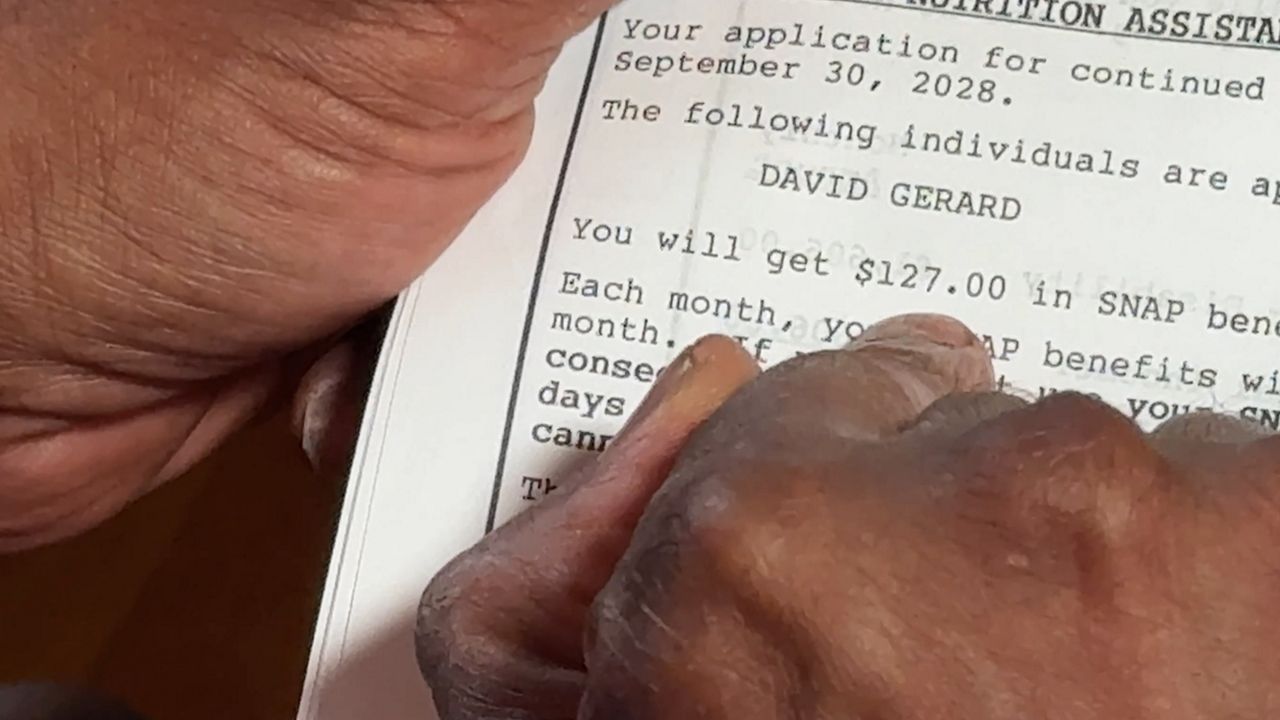
(Albany senior David Gerard shows his reduced SNAP benefit of $127.)
Gerard also said his notice indicated he was eligible for New York’s Restaurant Meals Program, which allows certain SNAP recipients, including qualifying older adults and people with disabilities, to use existing benefits to buy prepared meals at participating restaurants.
He said that when he searched for participating restaurants in Albany, he found two McDonald’s locations, a KFC and a Caribbean restaurant. Gerard, who said he is health-conscious and has diabetes, questioned whether those choices offer meaningful healthy-food options for seniors and people with disabilities.
“It almost seems like having McDonald’s and Kentucky Fried Chicken being viable, legitimate participating restaurants is sending the message that it’s OK if you have your meals at McDonald’s,” Gerard said.
Albany County Department of Social Services Commissioner Erin M. Stachewicz said SNAP benefits can decrease for several reasons, including changes in income, household size or deductions for medical costs, housing and utilities.
SNAP participants must complete a recertification packet, provide requested documentation and take part in an interview to determine continued eligibility, according to the county.
Stachewicz said recipients who do not understand a reduction should contact the SNAP worker identified on their notice to ask how the benefit was calculated and whether a correction is needed.
Diane DeGroat, managing attorney for the Legal Aid Society of Northeastern New York, said income is only one factor used to calculate SNAP benefits.
“Other things that come into play include their household size, who is included in the household, and whether there have been any changes there,” DeGroat said. “Also, any relevant expenses.”
Those expenses can include rent or mortgage payments, utility costs and, for seniors or people with disabilities, qualifying medical expenses.
Krista Hesdorfer, director of public affairs for Hunger Solutions New York, said SNAP navigators can help recipients review their income and expenses and estimate what their benefit amount should be.
“A SNAP navigator can take a look at somebody’s income and expenses and provide them with an estimate of the benefit amount that they should likely be receiving,” Hesdorfer said.
The questions come as new federal SNAP changes take effect Oct. 1. Under the One Big Beautiful Bill Act, the federal share of SNAP administrative costs falls from 50% to 25%, shifting an estimated $170 million in annual costs to New York counties and New York City, according to the New York State Association of Counties.
The federal law also expanded work requirements for some SNAP recipients classified as able-bodied adults without dependents. Those requirements do not apply to every recipient, and Gerard’s individual benefit reduction remains under review.
Albany County officials said people who disagree with a SNAP decision have 90 days from the date on their notice to request a fair hearing. New York’s Office of Temporary and Disability Assistance says recipients may request a fair hearing within 90 days if SNAP benefits are denied, reduced or stopped.
Recipients also may ask their local social services district for a conference and seek help from a SNAP navigator or legal-services provider.
Dining and Cooking