
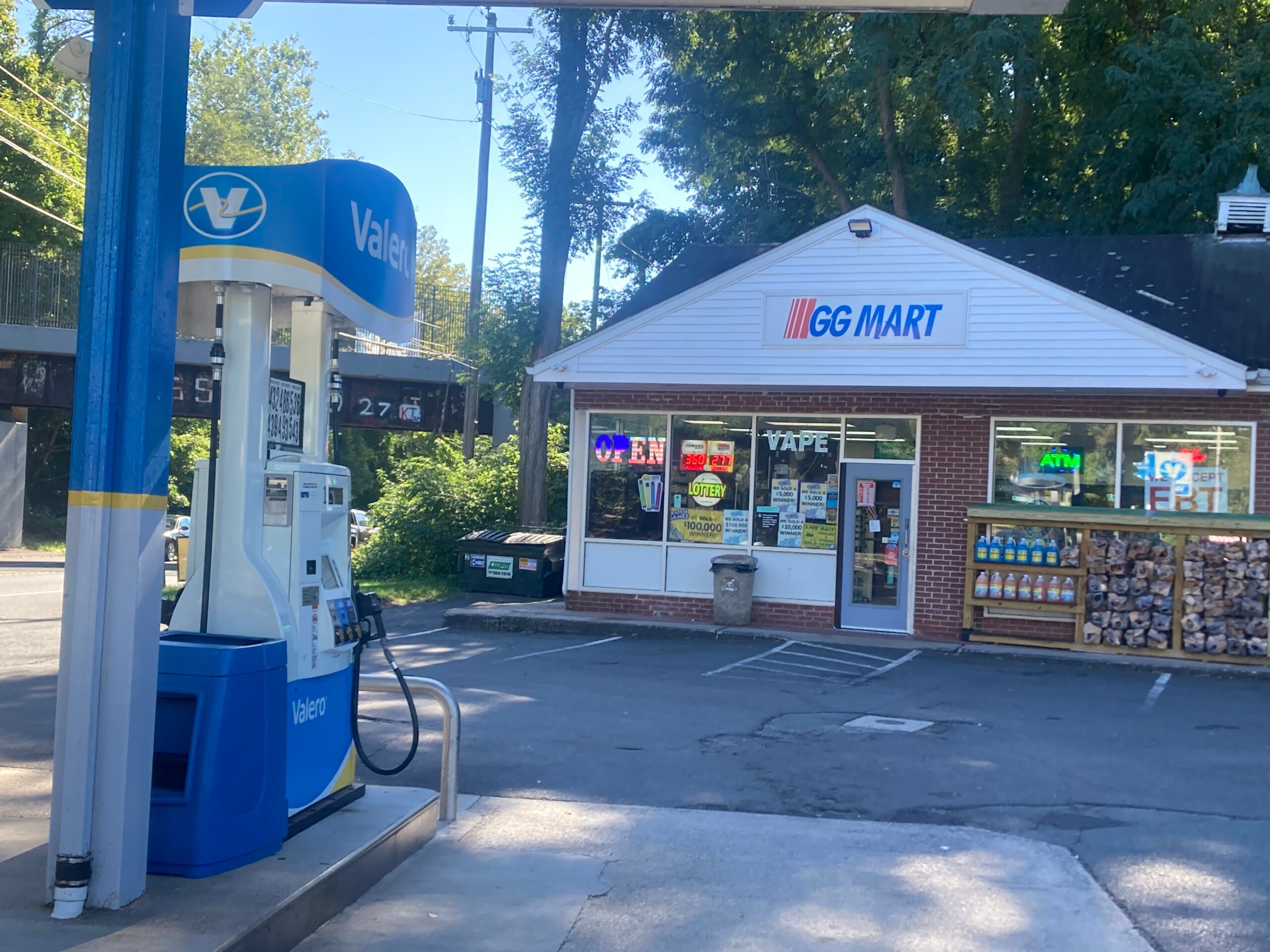
Citing concerns about allowing too many alcohol retailers near a playground and a heavily used rail trail, Farmington this week rejected a Valero gas station’s request for permission to sell beer under a “grocery store” designation.
Savan Pourharton wants to sell beer from the GG Mart on Farmington Avenue at Wannowmassa Lane, arguing that the convenience store part of his business could qualify as a grocery store.
He planned to apply to the state liquor board for a permit, but first required a town certificate of zoning compliance because the business is less than 1,500 feet from another alcohol retailer — Highlands Package Store.
In a split decision, the town’s zoning board voted “no” citing a series of reasons, with one commissioner questioning whether a convenience mart could even quality as a grocery store under Connecticut law.
A retailer that has groceries make up at least 51% of its sales is eligible for a beer permit. Pourharton presented a breakdown of sales at GG Mart showing groceries accounted for about $203,000 in business over the past nine months, well more than half of the roughly $384,000 in overall sales that include tobacco and vaping products.
Commissioner Josh Davidson countered that Pourharton’s figures apparently didn’t include income from his commission on Valero gas sales or on lottery tickets. When those numbers are factored in, GG Mart appeared to fall short of the state threshold for a beer permit, he said.
“On the application you listed this request as ‘grocery store beer permit for a gas station.’ I don’t think I have to point out the irony there,” Davidson said. “And your attorney referred to you as a convenience store with a gas station. I don’t see this as a grocery store.
“My understanding is the state has rejected gas stations (for beer permits) for just that thing. If you add gas or lottery commissions (to non-grocery sales), he’s under 47% or less.”
Pourharton acknowledged that most items he sells beyond gas, lottery tickets and tobacco products are candies, snacks, sodas, coffee, tea and energy drinks, all of which are considered groceries.
The state liquor board would have had to address that question, but the application won’t get that far without the local zoning certificate.
 GG Mart in Farmington. (Don Stacom/The Hartford Courant)
David Peck, Pourharton’s attorney, told the Town Plan and Zoning Commission that his client’s business has created no reason for rejecting the request, noting that GG hasn’t been the scene of arrests or police activity.
“There have been no instances to cause any heightened concerns about his proposed use,” Peck said. “There have been no compliance issues with his sale of tobacco. He’s very familiar with all of the requirements expected of him if he were to move forward.”
Pourharton said he already has numerous security cameras in place, and would add more if he were allowed to sell beer.
“My business will comply with all state and local laws governing alcohol sales. Employees will be properly trained to check identification carefully and to refuse sales to minors or intoxicated individuals,” he said. “This store is well monitored and professionally operated.”
Peck acknowledged the GG Mart is within 1,500 feet of Highlands Package Store, but said that doesn’t establish an unwanted concentration of alcohol retailers.
But other commissioners said they object to the location because it’s near the Farmington Canal Heritage Trail and a local ballfield. They said high school students frequent the store, and Davidson said the town already has trouble with people dumping beer cans and bottles at the riverfront access just a few hundred feet from GG Mart.
Dining and Cooking