

When it comes to Georgian literature, there is The Knight in the Panther’s Skin — and then there is everything else.
This 12th-century masterpiece by Shota Rustaveli is far more than a great work of literature. For Georgians, it is a cultural monument, deeply embedded in our national identity. The poem brings together love, friendship, heroism, dignity and loyalty. For centuries, Georgians copied and illustrated it by hand; even today, it is customary to give the book to children and to present it as a wedding gift.
And the connection with India is fascinating. Rustaveli, writing at the height of Georgia’s Golden Age, chose India as the setting for one of the great imaginary worlds of his masterpiece. Tariel, the central character, is an Indian prince and military commander, while Nestan-Darejan is the daughter of the King of India. Much of the story unfolds in this fictionalized India. In this sense, The Knight in the Panther’s Skin represents a remarkable literary bridge between Georgia and India — one built more than eight centuries ago.
Show Full Article
Choosing among contemporary Georgian writers is considerably more difficult. Fortunately, there are so many to choose from that every reader will have a favourite. I would probably choose Aka Morchiladze, who, in my view, captures particularly well the spirit of Georgia from the late 20th century to the present day. He has also written excellent works on Georgian writers, historical cities and Georgian traditions.
 Jvari Monastery, a sixth-century Georgian Orthodox monastery overlooking Mtskheta and the confluence of the Aragvi and Mtkvari rivers | Photo by special arrangement
Also read: I recited Devdas by heart. My reward was a visit to SRK’s dressing room: Georgian Ambassador
From literature to khinkali and khachapuri
Georgian cuisine is as diverse as the country’s landscapes and history. We use an abundance of herbs, spices, walnuts and other local ingredients. But according to most Georgians — and not only Georgians — two dishes stand out above all: khinkali and khachapuri.
Khinkali can be described as a large dumpling filled with seasoned minced meat, with a delicious broth forming inside as it cooks. There are also mushrooms, potatoes and other varieties. Khachapuri is bread dough filled with cheese and is probably the most recognizable Georgian dish. Both have numerous regional varieties, reflecting the differences between eastern and western Georgia, and between the mountains and the valleys.
Georgian cuisine is also rich in vegetarian dishes, in which walnuts are often combined with aromatic herbs and spices. Connoisseurs of Indian cuisine may notice interesting similarities between some Georgian and Indian flavours. This is particularly evident in dishes such as satsivi, chicken served with a rich walnut sauce and aromatic spices.
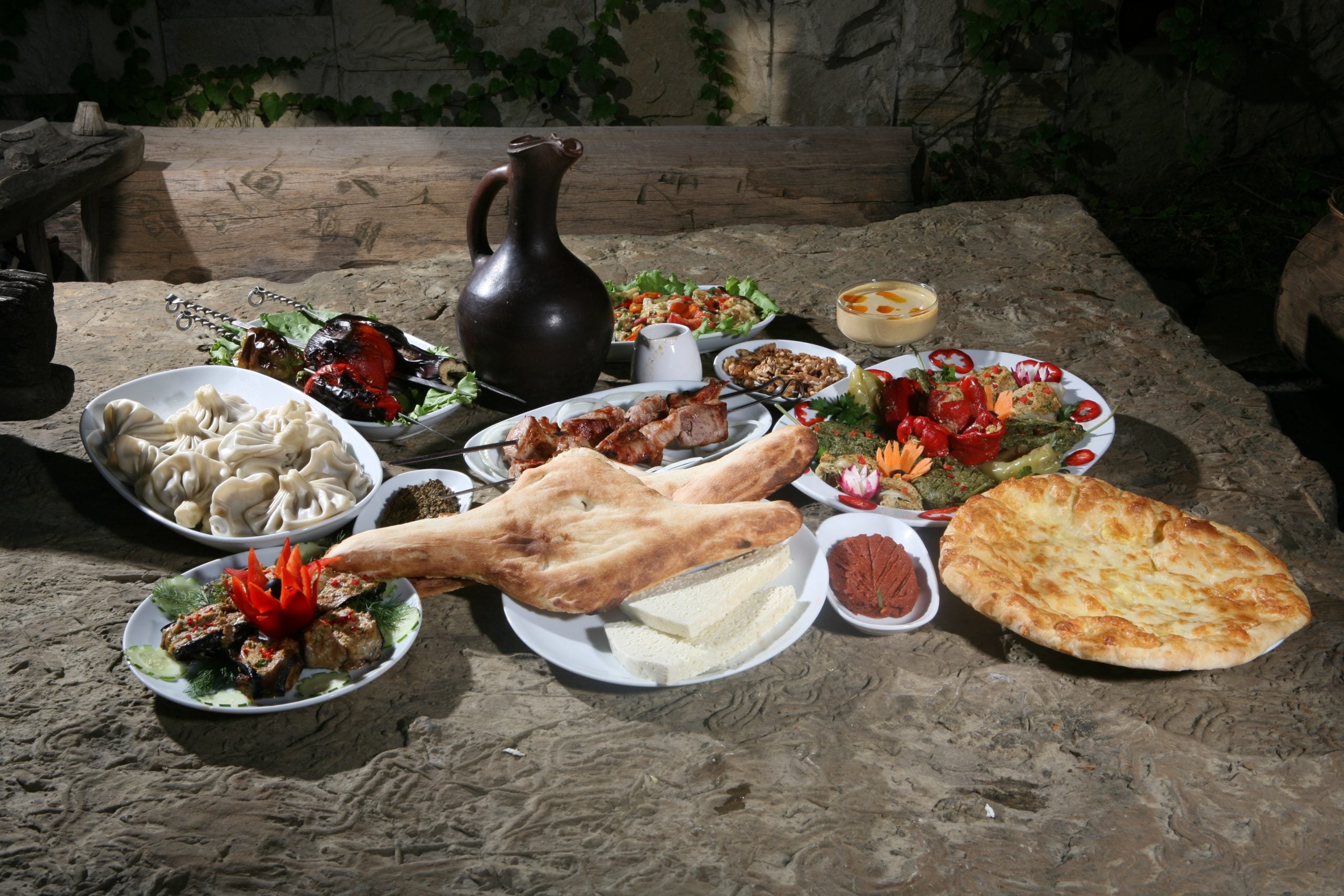 A traditional Georgian supra, featuring khinkali, khachapuri, grilled meats and other dishes | Photo by special arrangement
And no discussion of the Georgian table would be complete without wine. Many people may not know that Georgia is widely regarded as the world’s oldest wine-producing region, with a continuous winemaking tradition stretching back more than 8,000 years.
Where there is Georgian food and wine, there is, of course, Georgian music. No festive Georgian dinner — the supra — can truly be imagined without singing. Georgian polyphonic singing has evolved over centuries across different regions, each with its own traditions and styles. It is now recognized by UNESCO as part of the world’s intangible cultural heritage.
As for contemporary music, I will be both objective and subjective. Objective, because Irakli Charkviani, whom I would single out, remains one of the most beloved figures in contemporary Georgian music, even two decades after his death. Subjective, because I had the good fortune to be his cousin.
Georgia, and particularly Tbilisi, is also known for its vibrant nightlife. The city’s clubs, many of which feature internationally renowned electronic music DJs, attract young people from Europe and around the world.
And then there is the country itself. Those who travel to Georgia can choose between mountains and the sea, explore historical monuments and nature reserves, enjoy the colours of spring, hike in summer, take part in the harvest in autumn, and ski in winter. Georgia truly is a four-season destination.
Last year, we had the privilege of welcoming nearly 150,000 visitors from India, and I am confident that this number will continue to grow in the years ahead. Moreover, some 30,000 Indian students have chosen Georgia as a destination for higher education. We are proud that Georgia has become a second home for so many young Indians who, after completing their studies, will contribute to the future of their own country while carrying with them warm memories — and, I hope, lasting affection — for Georgia.
I warmly invite you to discover Georgia: its breathtaking mountains, rich cultural heritage, vibrant cities, extraordinary cuisine, ancient wine tradition and warm hospitality.
Georgia and India have never been so close.
Vakhtang Jaoshvili is the Ambassador of Georgia to India. Views are personal.
This article is part of Diplomatic Cable, a special series in which ambassadors and high commissioners in New Delhi share their experiences of India and introduce readers to the people, culture and traditions of their home countries. Read all the articles here.
(Edited by Prashant Dixit)
Dining and Cooking