

A plan to bring massive shipments of imported meat into the U.S. is raising questions about food safety and whether the additional supply could help lower prices for North Carolina shoppers.
In August, President Donald Trump announced that the U.S. would allow up to 300,000 metric tons of foreign beef to be imported over three months without extra tariffs, starting Sept. 1, CNBC reported. The goal is to increase the supply of beef and lower high prices, with the imported beef expected to be sold at 25% below current market prices.
The move comes as U.S. beef prices spike. According to the U.S. Bureau of Labor Statistics (BLS), the average price of ground beef in August was $6.92 per pound, up nearly 10% from the same time last year.
The high prices are closely tied to a shrinking U.S. cattle supply. The U.S. Department of Agriculture reported in January that the U.S. had 86.2 million cattle and calves, down 1% from the previous year. That USDA figure is the lowest overall cattle inventory in roughly 75 years.
 Meat section at Walmart Supercenter #1452 in Charlotte, N.C., on Wednesday, March 27, 2024. Khadejeh Nikouyeh Knikouyeh@charlotteobserver.com
With the dwindling cattle supply, some American ranchers and lawmakers are concerned that bringing in more foreign beef could hurt U.S. cattle producers, according to CNBC. They argue that the U.S. should focus on rebuilding its cattle herd, rather than relying on more imports.
In early September, the Trump administration said the meat is being imported from Brazil, Argentina and “a couple other places,” Forbes reported.
With the new shipment, some ranchers have raised concerns that the imported beef could contain banned antibiotics or other substances that would not be permitted in U.S. beef, The Washington Post reported.
The European Union recently banned Brazilian beef imports over concerns about antibiotic use and food-safety standards, Forbes reported. Argentina has also faced scrutiny: China rejected a 22-ton shipment of Argentine beef after finding traces of chloramphenicol, an antibiotic banned in food-producing animals in the U.S.
Is the imported meat safe to eat?
Despite the uncertainty surrounding the new beef imports, consumers should not assume the meat is unsafe, Dana Hanson, an associate professor and meat science specialist at N.C. State University, told CharlotteFive.
Hanson said countries that export beef to the United States must go through a rigorous food-safety approval process before their products can enter the U.S. market.
The system is based on what the USDA calls equivalence, meaning foreign countries must demonstrate that their food safety inspection standards provide protections comparable to those required in the U.S. The systems do not have to be identical, Hanson said.
“They have to show in their import documents that they followed X, Y and Z guidelines to get the product imported,” Hanson said.
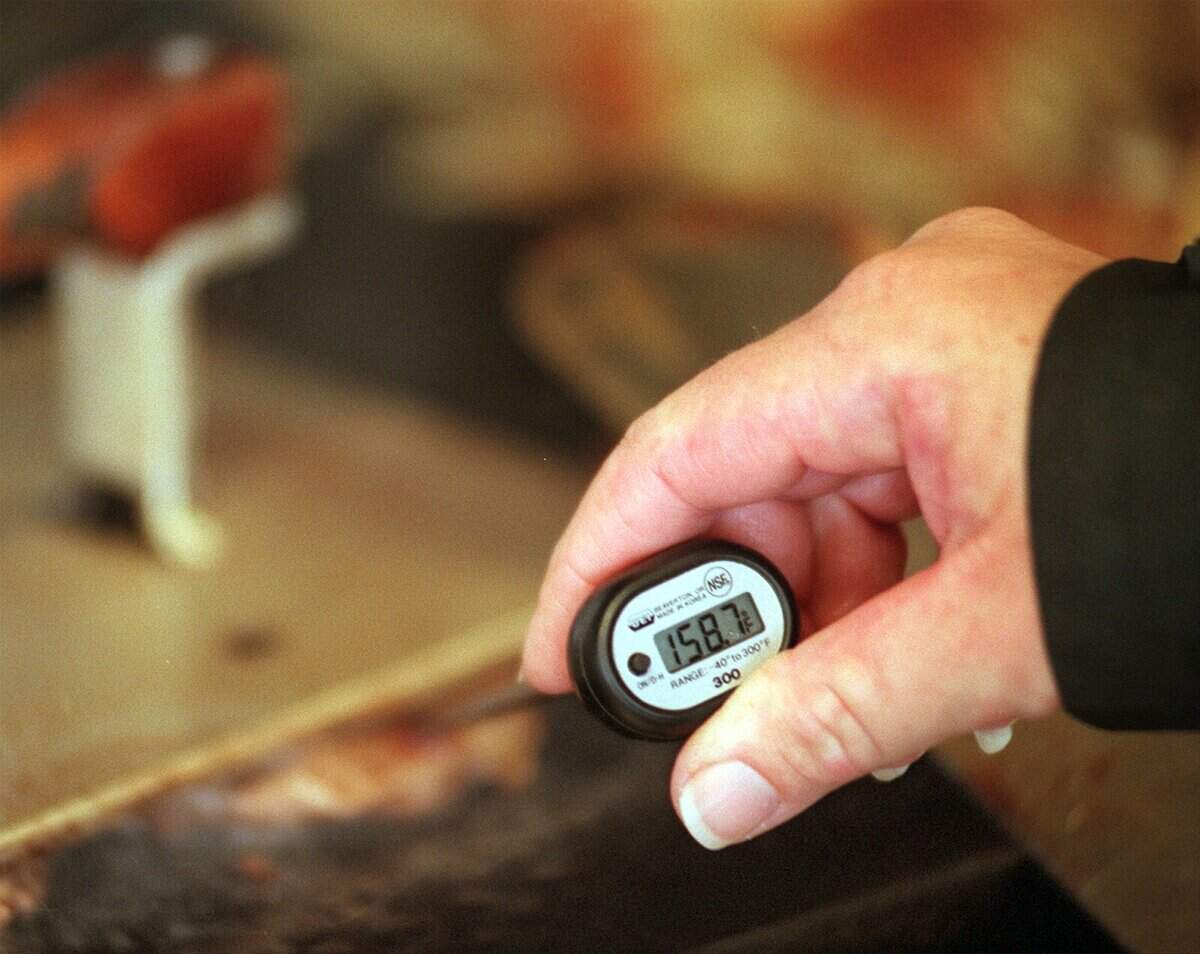 According to North Carolina state law, permits are immediately revoked if a restaurant receives a score of less than 70 percent. Layne Bailey The Charlotte Observer
Once imported beef enters the United States and is taken into possession by a U.S. company, Hanson said, domestic food safety requirements apply to how the product is handled and processed. Those requirements include controls for sanitation, time and temperature, along with other rules governing meat production.
Hanson also said consumers should not expect a meaningful nutritional difference between the imported lean beef trimmings and domestically produced beef.
“Nutrition is not something that I would be fearful of or have concern over,” he said.
Beef prices in NC
According to data from the BLS, the average price of ground beef in the South region (which includes North Carolina) was about $6.41 per pound in August, up 7.6% from the year prior.
The high price of beef in North Carolina is part of a larger national problem that begins with the shrinking supply of cattle, but that’s not the only factor driving prices.
Hanson said the cost of raising cattle has increased dramatically over the past two decades.
Farmers face higher costs for feed, fuel and other inputs, while drought across the Great Plains has reduced pasture and feed supplies. The region stretching from North Dakota to Texas contains a large share of the country’s beef production, Hanson said, making prolonged drought there particularly damaging.
 Cattle graze at Rare Earth Farms, known for its grass-fed beef, near Bunn, N.C. Courtesy of Clairmont Communications
Feed is another major expense. Corn and other crops used to feed cattle have become more expensive to produce, while higher petroleum prices increase the cost of planting, harvesting and transporting those crops. Hanson said those costs eventually work their way through the supply chain and contribute to the prices consumers see at the grocery store.
The result, Hanson said, is a complicated “farm-to-fork continuum” where there is no single explanation for today’s high beef prices.
“It’s literally a perfect storm,” he said, noting that costs have increased across the broader food system, including transportation and packaging.
More imports could help lower prices, Hanson said, but with beef prices still high a month after the imports began, shoppers have yet to see a significant drop.
Related Stories from Charlotte Observer

Evan Moore
The Charlotte Observer
Evan Moore is the food insider for CharlotteFive. He grew up in Denver, North Carolina, where he previously worked as a reporter for the Denver Citizen, and is a UNC Charlotte graduate.
Dining and Cooking