

After President Donald Trump signed the One Big Beautiful Bill Act more than a year ago, enrollment in the federal food assistance program dropped rapidly across the nation as states enforced new restrictions and prepared to take on more of the costs.
Nationally, an estimated 5 million, or 13%, fewer people were enrolled in the Supplemental Nutrition Assistance Program, also known as SNAP or food stamps, this June than in July 2025, when the law was enacted. Louisiana saw one of the most precipitous declines, dropping about 170,000 people, or 21% of state enrollees, according to federal data.
“We haven’t seen a decline of this magnitude in about three decades,” said Joseph Llobrera, senior director of research on food assistance at the left-leaning Center on Budget and Policy Priorities, which did the analysis.
Meanwhile, food prices rose nearly 3% from August 2025 to this August, according to the U.S. Department of Agriculture.
Elected officials, policy analysts, and anti-hunger advocates are pressing Congress to delay provisions in the law that will cut federal funding for food benefits and steeply increase the cost for states. They want to insert the delay in the Farm Bill, which is pending in the Senate.
The provisions required states to start paying for 75% of the cost to operate SNAP on Oct. 1. Previously, the USDA and states split SNAP’s administration cost 50-50.
Beginning in October 2027, some states may also have to cover part of the cost of SNAP benefits that had been paid fully by the federal government. The amount that a state pays toward benefits will depend on its payment error rate, or how often it underpays or overpays enrollees. The higher the error rate, the higher the state’s share of SNAP benefit costs.

Email Sign-Up
In Louisiana, the state may have to cover up to $199 million of the cost for benefits, according to an analysis by the Food Research & Action Center. Its error rate increased from 6.62% in fiscal year 2024 to 8.14% in FY 2025, the most recent data available.
Many states, including Louisiana, have placed pressure on applicants to submit more information more often to verify their eligibility to reduce the state’s payment error rate and limit how much the cost of benefits shifts to the state.
“It’s been a race to drive down those error rates,” Llobrera said.
He said the challenge of implementing new program restrictions and requiring more documentation has increased the burden on applicants and state agencies. The agencies have to process more paperwork on a tight timeline without enough staff. This can increase the likelihood of errors when processing applications, potentially leading to rejection of benefits for more people. It’s also harder for applicants to meet additional verification requirements.
The One Big Beautiful Bill Act expanded work requirements for SNAP, made it harder for states to waive the work requirements, and revoked access for many noncitizens with legal status.
The Louisiana Department of Health did not respond to requests for comment.
Tia Fields, the safety net policy analyst for the nonpartisan Invest in Louisiana think tank, said the cost increase to the state has contributed to two crises: a projected shortfall in the state budget and eligible families’ losing access to help.
In Louisiana, state data shows that 75% of people who lost SNAP from July 2025 to June 2026 did so for procedural reasons. When the program’s strict deadlines for documentation and verification aren’t met, applications and renewals are closed.
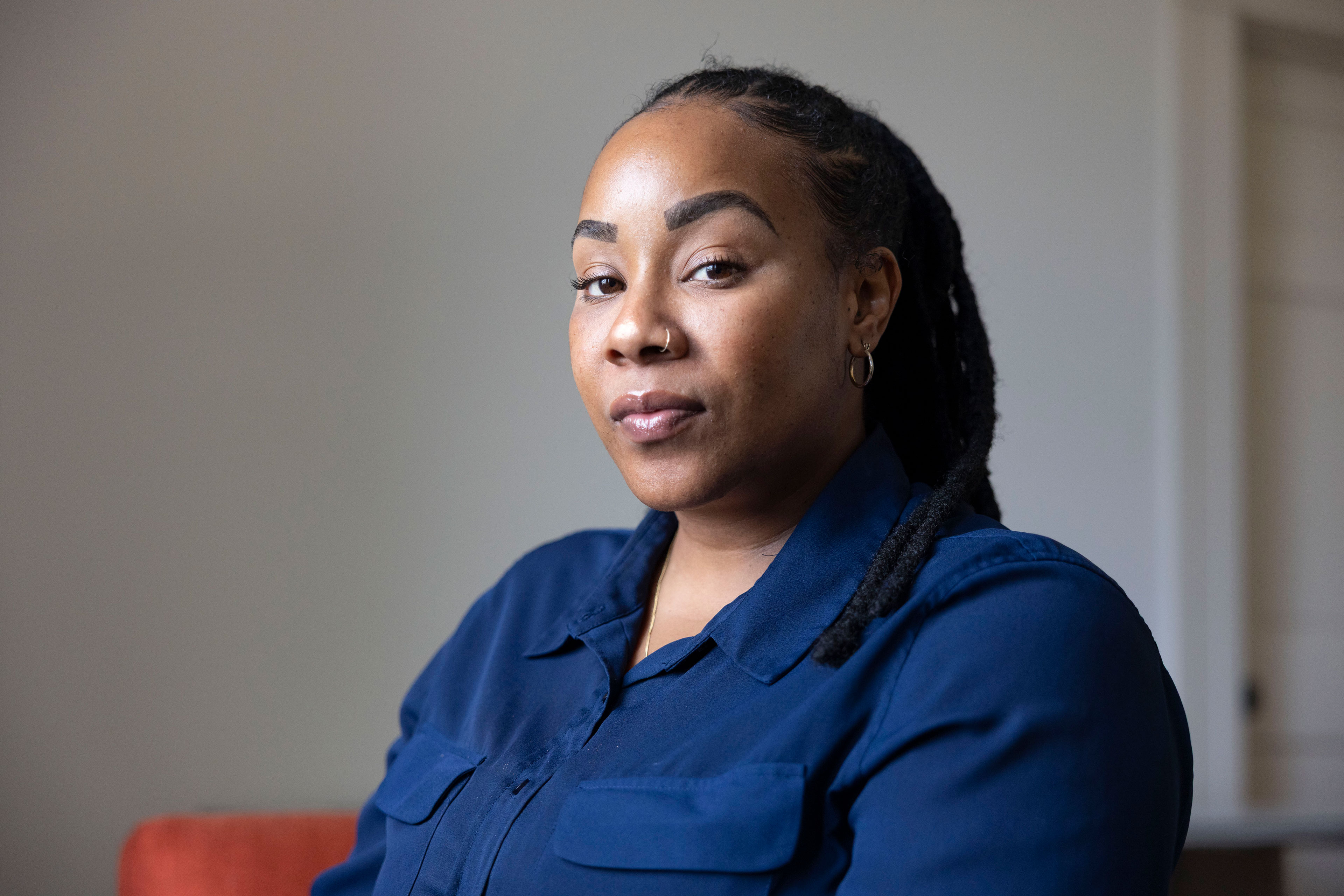 Tia Fields, a policy analyst for the nonpartisan Invest in Louisiana think tank, says covering federal cuts to the Supplemental Nutrition Assistance Program will contribute to a shortfall in Louisiana’s state budget. One Big Beautiful Bill Act restrictions on the program could also lead eligible families to lose access to food aid. (Christiana Botic/Verite News and CatchLight Local/Report for America)
Fields said applicants may miss forms and interviews or fail to recertify or report changes in their status. Other times, the problem is on the state’s side. Agency notices may reach applicants past the deadline due to mail delays, they may be sent to the wrong address, or caseworkers may have backlogs in processing paperwork.
“Families are still hungry, and they’re actually eligible for the program,” Fields said. “This is a tax bill that we really cannot afford.”
The additional administrative burden and the financial penalties tied to having a high payment error rate give states an incentive to deny more applications, Llobrera said.
“The pressure that states feel now to really get their error rates down is pushing states to just ask for a lot more verification and more frequently,” Llobrera said.
Anti-hunger advocates say the need for food assistance has increased as barriers to SNAP have grown.
A Steadily Increasing Need
Aaranika Macon and her son received SNAP benefits for more than three years, continuing when she began nursing school last year. But she no longer qualified when she took a job in healthcare. After three months of trying to juggle work and school, her grades started to slip and she quit the job to focus on school.
So she reapplied to SNAP in February but did not receive benefits until April.
“I’m waiting, like, two months with nothing, because I stopped working,” Macon said. “Usually when you fill out, they’ll get back with you in, like, two weeks.”
According to the Food and Nutrition Act of 2008, SNAP-eligible households are required to receive benefits within 30 days of application.
 Macon at her home in LaPlace, Louisiana. (Halle Parker/Verite News)
When Macon’s SNAP application was finally processed, she received less assistance than she previously did. She was deemed ineligible as a student, though she’s taking the same number of classes as she did last year when she was considered eligible. In Louisiana, higher education students are eligible for SNAP if they attend school at least half-time and meet other requirements.
Only her 11-year-old son was approved for benefits. Instead of the roughly $500 a month for two people that she received previously, she said, the $298 for her son feeds them both.
She said she had to stretch a $5 balance in her SNAP account over six days at one point this summer.
“I’m in the same position as before the job. So, why is it cut?” Macon said. “You’ve got to fight to communicate with them.”
Lindsay Hendrix, chief impact officer for Second Harvest Food Bank in southern Louisiana, said the organization has seen the need for food increase steadily for several years. Even before the passage of the SNAP changes last year, anti-hunger advocacy group Feeding America documented a 14% increase in food insecurity in Louisiana from 2022 to 2024.
“What we’re seeing is actually that more of our neighbors are coming to the food pantries longer than they used to before,” Hendrix said, and “the frequency of their visits have increased.”
Hendrix said last year’s government shutdown — which halted federal SNAP distributions and left states scrambling to fill the gap — illustrated the necessity of the food assistance program.
“Every politician was like, ‘Oh, just go to your food bank,’” Hendrix said. “And all of us working in food banks just around the country were like, ‘We will run out of food.’”
Instead, some states, including Louisiana, ensured SNAP benefits weren’t disrupted by distributing the benefits themselves until the federal government reopened and the agencies could be reimbursed. Hendrix said food banks complement SNAP and can’t compare with the scale of the program.
“We could not absorb that level of need without that program operating at its best, most effective level,” Hendrix said.
 Lindsay Hendrix, chief impact officer for Second Harvest Food Bank in southern Louisiana, says food insecurity in the area has increased and that the organization has seen people visit more frequently than in past years. (Halle Parker/Verite News)
Cushion Against Higher Costs for States
Policy advocates and anti-hunger groups have been pressuring legislators in Congress to amend the latest Farm Bill or appropriations bill to delay any new costs to the states for SNAP by two years.
“We’re asking for every state to be able to have that cushion to try to get their systems in order, lower their error rate, and then give us time to reset, so that we’re not penalized for not yet having a strong enough system in place,” Fields said.
In September, the Senate Committee on Agriculture, Nutrition, and Forestry sent a new Farm Bill to the full Senate that would give states another year before they may have to help pay for SNAP benefits. The cost would shift to — and penalties would be set in — 2028 instead of 2027. The legislation would still require states to start paying more for the cost of administering the program this year starting in October.
Sen. Amy Klobuchar (D-Minn.) and other Democrats on the committee have pushed for a two-year delay.
The committee chair, Republican Sen. John Boozman of Arkansas, told an Arkansas Farm Bureau podcast in September that he expects negotiations on the bill to continue in October, with the goal of having legislation that can pass the House and Senate by the end of the year.
Anti-hunger advocates say a one-year delay isn’t enough. Jordan Baker, a spokesperson for the Food Research & Action Center, said the financial strain of the impending administrative costs could eventually cause some states to opt out of SNAP altogether. Four states said they might withdraw from or pause the program if they have to start paying for benefits, according to a spring survey by the American Public Human Services Association.
Fields and Hendrix said it’s unlikely that Louisiana would completely drop SNAP. Hendrix said Louisiana’s SNAP program has been understaffed for a long time, straining the state’s ability to administer the program and do community outreach. That’s why Second Harvest’s food banks also help people with their SNAP applications. Fields said she also believes the state Department of Health is doing the best it can under a tight deadline.
“We just have to work out the kinks again,” Fields said. “That’s why we’re asking for that cost shift delay, so that the agency can have the opportunity to get it right and to keep the families fed here in Louisiana.”
Dining and Cooking