
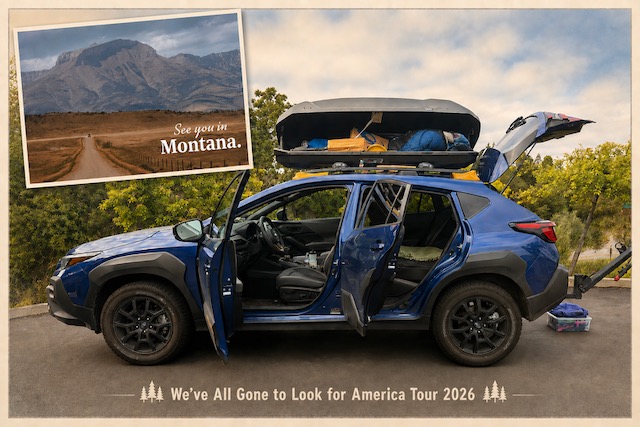
I’ve just returned from a grand road trip—a tent-camping odyssey, 30 days across the West.
We’ve all gone to look for America.

These month-long explorations started the summer of COVID, after the world shut down and the best place to be was outside. Why not go on a long road trip—farther than usual? Having never spent 30 days alone, I wondered: Could I entertain myself that long? Would I get lonely? And, perhaps most importantly, would I still like myself at the end of it?
That first trip around Northern California took me places I’d never been—on the map and in my head. I discovered the pleasure of waking up with no real agenda and pointing the car toward somewhere completely new.
This year I loved seeing California turn into Nevada, turn into Idaho and then Montana. How the forest turns into desert, into high desert and then mountain peaks. There’s so much romance and poetry around an open road and a driver with a curious spirit.
The Road is in my Blood
My parents planted the road-trip bug early.
Every summer, Mom would pack four kids, pillows and blankets into the Cadillac, and Dad drove off into wonder. I still remember looking out the window into the morning darkness. What memories I keep of those trips. They added wild to an otherwise mild Midwestern upbringing. Apparently, I never quite got over it.
We’ve Food Partied! these solo expeditions before:
2022: Traveling Solo: Idaho Hot Springs and Yellowstone
2024: Travelin’ Solo – Southwest and Colorado
2025: Travelin’ Solo 2025 – Utah or Bust
2026: Montana
This year, it was Montana. The itinerary was ambitious but simple. A week getting there, a week exploring Glacier National Park, a week winding through the middle of Montana and into Yellowstone, and a final week driving home to the Bay Area with a few days around Mammoth Lakes, CA.

Part part road-trip fantasy, part exercise adventure, part spiritual tune-up—living outside that long resets the spirit. People ask, “What do you do all day?” Explore my surroundings, mostly. Hike until my legs are tired. Swim when I find a beautiful lake. Paddleboard if the wind cooperates. Write. Relax around the fire. Talk to strangers. Talk to myself.
And, of course, explore the country through food.
Camping Doesn’t Mean Bad Food
After decades of car/bike/tent camping, I’ve learned a few things about eating on long road trips.
1) Less is More—keep the kitchen small.
My camp kitchen is surprisingly efficient. A two-burner propane stove handles dinner, while a backpacking stove takes care of morning coffee. Then, if something goes wrong with the main stove—and oh, did it ever this year—you have a backup. More on that drama next week.
A cast-iron skillet, flat wooden spoon, flake salt and a bottle of olive oil can take you surprisingly far. I like a French press for coffee. Keep items used daily in a shoebox for easy transport. Seal oils in a plastic bag.

Here’s some favorite road eats: Camp Recipes from the Road.
A Little Civilization, Please
I cook more in camp than I eat out because too much eating out is exhausting. So when you go out—make it special.
We give a Food Party! shout-out to both Glacier and Waterton Lakes National Parks (Alberta, Canada) and their classic restaurants in grand old hotels. If you travel to this area—and I certainly encourage you to do so—at least enjoy a cup of tea in the Royal Stewart Dining Room at the historic Prince of Wales Hotel. Sitting high above Waterton Lake, what a view, with those enormous windows framing mountains and water.
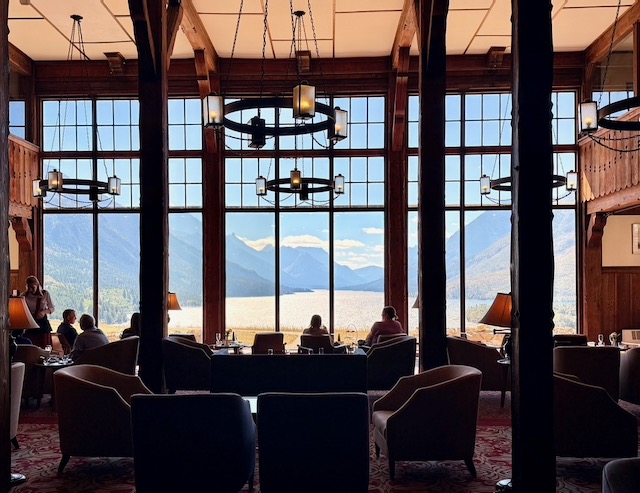
Also of note: the Ptarmigan Dining Room at the Many Glacier Hotel. Or, best of all, grab a to-go drink from the Swiss Lounge Bar in the hotel, and enjoy it on the amazing balcony in a wooden rocking chair, with a sweeping view of Swiftcurrent Lake.

And Then There Were the Huckleberries
Now, if Montana has one culinary standout, I’d say it is this:
Huckleberries.


Everywhere I went, there they were.
Huckleberry ice cream.
Huckleberry jam.
Huckleberry syrup.
Huckleberry scones.
Huckleberry candy.
Huckleberry liquor.
Huckleberry everything.
I became a willing participant in the research. These little wild berries have a distinctive, intensely tart flavor—much more than supermarket blueberries. There’s the first berry hit, and then the flavor deepens into a tone that lingers. Maybe because they grow wild at high elevations and survive long winters under snow? Hand-picked by people who hike deep into the wilderness—these berries have staying power. They make ordinary blueberries seem shy.
My favorite? The huckleberry ice cream with that gorgeous pale purple hue; studded with deep purple whole berries.

And Then There Were the Bears
Now there is one small complication to all this food enthusiasm in Montana…
Bears.
At Sprague Campground in Glacier, the welcome sign offered a little local perspective:

GOT BEARS? YES — 61 IN CAMP THIS SEASON.
And here’s what surprised me: Unlike California campgrounds, where bear boxes are commonplace, people in Montana don’t use them—they leave their food inside their vehicles.
Huh? This is grizzly country, after all.
I’ve had enough experience with California black bears to know what they can do. The picture below shows the aftermath of a bear trying to get at cookies by clawing into a Tahoe trunk. In Yosemite, my friend watched a bear rip out his car window for a PowerBar on the front seat.

So yes, I kept bear spray nearby on this trip and carried it on hikes and bike rides. FYI: Bear spray is expected in Montana national parks; in California national parks, it’s illegal.
 A canister of bear spray travels well in the bike water bottle holder
I actually saw my first grizzly bear on this trip in Glacier. How do you know it’s a grizzly? Look for the hump on the back.

Thirty days. $676 in gas. One tent. A lot of good meals. Plenty of time to think.
And more huckleberries than any person probably needs.
I went looking for Montana.
I left with some good stories, a purple tongue, and a smile.
Dining and Cooking