

 3 min read
Daniel Boulud has been feeding New York since 1982, long enough that his earliest customers now bring their children and grandchildren. “I have almost touched three generations of customers,” he says. Next year marks 45 years since he arrived in the city, and his latest restaurant, Brasserie Boulud, on the corner of Broadway and West 64th Street, across from Lincoln Center, is built to bring all three generations to the same table.
In those 45 years, Boulud has shaped how New York City eats: the ceremony of Daniel, the seasonal focus at Café Boulud and Le Pavillon, the elegance of omakase at Jōji, the old-fashioned comfort of Le Gratin. There’s also Cuisine Boulud, his catering arm, which handles everything from corporate catering to museum galas and which he describes as “all the cuisine that I live with, and I love.” Together, his restaurants cover nearly every way New Yorkers dine out now: formal, casual, celebratory, everyday. Brasserie Boulud folds much of that range into a single 320-seat room.
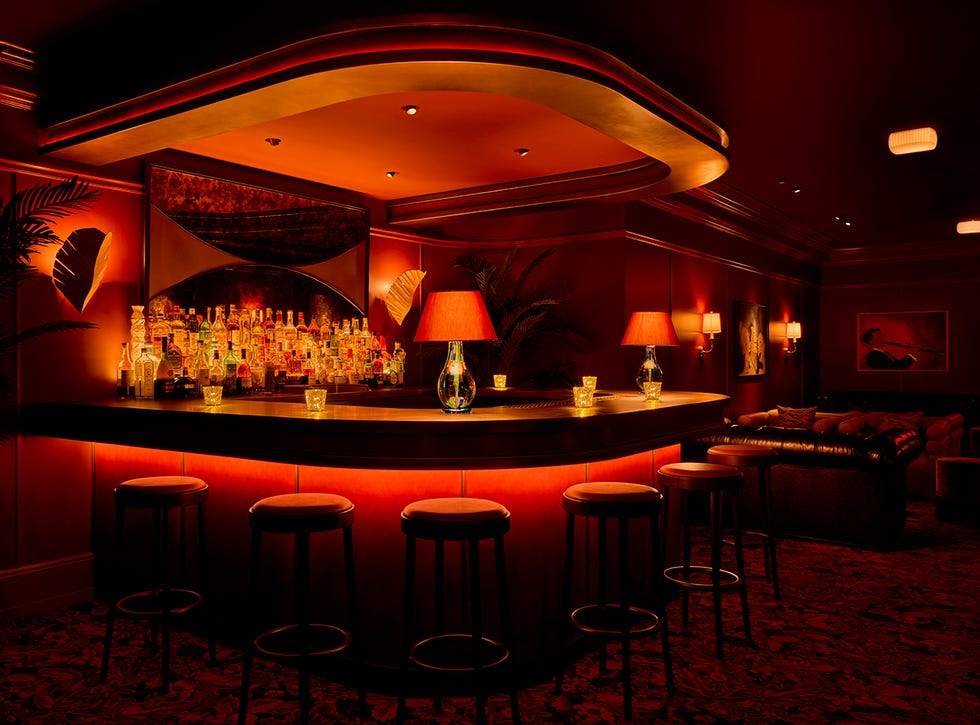
Jason Varney for Rockwell Group
The restaurant occupies a corner Boulud has held for two decades, most recently as Bar Boulud, Boulud Sud, and Épicerie Boulud. Rather than keep three separate addresses, he and longtime collaborator David Rockwell consolidated the block into one destination, with a cocktail bar tucked in back called Bar Viv, named for philanthropist Vivian Milstein of the Milstein family, who developed the building. “The Upper West Side needed a place that is a little bit of a magnet, a social rendezvous,” Boulud says, with Lincoln Center’s staff, performers, and pre- and post-curtain crowds as a built-in audience.
The menu is classic French brasserie: onion soup gratinée, oeufs mayonnaise, escargots, a chicken liver mousse Boulud says is “the perfect spread,” a full seafood plateau, steak frites in five cuts with as many sauces. A rotisserie turns out whole chickens to order (I mean, what’s better than roast chicken, french fries, and a green salad on a Sunday night?), and a lobster timbale in sauce Américaine brings back a favorite of 1970s French cooking. “I want to be very new,” Boulud says, “but also refer to the past and the classics.”

Jason Varney
His New York story began with a monthlong stage, or kitchen apprenticeship, at La Côte Basque, then across from the St. Regis. The kitchen’s pace impressed him, but it was the dining room that convinced him to stay: power players from finance, literature, music, and film, all living in the same city. “Before I went back home, I needed to work in New York,” he recalls. He spent the next decade honing his craft at iconic New York restaurants, including the Polo Lounge at the Westbury, Le Régence at the Hôtel Plaza Athénée, and Le Cirque, where he became executive chef in his early thirties. “I had no money and no connections at the time,” he says of that decade, but it bought him the reputation and the backing to open Daniel in 1993, which succeeded immediately.

The steak frites at Brasserie Boulud.
Bill Milne
Other classic include trout almondine.
Bill Milne
Opening a restaurant hasn’t gotten easier since. “There’s nothing more exciting for me, nothing more challenging, nothing more stressful,” he says. He still moves between his kitchens most days, often on the subway in his chef’s whites, a few stops from the 72nd Street station, where a Vik Muniz mosaic of his face greets commuters.
Asked what he still hasn’t achieved after building an empire that now spans continents, Boulud doesn’t mention another restaurant. “To take more time for myself,” he says: golf with his son, travel that isn’t for work, more time with his younger children. Forty-five years in, it’s the one thing still missing.

Special Projects Editor William Li is the founder of art consultancy Armature Projects and the Emmy-nominated co-host of Lucky Chow, a series about Asian food and culture on PBS.
Dining and Cooking