
WASHINGTON — There is a push in Congress to block states from enacting their own standards for the humane treatment of livestock.
The Save Our Bacon Act is a response to a California law setting minimum space requirements for farm animals that provide pork, veal and eggs sold in the state. Supporters want to insert the legislation into the next Farm Bill. Opponents don’t.
“We do not want to see this put into the Farm Bill,” said Ryan Sullivan, a first-generation farmer north of Manitowoc, Wis. “We feel like it kind of lowers the standards. It’s a race to the bottom.”

Ryan Sullivan, a first-generation farmer north of Manitowoc, Wis. (Ryan Sullivan)
The Save Our Bacon Act would override Proposition 12, the landmark California law requiring that pork, veal and eggs sold in California come from animals raised humanely. Critics said the law essentially sets national standards because farms across the country adopt its provisions so they don’t lose access to California’s large market. The Save Our Bacon Act would prohibit states from enforcing their own standards on other states.
Sullivan said he worries that if the bill passes, more animals raised in confinement by large producers will flood the market.
“We don’t think that this is going to improve the quality of meat products that are available,” Sullivan said. “I feel like it’s going to probably have a negative effect and go the other direction.”
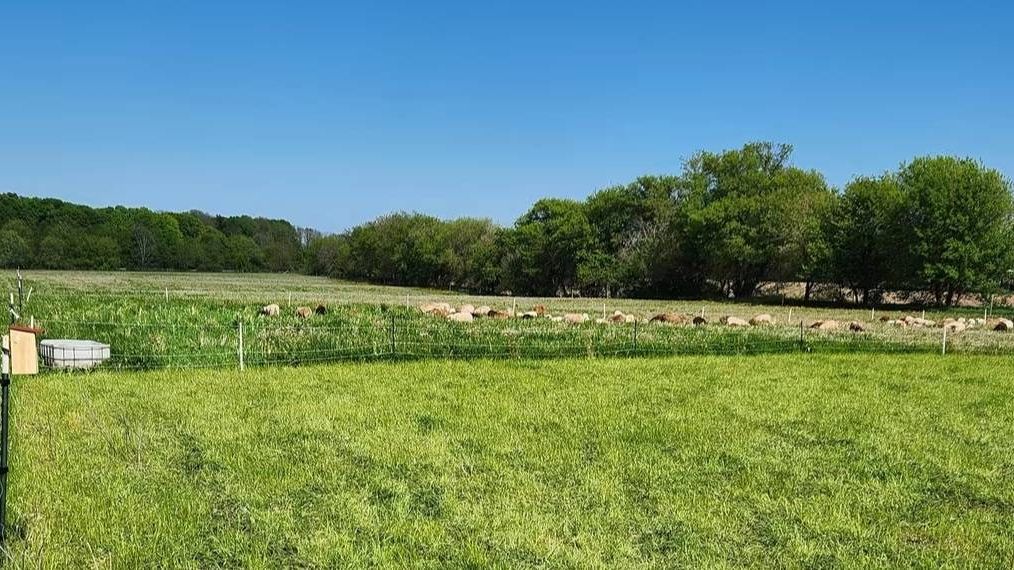
Sullivan retired from the Air Force after 26 years of service. He said he and his wife got into farming to provide the best food for their three children, and now they sell to a co-op, do home deliveries, and work with food pantries, too. They produce grass-fed lamb, organic poultry, honey and vegetables. He said he takes pride in raising animals in the pasture.

Ryan Sullivan retired from the Air Force after 26 years of service. He said he and his wife got into farming to provide the best food for their three children, and now they sell to a co-op, do home deliveries, and work with food pantries, too. (Ryan Sullivan)
“We want voters in Wisconsin to have a say and decide what the regulations, the laws, are going to be in our state. We don’t want that to come from a federal level,” Sullivan said.
An analysis of the bill by Harvard’s animal law and policy program found that state laws and regulations around disease restrictions, food safety standards and animal welfare could be affected by the bill.
“There are state laws that are highly important for biosecurity, and laws that generally benefit local Wisconsin farmers that would be wiped away by this bill,” said Holly Bice, president of the American Meat Producers Association, which opposes the Save Our Bacon Act.
The association is launching a multi-million dollar advertising campaign against several lawmakers who support the bill. One targeting Rep. Derrick Van Orden, R-Prairie du Chien, who is in a competitive race for re-election, will be live later this week. His office has not yet responded to a request for comment.
“It’s incredibly difficult for smaller family farms, independent farmers, to be able to compete against the larger conglomerates and the larger industrialized operations. So you need state laws like California’s Prop 12 to provide a more even playing field, so that family farmers have a fair shot to be able to market and sell into that market,” Bice said, adding that farms that made the financial investment to become Prop 12 compliant have been able to keep income flowing at a time when farmers are facing economic headwinds, but would lose out on their financial investments if the Save Our Bacon Act passes.
“It’s incredibly unfair for Congress to pull the rug out from under them now. Prop 12 passed eight years ago,” she said.
Rob Brenneman, the president of the National Pork Producers Council, who’s a pork producer in Iowa, said the latest campaign from the American Meat Producers Association is “another attempt to distract from the facts about California Proposition 12.
“The lawmakers being targeted by this campaign should be commended, not attacked,” Brenneman said. “They listened to farmers, veterinarians and real agricultural organizations and stood up for a food system guided by science, consumer choice and the expertise of people who actually grow and raise our food, including the thousands of us who are farmer-members of NPPC… We will continue working with members of Congress in both parties to fix Proposition 12, protect family farms and prevent a costly patchwork of conflicting state mandates that hurts farmers where they live and work and consumers trying to affordably feed their families.”
The House included the measure in its Farm Bill, but the Senate omitted it. The Save Our Bacon Act could be in the final Farm Bill when the chambers reconcile differences as early as next month, after the November elections.
Follow Charlotte Scott on X.
Dining and Cooking