
Editor’s note: The headline and body of this story were corrected on Oct. 13 from its original Oct. 4 version for accuracy. The headline was changed from “$120 million ‘Future of Food’ initiative seeks to improve food science department” to “UMass launches $120 million ‘Future of Food’ initiative.” The fourth body paragraph initially stated that two buildings will be built, and was changed to reflect the plans to only construct one building.
The University of Massachusetts’ nationally No. 1 ranked food science and agricultural program will be seeing further improvements thanks to the historic $120 million “Future of Food” initiative. The initiative, announced in mid-September, aims to broaden research efforts into production and sustainability methods of food systems campus-wide.
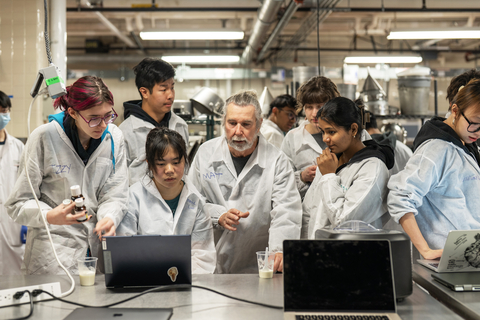
Despite being ranked the best program in the country by the U.S. News & World Report, many of the building and facilities in the food science department are on the older side. Chenoweth Laboratory, the current food science building, was built in 1930, and while there have been additions made to it in the past, there are still limitations to the space.
“We just haven’t got room either for all the students we have and all the faculty we have, and we haven’t got the ability to work side by side with other people in labs,” said Fergus Clydesdale, a distinguished food science professor who served as the department head for 20 years.
Using these funds, a new building, The Paul and Diane Manning Food Innovation Hub, will be built adjacent to Chenoweth Laboratory, and is expected to improve the hands-on aspects of food science. It will feature a new pilot plant and kitchen, as well as sensory, human clinical and food analysis laboratories. Additionally, this initiative supports a new research center, The Paul and Diane Manning Center for the Future of Food, which is an interdisciplinary research, education and public engagement branch of the Institute for Applied Life Sciences.
 Rendering of the exterior of the Food Innovation Hub | Photo courtesy of UMass website
Maria Victoria Paola Acevedo Estupinan, a current PhD student, expressed her excitement for the new pilot plant, particularly in relation to product development contests, which are incredibly popular within the food science department. “But to do a new food product that judges are going to taste, you need a food safety pilot plant, and our plant is very, very, very old.”
These facilities will also help optimize the interdisciplinary aspects of food science. The project calls for collaboration between campus faculty, farmers in western Massachusetts and those working in sustainability regenerative agriculture, according to Clydesdale.
“We’ll be pulling all those people together,” Clydesdale explained.
Currently, the Departments of Nutrition, Health Promotion and Policy and Food Science and the Elaine Marieb College of Nursing are working together to study “the power of food to promote health and reduce chronic illness.”
The collective $120 million donation came from four sources, each pitching in $30 million: the Commonwealth of Massachusetts, UMass Amherst, the UMass Amherst Foundation and the Manning Family foundation.
“We’ve had a lot of donations over the years, but that’s the biggest,” said Clydesdale, in reference to Manning’s contribution.
Three years ago, former department head Professor Lili He showed a presentation to Paul B. Manning relating to how food connects with health, technology and innovation. This presentation piqued the interest of Manning, an entrepreneur who is interested in health.
“We’re really grateful for his support,” He said.
While the food science department was formally founded in April 1918, research relating to food fell under the Department of Pomology. World War I exposed weaknesses in the national food supply, making the research and instruction of food science — especially food preservation — extremely timely.
Today, as the world faces similar issues with food shortages due to overpopulation and climate change, the $120 million donation aims to assist UMass in aiding in these challenges.
“If you look around here in the department, most of the students are international students,” Acevedo Estupinan said. “The investment and impact will be worldwide. That’s why I think that it is incredible.”
Editor’s note: Following the publication of this article, Associate Vice Chancellor for News and Media Relations Emily Gest provided additional comment on the initiative.
“The Future of Food Initiative is a multidisciplinary effort to address crucial challenges related to climate change and sustainability, food safety and a growing population expected to reach 10 billion people by 2050,” Gest said in an email. “The initiative will include a new 36,000 square foot research facility, a multidisciplinary collaborative research center, an endowed chair in food science and three endowed faculty positions who will examine crucial questions about the future of our global food system.”
Addie Tomaino can be reached at [email protected].
Dining and Cooking