
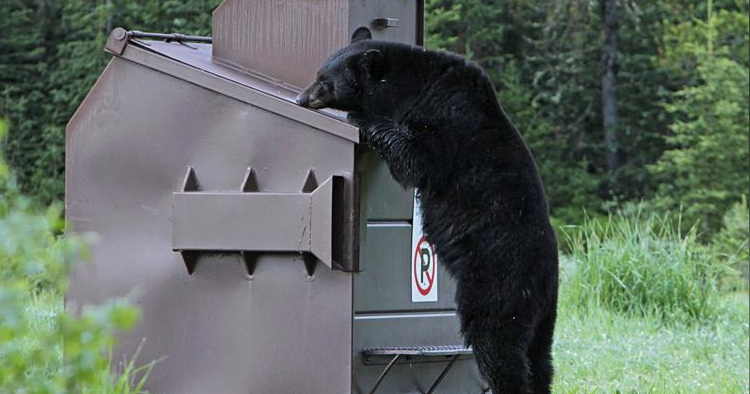
At about 3:30 a.m. on Oct. 2, a juvenile black bear tried to push its way through the back door of a home in Salmon’s Sunset Heights subdivision. The residents tackled the bear and wrestled with it to keep it out.
Two residents were injured during the melee — one of whom had to be airlifted to Eastern Idaho Regional Medical Center in Idaho Falls for treatment, according to Idaho Fish and Game. A neighbor shot and killed the bear’s mother shortly after the attack, and Fish and Game trapped and euthanized her two juveniles early the next morning.
The bears had been feeding for several days on chickens and a substantial accumulation of unsecured household garbage outside the home, Fish and Game’s investigation found. The agency called it an unfortunate case in which food-conditioned bears led to serious injuries and a threat to public safety.
It was the most serious encounter in what, by many accounts, has been one of the hardest years for black bears in recent memory, and a nerve-racking one for the people living near them.
Across East Idaho, black bears have torn through window screens, broken into homes and garages, raided garbage and killed backyard chickens. Wildlife officials across the region point to the same cause: a drought-stricken landscape that has left bears without enough natural food to fatten up for winter. In Montana, a state bear specialist told the Bozeman Daily Chronicle it was shaping up to be “one of the worst natural food failure years on record.”
Now, as the animals head for their dens, the question is what kind of shape they’ll be in when they wake up next spring.
Idaho Fish and Game said in a September release that dry conditions have made natural food harder to find across southern Idaho and the West, forcing bears to travel farther and into places they don’t normally go.
In Pocatello, Fish and Game biologists captured a young black bear Aug. 31 that was climbing a fence and eating berries in a neighborhood. The agency said the bear may have followed the Portneuf River corridor into town, and it was released in a more remote area. It was the first bear incident within Pocatello city limits since 2018.
In Teton County, Idaho, officials sent a Code Red emergency alert last month warning residents of daily bear sightings. The county urged people to secure pets, keep garbage indoors or in bear-proof containers, harvest fruit trees and remove bird feeders. Teton County Fire & Rescue said bears were approaching homes and porches, even trying to open doors and windows.
Salmon wasn’t the first encounter to end badly for the bears in East Idaho.
On the night of July 12, a male black bear tore through a window screen at a Swan Valley home while the owners slept, ransacked the kitchen and ate a pumpkin pie off the table, according to Idaho Fish and Game. The bear returned the next night and got into the household garbage. Fish and Game trapped and killed it under agency policy for bears that pose a clear risk to human safety.
“Our number one priority is always human safety,” Fish and Game Wildlife Manager Eric Freeman said in a news release.
Later that summer, a food-conditioned black bear spent about a week breaking into occupied homes, garages, cabins and other buildings in the Robinson Creek, Potpourri and Shadow Ridge areas of Fremont County, finding food nearly every time, the Fremont County Sheriff’s Office said. The bear was euthanized hours after the sheriff’s office issued an urgent public safety advisory, the Idaho State Journal reported.
Neighboring states are experiencing the same bear trouble.
Just south of the Idaho state line, a 2-year-old black bear wandered through Cache Valley communities in August before Utah wildlife officials captured it near a business in south Logan on Aug. 15, the Herald Journal reported. The bear was suffering from severe heat distress and was euthanized, according to the Utah Division of Wildlife Resources. The agency said it had responded to 168 bear issues statewide as of August, double the number at the same time last year, and blamed late freezes, heat and drought for damaging the berries and other plants bears depend on.
In Wyoming, Grand Teton National Park staff killed a black bear near Delta Lake on Sept. 11 after it repeatedly got human food from visitors and kept approaching people, according to the park.
“We need to be clear—this bear was lethally removed because of poor decisions made by park visitors,” the park said. Several park visitors were cited for approaching wildlife or violating food-storage rules following the incident.
In Montana, game wardens killed 14 black bears at a single property north of Bozeman in late September after finding the animals had been fed by people and had lost their fear of humans, according to Montana Fish, Wildlife and Parks.
With winter approaching, the bears’ troubles may not end when they bed down.
Idaho’s black bears enter their dens from mid-October through November and emerge from mid-April to May, according to Fish and Game’s black bear management plan. Over the winter, they live off the fat they stored in summer and fall. Pregnant females give birth in the den, usually within the first two months of hibernation, and the cubs nurse through the winter, according to the National Park Service.
The cost of that long sleep is steep. Male black bears usually lose 15% to 30% of their body weight during hibernation, while sows with cubs can lose up to 40%, according to Fish and Game. When they emerge, bears look to take in 15,000 to 20,000 calories a day to rebuild their fat reserves.
That’s what makes this year worrisome. A bear that couldn’t put on enough weight this fall will wake up with less in reserve, and a mother with cubs will have to feed them on a thinner margin.
Bears that learned this year to find food around homes may also remember those spots when they wake up.
“Bears that obtain human food can quickly become habituated,” Fish and Game Regional Wildlife Manager Dennis Newman said after the Salmon attack, adding that it raises the likelihood of property damage and dangerous encounters.
That’s why Fish and Game says the best way to prevent conflicts, now and next spring, is to remove what draws bears in. The agency urges residents to store garbage in bear-resistant containers or inside a garage or shed until pickup day, bring in pet and livestock food, pick up fallen fruit and remove bird feeders from April to mid-November. Newman noted that even uncleaned barbecues and smokers left outside will attract bears.
In the Caribou-Targhee National Forest, a food storage order already requires people in the Teton Basin, Ashton/Island Park and Dubois ranger districts to secure food and garbage from March 1 to Dec. 1, according to the Forest Service.
Fish and Game also urges people to report bears around homes promptly. Early reports give wildlife staff a chance to work with residents to deter bears before they become food conditioned.
Fish and Game officials have a blunt saying: A fed bear is a dead bear.
This year’s incidents in East Idaho proved it, and the Salmon attack showed that people can end up in the hospital too.
If local residents don’t learn from the bear encounters of 2026, the coming year could be even more dangerous for bruins and people alike.
Dining and Cooking