

Trendy dining abounds in Toronto, Canada’s largest city. Buzzy restaurants line Ossington Avenue, for example, drawing many culinary-minded travellers.
But on a recent trip, I decided to stick to the city’s ethnic enclaves, which offer some of the most interesting and varied dining in a city where nearly 47% of the residents are immigrants, more than double the national average.
Cooking has long provided immigrants and refugees with an entrepreneurial foothold in their new homes, making Toronto and neighbourhoods such as Little India, Greektown, Little Portugal and several Chinatowns intriguing dining destinations.
Here are four culinary highlights that offer a taste of multicultural Toronto.
Dinner with locals
During a Saturday evening supper club gathering at the Depanneur, a cooking school and culinary event space in Toronto’s Chinatown, I sat with six other diners at a long table covered with banana leaves.
On top of those, owner Len Senater and an assistant spooned a long mound of rice they then topped with a series of Filipino dishes, including smoked eggplant salad, green papaya in vinegar, tofu with mushrooms, coconut squash, twice-cooked chicken and slices of pork roast stuffed with aromatics, a Filipino version of porchetta.
“Tonight is a unique style of Filipino dining called kamayan, which means, ‘by hand’,” Senater said, introducing a meal prepared by chef Maria Polotan – who was busy in the kitchen during service – meant to be eaten without utensils. “It came out of the army barracks,” he said.
In addition to classes and culinary talks, the Depanneur holds periodic dinner parties such as this one, presented by budding entrepreneurs, culinary instructors and everyday cooking enthusiasts across the ethnic spectrum.
“It’s the way I would like to travel,” Senater told me during a break in the meal at the loft-like space with wood floors, whitewashed brick walls and exposed ductwork.
“I could go to a restaurant, but I’d rather go to a dinner party with a bunch of locals.”
The pop-up event was BYOB (bring your own bottle/booze), and offered a chance not only to try Filipino foods but to meet my tablemates, who were all from Toronto and offered generous tips on what to do in town.
After a dessert of sticky rice in coconut milk, my new friends and I walked it off on lively Spadina Avenue, chatting about where to eat next.
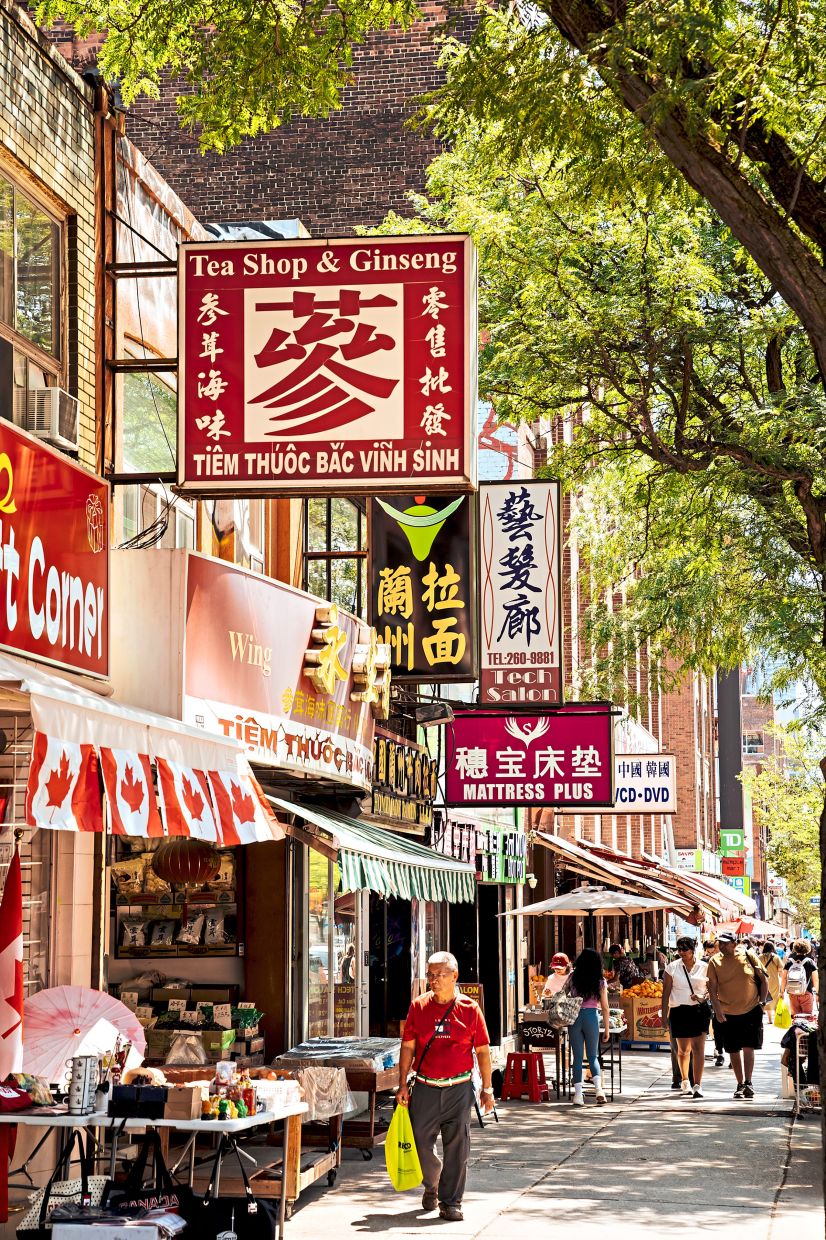 An area of Spadina Avenue, one of the main thoroughfares of Toronto’s Chinatown.
Grazing through chinatown
Spadina is one of the main thoroughfares of Chinatown, sometimes known as the downtown or west-side Chinatown to distinguish it from other Chinese areas. In the neighbourhood, streets are packed with produce stands, sandwich boards advertising massages, clothing racks selling three dresses for cheap and a Pan-Asian array of restaurants, bakeries and takeout businesses.
It is also conveniently close to top Toronto tourism attractions like the Art Gallery of Ontario, where, between meals, I browsed Canada’s expressive Group of Seven landscape painters. Behind the museum, Grange Park, with its broad shade trees and Henri Moore sculpture, is popular with picnickers.
I brown-bagged it there with a tasty but unevenly assembled banh mi from the Asian deli Nguyen Huong Vietnamese Sandwiches, then found more satisfying snacks: a sesame ball and cream-filled bun from the bustling Chinese Bakery.
Another morning, for a breakfast that sustained me most of the day, I stopped at Jian Bing Club, a quick-service restaurant with art depicting Asian street food carts that referenced its traditional speciality: jianbing, a messy, addictive Chinese breakfast crepe filled with eggs, crunchy wonton crackers and spicy sauce.
Among dim sum options, new acquaintances warned me away from cart-based specialists, where the dishes can get cold, in favour of Rol San Restaurant where the dim sum is ordered from the kitchen and the shrimp dumplings arrived fresh and warm.
A market tour
Kensington Market, a multicultural neighbourhood and national historic site, is filled with small, diverse food businesses that reflect its history of immigration amid a growing collection of thrift shops.
On a Sunday morning, I joined three other tour-goers, all Toronto residents, in exploring Kensington Market on a “Taste the World” food tour offered by Tasty Tours.
Over medium-roast coffee and savoury boreka pastries at the Moonbean Coffee Co, our guide, Odile Chatelain, a professional chocolatier, explained that the neighbourhood was established by the British after the War of 1812.
It later welcomed waves of Irish, Jewish, Portuguese, Jamaican, Mexican and Chinese newcomers.
“The layering of cultures is so typical in this neighbourhood,” Chatelain said, guiding us past modest workers’ cottages and mural-filled alleys between bites at a series of restaurants, starting with the tiny Japanese-run Takoyaki6ix, where we used toothpicks to eat fried octopus balls.
Down the street, we tried Jamaican patties, or meat turnovers, from the small grocer Caribbean Corner. Around another corner, we had butter tea and momo at Tibet Cafe & Bar.
Nearby, we lined up for birria tacos at Gus Tacos, a breakout hit at the market that now has nine locations, followed by dulce de leche churros at Pancho’s Bakery.
“This neighbourhood is gold for food,” Chatelain said, offering us a farewell tasting of several Toronto-made Soma Chocolatemaker chocolates.
Trek to Scarborough
Toronto’s immigrant communities have also made its suburbs food destinations, including Scarborough, to the east.
“Scarborough caters to a diverse population,” said Suresh Doss, a local journalist who acted as my guide, pointing out Latin American and Asian establishments in food courts, takeout joints and modest restaurants.
At the Dynasty Centre shopping mall’s Hong Kong-style Great Fountain Fast Food, we sampled crispy roast pig. In the same parking lot, we visited One2 Snacks for Malaysian takeout.
In an unlikely office park, we found Manzou Bakery, which specialises in Chinese cakes, including single-serving cake cups layered with mousse. Sabrina Pan, who runs the shop with her family, suggested the creamy black sesame cake.
“It is not too sweet, and the texture is light,” she said. “It has a very Chinese flavour.”
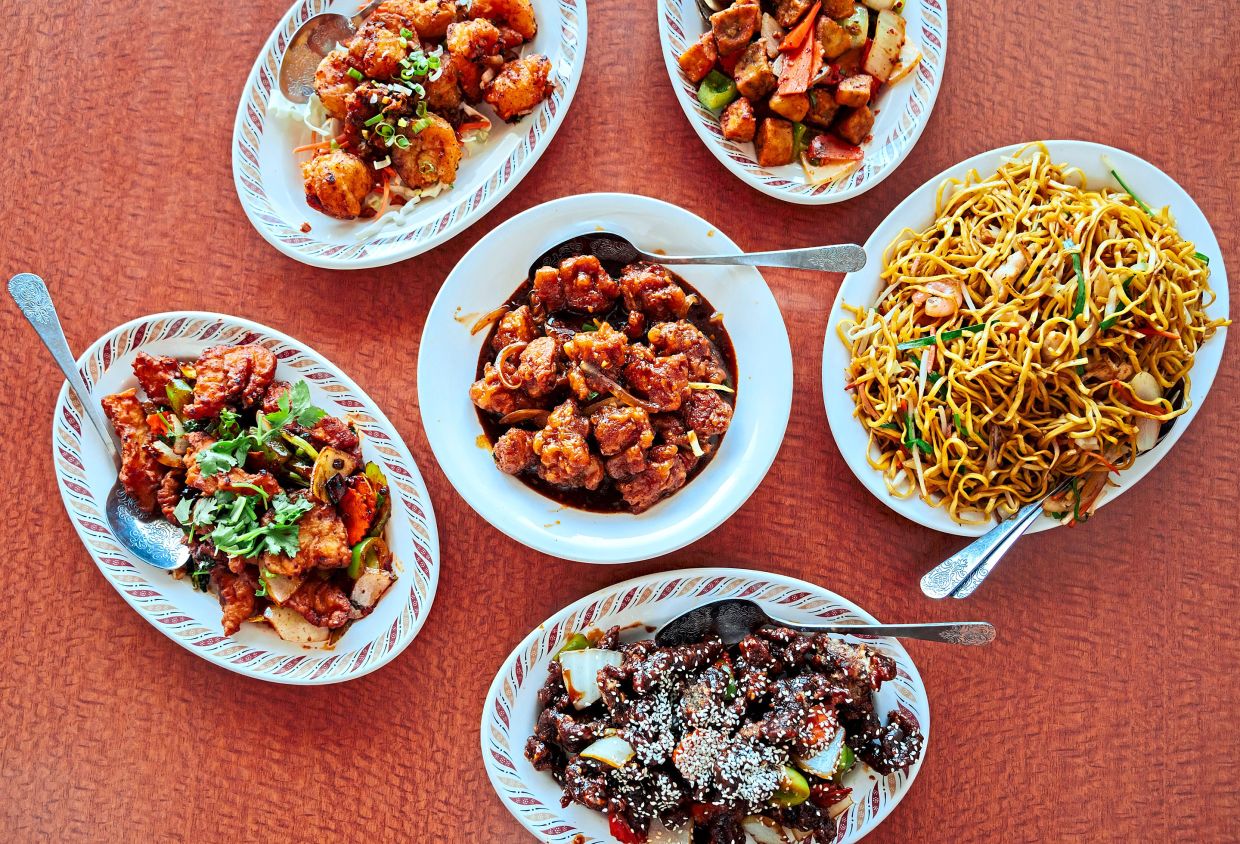
At Wong’s Asian Cuisine, chef and owner Christopher Wong waved me from the cosy dining room where floral-patterned dinnerware was set on dark wooden tables into the small kitchen to watch him expertly wok-fry chilli chicken, a popular dish on his Hakka menu, ensuring that each ingredient was quickly kissed by the flame, giving the results a smoky accent.
Doss, who recommended the restaurant in an unassuming strip mall, described Toronto’s Hakka fare as originating with Chinese Han immigrants who had moved to India before Canada, producing a distinctly Indian-Chinese fusion fare.
“Diversity,” Doss said, “… is our strength.” – ELAINE GLUSAC/©2026 The New York Times Company
This article originally appeared in The New York Times.
Dining and Cooking