
The 2026 Pulse Poll is a sweeping survey detailing data gathered on a range of topics – including cost of living, mental health services, state government and more.
DENVER — A new survey from the Colorado Health Foundation is providing more data about Latinx communities and food insecurity rates across the state – the data shows that this population is suffering from more challenges regarding food access in general, as compared to Coloradans overall.
“These aren’t abstract concerns,” said Virginia Garcia Pivik, the communications consultant for the survey. “These are real experiences that our Latino communities are living on a daily basis.”

This story continues below.
The foundation’s Pulse Poll gathered information from about 2,000 Colorado residents, including around 600 Latino and Hispanic individuals and families. Data from the poll shows that 24% of Latinx respondents stated they skipped meals because of a lack of affordable food, compared to 17% of all respondents.
Regarding being able to provide for themselves or their families, 44% of Latino and Hispanic respondents said they had concerns about making ends meet, according to poll data; that’s compared to 31% of all Coloradans who responded.
“We see how deeply affordability is affecting Latino communities and Latino families,” said Garcia Pivik. “Forty-four percent of respondents, they told us they are worried about being able to afford enough for their families.
“And this is a growing worry, that we have noticed,” she added. “They don’t have a clear panorama of what the future might look like for them, or even if they’re going to be able to afford being able to live in Colorado in the future.”
Non-profits in Denver are among those trying to provide for people who are experiencing food insecurity and also looking to address the root causes of food access issues. Factors can include, but are not limited to, lack of livable wage; affordability of needs such as health care, housing, and others; and general access to groceries, especially affordable ones.
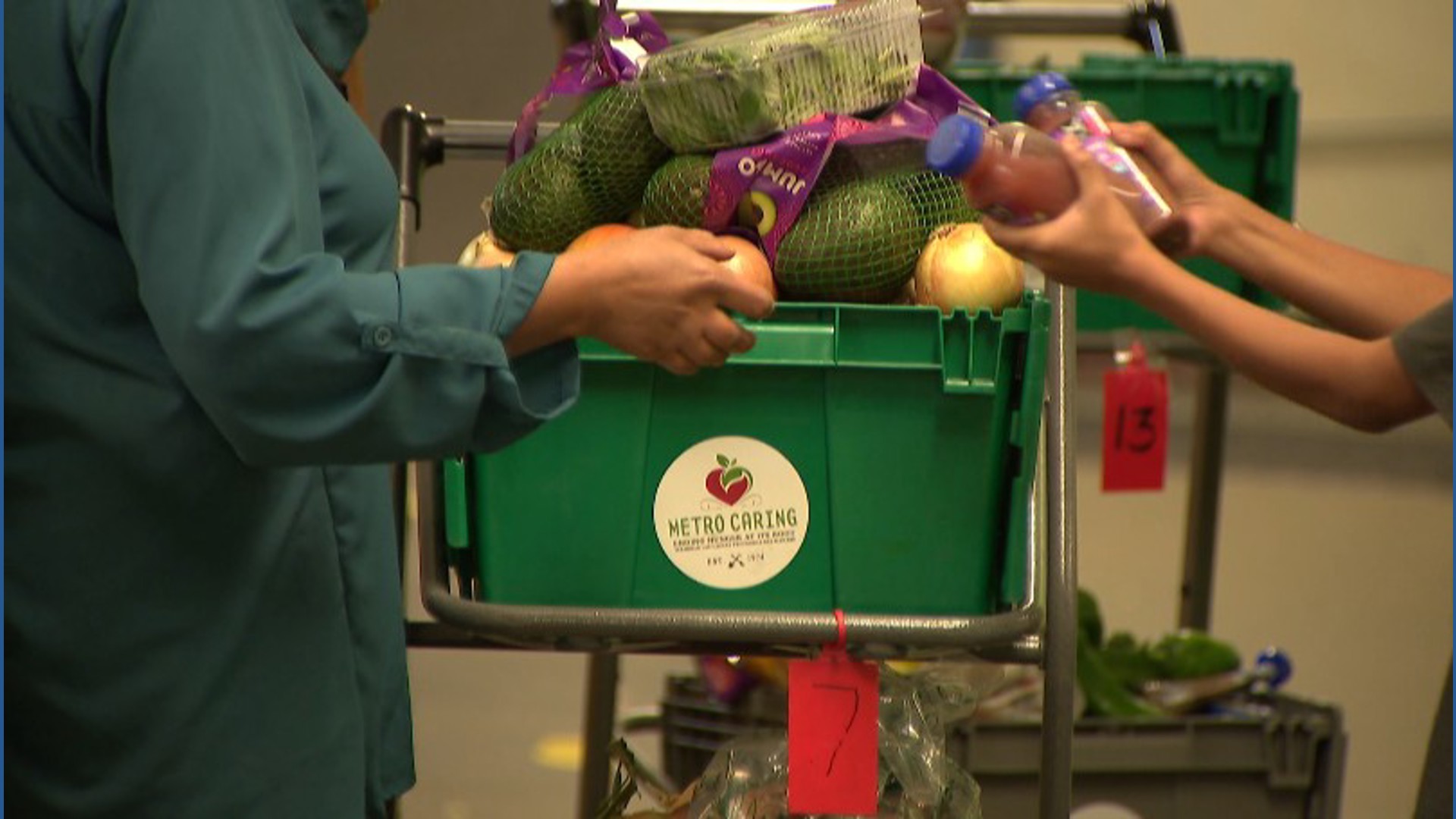
Metro Caring is a multi-pronged organization in the middle of the city that focuses on nutritious, culturally relevant food. That’s according to Metro Caring Community Connections Senior Manager Jesus Esparza, who explained that the mission at Metro Caring hits especially close to home, as they have personally lived through food insecurity.
“Hunger is a symptom, a byproduct of a lot of other things going on in peoples’ lives,” Esparza said. “We believe people have a right to food. The same way we deserve clean air to breathe, clean water to drink, you should have access to healthy, nourishing food for yourself.”
About half of the people who seek Metro Caring’s services – including food and other support – prefer Spanish as a primary language, Esparza said. That shows how prevalent the need is within Latinx communities and highlights the importance of the availability of culturally relevant foods.
“A lot of these foods, your rice, your beans, are cross-cultural,” Esparza explained, adding that certain foods are considered staples in Metro Caring’s market, and are prioritized as items the organization tries to have on hand at all times. “They’re taking full baskets of culturally relevant foods, whether that’s to their culture identity, to their religious beliefs, to their dietary restrictions.
“Regardless of their background, regardless of their culture, regardless of their language spoken at home, come here,” Esparza added, “and we’ll take care of you.”
Esparza also pointed out that food has a huge role not only in everyday life, but also during major events people experience, from birthdays to memorials and everything in between.
“Think about all the good memories you have – chances are, it’s associated with food,” Esparza said. “A birthday celebration, a holiday, even in my culture – being a Mexican American – a funeral. You feed people when they come, and they grieve with you. We wanted to make sure we were inclusive and protective of that culture, and preserving those traditions.”
The Fresh Food Market runs on donations from local farms and small businesses, and from big-box companies such as Whole Foods, Trader Joe’s and King Sooper’s, as well as purchases made through limited funding at Metro Caring. The Food Bank of the Rockies, and the Feeding America network, help keep the market stocked.
“We want to treat people with the kindness that you would a neighbor,” Esparza said. “Borrowing a cup of sugar, knocking on your door – these are people who are in our community, and we want to care for them as such.”
Metro Caring’s food service programs see 144 to 160 households per day, according to the organization, with much of the operation run by dozens of volunteers assigned to various shifts each week. All items are hand-sorted in the on-site warehouse to help ensure quality control.
The Fresh Foods Market is open Mondays through Thursdays. Though the barrier to entry is low, Esparza said, not even requiring formal ID, visits to the market are by appointment only. Walk-ins are accepted for some of the ready-made meals and other items, such as fruit, granola bars and easily opened cans of non-perishables.
Metro Caring also connects people to community resources and offers in-house cooking and nutrition classes in Spanish and English. Details on the group’s events, including the upcoming “Cornucopia” community celebration can be found here.
For more information visit the Colorado Health Foundation Pulse Poll – which spans a variety of subjects.
Dining and Cooking