
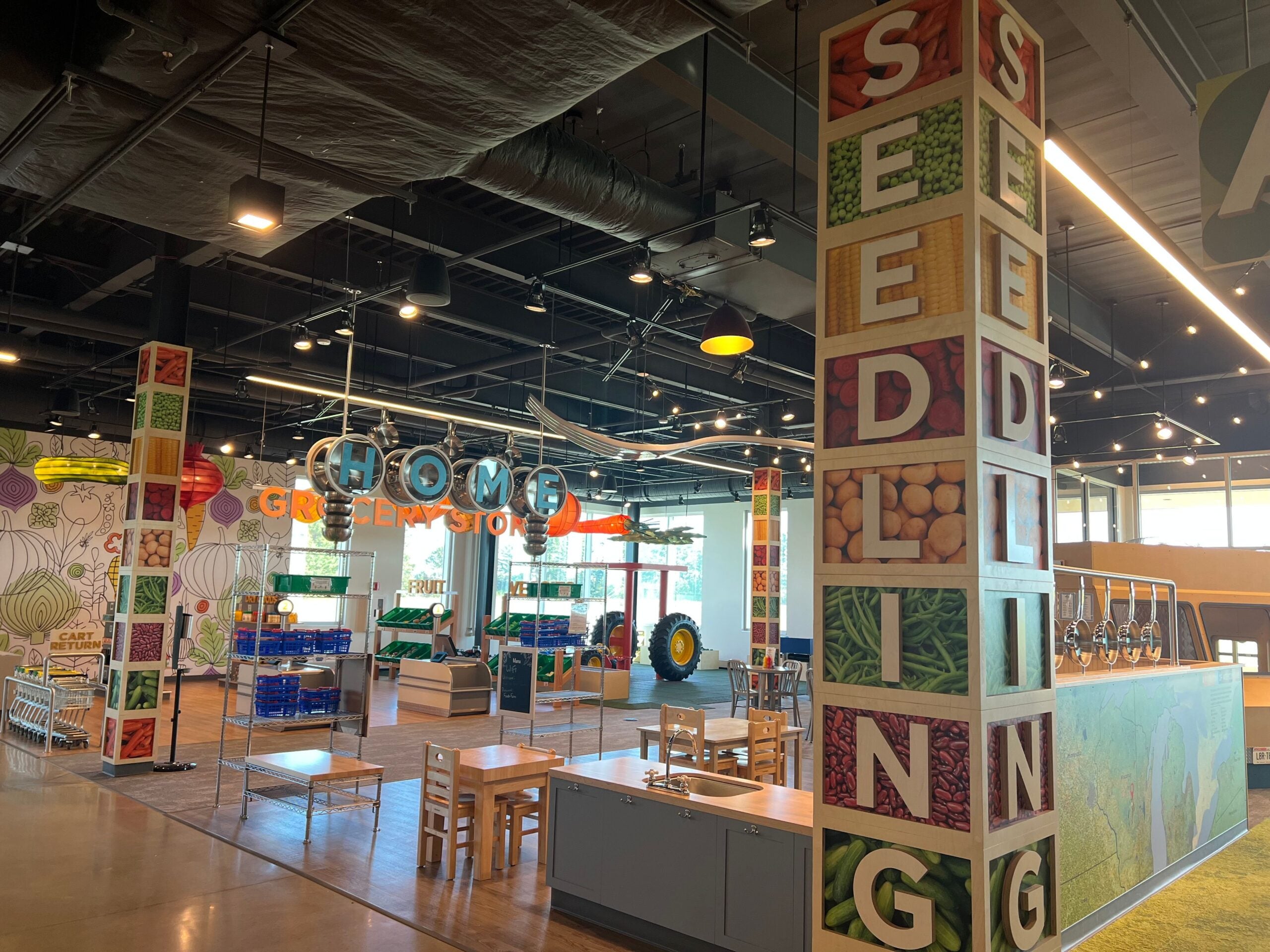
A central Wisconsin education center is helping visitors understand how food moves from farm fields to kitchen tables through interactive exhibits, hands-on harvesting and cooking programs that connect people with modern agriculture.
Located in Plover, the Food + Farm Exploration Center opened in December 2023 with a mission to reconnect the public with modern agriculture through immersive exhibits, outdoor demonstrations and hands-on programming.
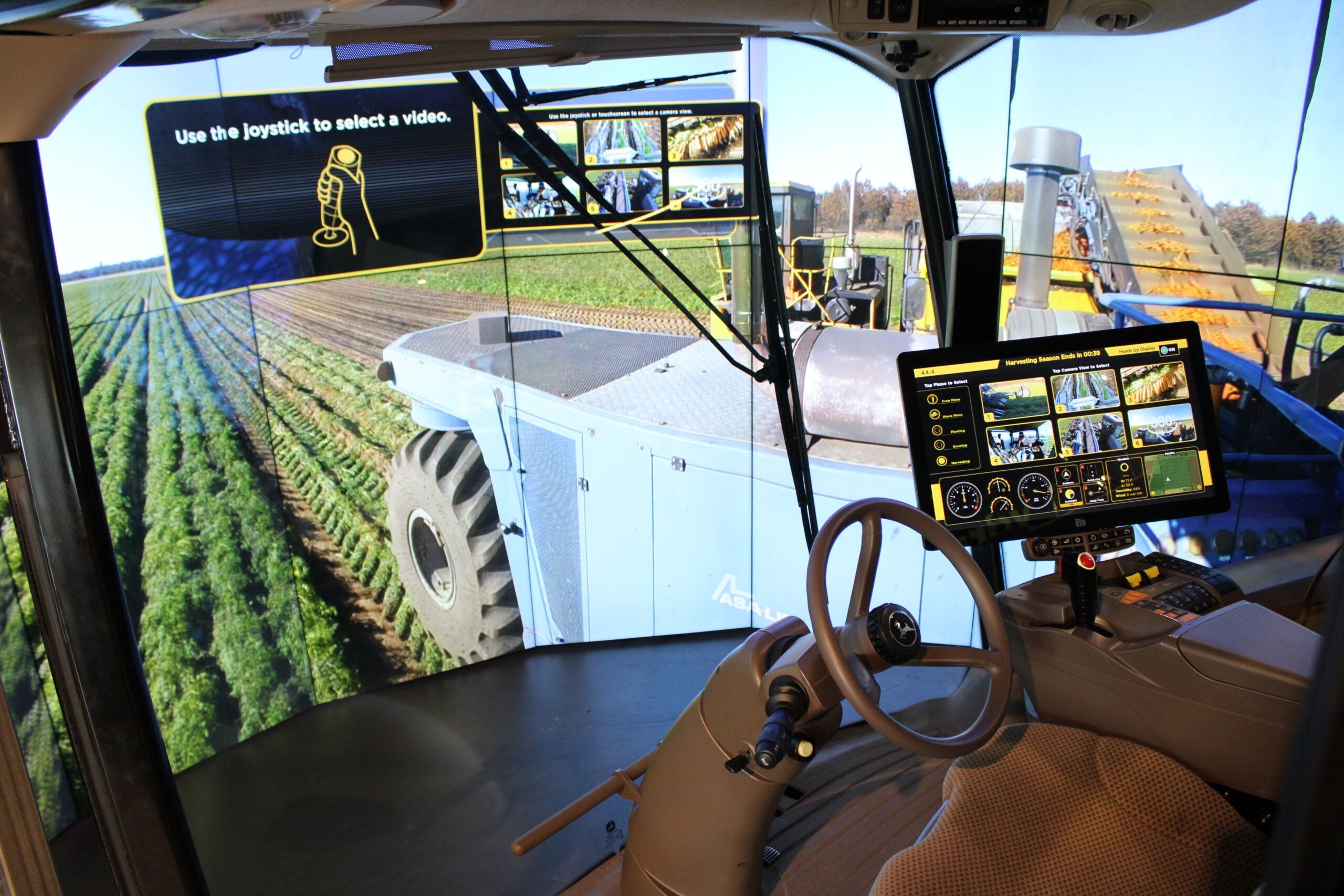 A tractor simulator inside helps visitors envision work on a farm. Photo courtesy of the Food + Farm Exploration Center
Understanding Wisconsin, Together.
WPR’s “Wisconsin Today” newsletter keeps you connected to the state you love without feeling overwhelmed. No paywall. No agenda. No corporate filter.
In a conversation on WPR’s “Morning Edition,” Executive Director Alexandria Behrend said the goal is to spark curiosity about food production while helping visitors better understand the complexity behind the meals they eat every day.
“Our 60 interactive exhibits were designed to teach people from age 2 all the way through 102,” Behrend said. “They’re also designed to encourage people to come back multiple times to continue learning about food production.”
Inside the center, exhibits guide visitors through the full food production cycle, from planting and harvesting to transportation, storage and preparation. Outside, demonstration plots allow visitors to experience agriculture firsthand. During the growing season, guests can harvest crops themselves — often providing a first glimpse into how familiar foods actually grow.
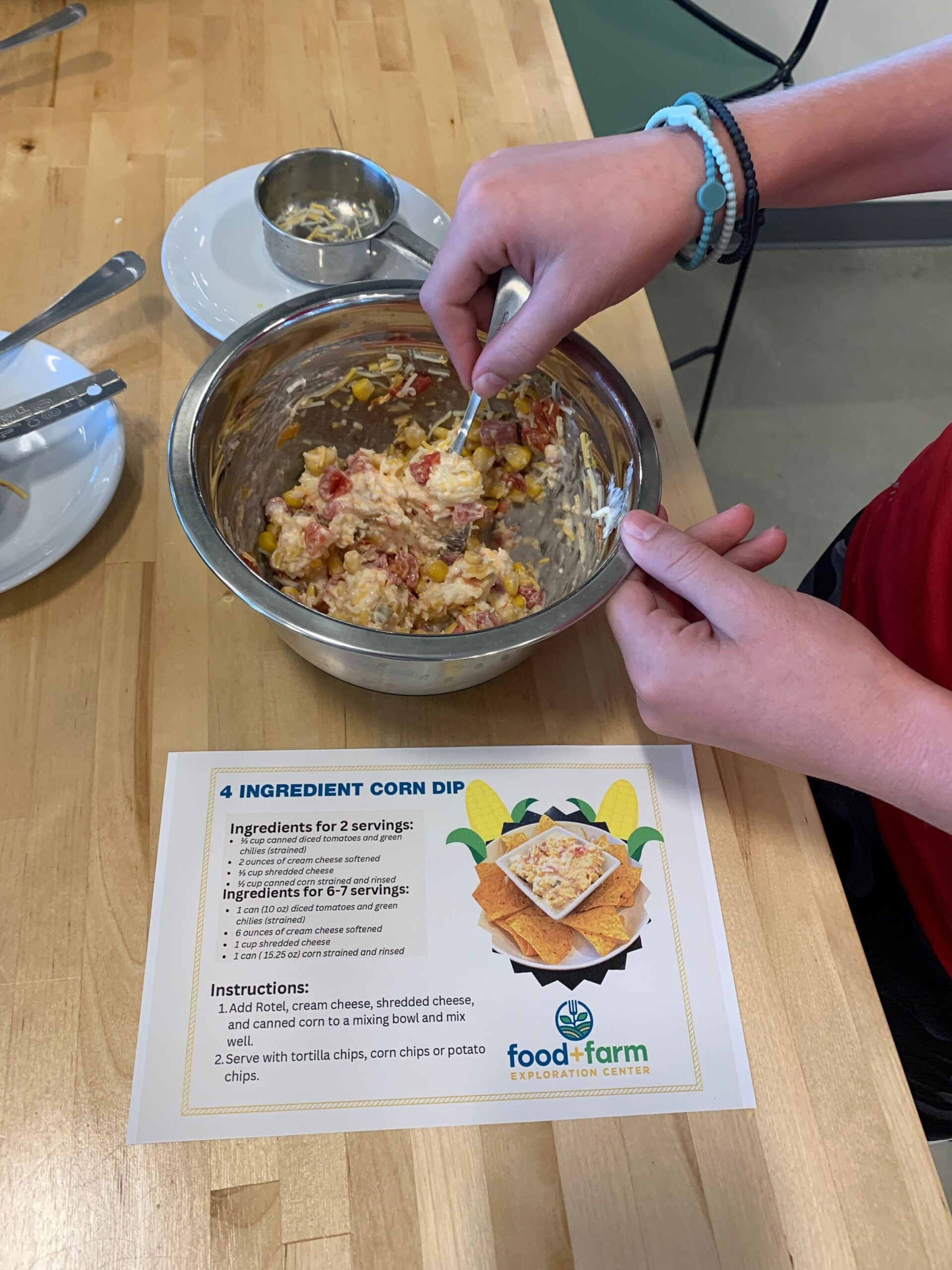 A participant prepares a recipe during a cooking class at the Food + Farm Exploration Center in Plover. Photo courtesy of the Food + Farm Exploration Center
The center has also become a popular field trip destination for schools across the region. In 2025 alone, nearly 200 school groups visited, bringing about 8,500 students to learn about agriculture and the many careers connected to food production.
Those experiences, Behrend said, help close a widening gap between consumers and the farms that supply their food.
“Most people today are disconnected from family farms,” she said. “They see food close to the final stages, in the grocery store, and they don’t take time to think beyond that about how that food got there.”
The center also hosts cooking classes and seasonal programming designed to bring families back repeatedly. Special activities and workshops are planned throughout the year, including family-friendly events during spring break.
 Inside the Food + Farm Exploration Center in Plover. Photo courtesy of the Food + Farm Exploration Center
The following interview has been edited for brevity and clarity.
Shereen Siewert: The center focuses on helping people understand where their food comes from. How do you define that mission in practice?
Alexandria Behrend: Trying to get people to understand why they should care about where their food comes from is a pretty big task. We go through all the stages, from planting to transportation to storage and production, and to recipes and finally to your table. It’s a unique way to expose people to food processes.
We’ve also done a great job at meeting people where they are and where they want to learn about the food production process. That means we do a variety of things, like hosting community cooking classes where people can learn to prepare their food in different ways in a fun environment.
We’re also able to sneak in some fun facts about the production of agriculture in the process. That’s been really cool, because we have almost a bit of a cult following with our Spud of the Month classes, for example. People love learning how to cook food in different ways and gaining an understanding of where their food comes from.
SS: Talk about some of the hands-on learning and why that’s important.
AB: In our back space, we have four separate 1.3-acre demonstration plots where we grow some of our focus crops every summer. Then we invite the public to harvest some of those crops. People dig their hands into the dirt and pull potatoes up from the vine, the peas, the cucumbers. We often hear people say that they didn’t know potatoes grew underground or that they’ve never picked a cucumber from a vine. Moms tell us they’ve tried to get their kid to eat peas for five years and they won’t touch them, but after this experience they can’t keep them out of the pea fields. Making an early connection for people that food comes from a field, and that it’s fresh, and that you can prepare it in different ways — that’s a really wholesome experience for people.
SS: What role do school visits and youth programming play at Food + Farm?
AB: Typically, from Tuesday through Friday our center is buzzing with students on field trips, from kindergarteners through college-age kids. It’s so exciting to see them getting off the bus. Every student gets a coupon to come back with their parents so they can teach their families what they’ve learned that day. It’s so fun to hear those conversations. We also make a point of talking with students about the wide ranging workforce in agriculture. That’s a big part of our mission as well.
SS: Food systems are often in the news, from prices at the grocery store to conversations about climate and land use. How does the center help put those issues into context?
AB: I think it’s easy today to want to blame someone for the prices at the grocery store, and often the person who gets that blame is the farmer. What we’re able to do is make connections, to remind people that farmers are people just like them and they’re working their hardest to keep food prices down.
It’s also a way to look behind the scenes and realize how much goes into food production. The planting, the harvesting, the watering, transportation is all part of it. There’s so much more involved in getting food to the table than most people seem to realize.
Before I worked at Food + Farm I never once wondered how the potato got into the bag that I was buying. Now, I get to be part of telling the story about who exactly is behind getting that potato into the bag. It’s about humanizing it and reconnecting the public with people who are growing the food they eat.
If you have an idea about something in central Wisconsin you think we should talk about on “Morning Edition,” send it to us at central@wpr.org.
Dining and Cooking