
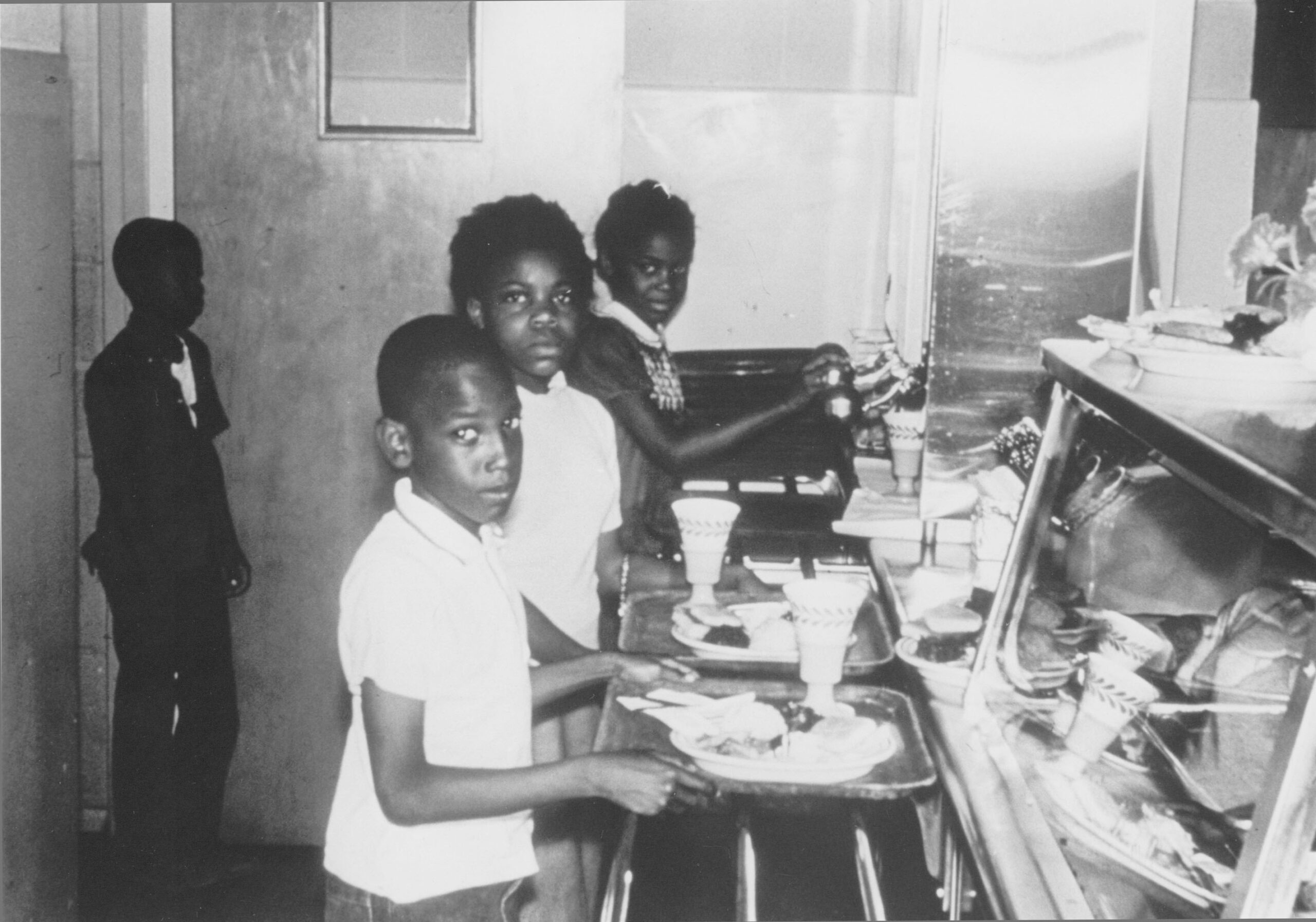
The goals of the National School Lunch Program have changed dramatically from those outlined in the original 1946 legislation, as have concerns over access to and participation in the program. Thanks to advances in food production, fortification, and distribution, once-common maladies like low bodyweight, rickets, and anemia are now rare. The daily diets and eating habits of U.S. schoolchildren have changed, and health experts once concerned by a lack of caloric intake now fret over rising obesity statistics.
During the 1970s and 1980s the federal government relaxed regulations on the amount of sugar, salt, and fat found in lunch offerings. As a result, the nutritional quality of meals declined significantly. Health professionals warned about childhood obesity as early as the late 1960s, and many today claim that the United States is facing an epidemic. Experts have pointed to the National School Lunch Program as both a major cause of the problem and a potential solution to at-risk populations.
Beginning in the mid-1990s, school lunch reformers pushed for the introduction of more fresh fruits and vegetables, whole grains, and low-fat dairy products into cafeterias. Lawmakers and public health advocates began working to strike a greater balance between nutrition and taste, attempting to reverse the so-called “fastfoodification” of school cafeterias. The Healthy, Hunger-Free Kids Act (HHFKA), championed by U.S. first lady Michelle Obama in 2010, represents the latest chapter in the story. The law introduced revised nutritional guidelines, regulated the sale of soft drinks and vending machine snacks, and granted access to the lunch program for thousands more students. By early 2015 more than seventy school districts in Georgia were enrolled in a new USDA program under the HHFKA that eliminates the paperwork for students applying for free or reduced-price lunches.
In the meantime, some districts, including the Atlanta Public Schools (APS), have taken drastic steps in the fight for a healthier school lunch. In August 2013 APS ceased offering fried foods during lunchtime in an effort to fight obesity and offer healthier meals to its more than 50,000 students. Individual schools across Georgia are also experimenting with school gardens and locally sourced foods, although such efforts have yet to make a substantive impact on the state or national scene.
Today the National School Lunch Program continues to spark debate over the nutritional value of foods served, the role of private industry, and the status of the program as a welfare initiative. A bigger and broader program more than sixty years after its original passage, the National School Lunch Program promises to remain a political hot-button.
Dining and Cooking