

Some of New York’s best-known dining institutions have been thrown a financial lifeline, but their future is far from guaranteed.
Restaurant giant Landry’s Inc has agreed to pay more than $22 million to acquire assets from struggling Fireman Hospitality Group, whose portfolio includes several long-established Big Apple favorites.
The deal offers a potential second chance for restaurants that have served generations of diners, but it comes with a catch: Not every location is guaranteed to survive.
Among the familiar names caught up in the restructuring are Café Fiorello, Trattoria dell’Arte, Bond 45, Brooklyn Diner and USA Brooklyn Delicatessen.
The acquisition was approved by a bankruptcy court on October 22, with the winning bid submitted by FHG Acquisition LLC, an affiliate of Landry’s parent company Fertitta Entertainment.
The transaction covers assets associated with nine restaurant locations, including two Brooklyn Diner sites and two Café Fiorello locations in New York and Washington, DC.
However, the deal does not automatically secure every restaurant’s future, with lease negotiations and decisions over which properties to retain still ongoing.
Jeff Crivello, chief executive of Ciao Hospitality Group, which was involved in the bidding process, told Nation’s Restaurant News there were no plans to transform the restaurants into entirely different concepts.

Restaurant giant Landry’s Inc. has agreed to pay more than $22 million to acquire assets from struggling Fireman Hospitality Group, whose portfolio includes several long-established Big Apple favorites.

The closures are the latest blow for diners who have come to associate the Fireman Hospitality name with established Italian dining and bustling restaurant destinations
The purchase price includes more than $22 million in cash, alongside additional costs and assumed liabilities, following a competitive auction that saw the original $9.5 million stalking-horse bid more than double.
While the rescue deal has raised hopes for some establishments, others have already switched off their lights for good.
Café Fiorello’s Washington, DC., outpost closed on October 28, while Fiorella Italian Kitchen at National Harbor in Oxon Hill, Maryland, shut its doors the following day.
The closures are the latest blow for diners who have come to associate the Fireman Hospitality name with established Italian dining and bustling restaurant destinations.
Earlier in July, the group also closed Redeye Grill and one USA Brooklyn Delicatessen location as its financial position deteriorated.
Landry’s, meanwhile, is no stranger to snapping up restaurant brands and turning around troubled hospitality businesses.
The Houston-based company owns an extensive collection of dining and entertainment properties, including Rainforest Cafe, Bubba Gump Shrimp Co, Mastro’s Steakhouse, Morton’s The Steakhouse and Del Frisco’s.
It is also controlled by billionaire Tilman Fertitta, who owns the Golden Nugget hotel and casino empire and the NBA’s Houston Rockets.

Bond 45 originally opened in 2005 as a theater-district Italian kitchen and bar in Times Square.
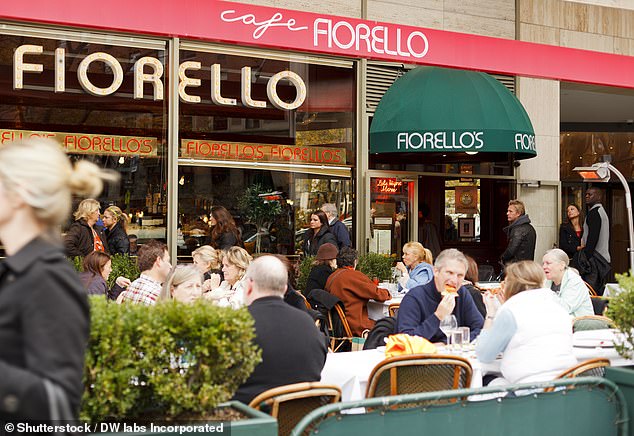
Café Fiorello opened in 1974 at 1900 Broadway in New York City’s Lincoln Square neighborhood, directly across the street from Lincoln Center.
Fireman Hospitality Group, operating under SMF Group Inc and affiliated companies, filed for Chapter 11 bankruptcy protection on August 9 in the US Bankruptcy Court for the Southern District of New York.
At the time, the business operated nine restaurants and employed more than 800 people across its locations and corporate offices.
Its financial problems had been building for years, with the company entering the Covid pandemic already weighed down by construction overruns and losses following a restaurant fire.
The subsequent shutdown of indoor dining proved particularly damaging because many of its restaurants relied on tourists, theater-goers and office workers in some of Manhattan’s busiest neighborhoods.
As revenues struggled to recover, the group increasingly turned to merchant cash advances to keep its operations afloat.
By March 2026, it had more than 30 advances across 11 lenders, with outstanding obligations of at least $5.5 million.
The pressure escalated when lenders directed payment processors to divert restaurant revenues towards outstanding claims, with at least $5.96 million in credit card receipts reportedly withheld by the time bankruptcy proceedings began.
The company said this left it with less than $100,000 in available cash, threatening its ability to pay staff, landlords, suppliers and tax authorities.
Dining and Cooking