

The food scene is as compelling as the sunshine and grand hotels that have drawn visitors to The Palm Beaches. Across 39 coastal communities stretching from Jupiter and Palm Beach Gardens in the north to Delray Beach and Boca Raton in the south, a new generation of restaurants sits alongside long-standing local favorites, reflecting the myriad of cultures that have shaped the area over the past century.
The region’s rise as a resort destination began in the late 19th century, when industrialist Henry Flagler extended the Florida East Coast Railway into South Florida, opening what had once been a remote stretch of coastline to visitors. As hotels appeared and new residents settled in the decades that followed, The Palm Beaches evolved into a collection of distinct communities, each adding its own traditions and flavors to the local dining landscape.
Today, that evolution is still underway. The Palm Beaches are home to neighborhood institutions as well as a new generation of ambitious restaurants that have broadened both the destination’s culinary ambitions and its identity.
“I think many people are surprised by just how young the restaurant scene really is,” says Andy Boles, general manager of būccan in Palm Beach. “While there are certainly beloved institutions that have been part of the community for decades, many of the restaurants shaping today’s landscape have opened within the last five or so years.”
That growth has also brought greater visibility to the area’s cultural diversity. “There is more diversity in food than most people know,” says Palm Beach native and Palm Beach Meats chef-owner Eric San Pedro. “The Palm Beaches are changing with regard to culture and food. … But there have always been some hidden gems showcasing Asian, Caribbean and Latin American food and culture.”
For diners, that makes The Palm Beaches an especially rewarding place to explore. The region’s MICHELIN Guide restaurants capture both its evolution and its culinary variety, offering a delicious way to experience The Palm Beaches beyond the coastline.
A5 Miyazaki Wagyu Hand Roll
Moody Tongue Sushi, West Palm Beach
You’re in for a treat at Moody Tongue Sushi, a dimly lit spot tucked inside the Hilton West Palm Beach. Here, Western-leaning sushi is often paired with beer, a nod to the owners’ original Chicago location, which is both a brewery as well as a restaurant.
There are plenty of excellent options from Chef Hiromi Iwakiri, but it’s the crispy A5 Miyazaki Wagyu hand roll, layered with shishito peppers and beef-tallow-roasted garlic, that keeps guests coming back and that MICHELIN Guide Inspectors have singled out as excellent. “Steak is celebratory, even in a sushi restaurant,” explains co-owner Jared Rouben. “We take pride in sourcing the best fish and apply the same standard to the wagyu roll.”
He adds, “It’s the turf to your surf. We love finishing an omakase experience with steak — it’s salty and rich and full of umami, perfect before transitioning to dessert.”
The roll is all the more impressive thanks to the sushi rice, which has been years in the making. Chef Hiromi uses his own proprietary vinegar to create a distinct flavor profile.
Given the brewery connection, don’t skip the Cherry Oud Bruin alongside the crisp hand roll. Aged for two years on Balaton cherries, the Belgian-style ale has a profile remarkably similar to red Burgundy.

Crispy A5 Miyazaki Wagyu hand roll, layered with shishito peppers and beef-tallow-roasted garlic. © ZAGA Media/Moody Tongue Sushi
Coconut-Fried Fluke
Coolinary & The Parched Pig, Palm Beach Gardens One of the most sought-after dishes at Chef Tim Lipman’s Coolinary and the Parched Pig in Palm Beach Gardens is the coconut fried fluke. Sustainably sourced fluke is coated in a blend of unsweetened coconut flakes and panko breadcrumbs before being fried to a crisp, creating a fragrant, crunchy crust. It’s served with tangy key lime slaw and smoky house-made aioli.
“Growing up in Florida, I developed a deep appreciation for the variety of local seafood that defines the state’s cuisine,” says Lipman. The dish is his interpretation of South Florida on a plate — fresh, bright and deeply rooted in the restaurant’s commitment to seasonal ingredients.

Fluke is coated in a blend of unsweetened coconut flakes and panko breadcrumbs before being fried to a crisp, creating a fragrant, crunchy crust. © Zack Perl the bacyard/Coolinary and the Parched Pig
Macallan-Marinated Foie Gras “Au Torchon”
Nicholson Muir, Boynton Beach Nicholson Muir, a Boynton Beach butcher shop and restaurant, is a coastal steakhouse shaped by Argentine fire and Italian tradition, all set inside a breezy beach cottage. The menu ranges from prime cuts to seafood and pasta, but Chef James Muir says the foie gras cured in Macallan single malt whisky and prepared au torchon is worth the trip alone.
The dish begins with the classic French technique of gently poaching foie gras wrapped in cloth, before it’s hung in the restaurant’s dry-aging room for a week. It’s then served with black Mission figs, balsamic glaze, fleur de sel and toasted sourdough.
“The result is a foie gras that is delicate yet dense, with concentrated flavor, a firmer texture and subtle notes of Macallan throughout,” says Muir. “Guests love that it is both familiar and unexpected. It’s one of the dishes we most often hear described as the best foie gras they’ve ever tasted.”

Foie Gras is served with black Mission figs, balsamic glaze, fleur de sel and toasted sourdough. © James Muir/Nicholson Muir
One Fish, Two Fish
The Butcher’s Club, Palm Beach Gardens
The Butcher’s Club, a modern steakhouse tucked inside PGA National Resort in Palm Beach Gardens, offers a classic-leaning menu built around high-quality ingredients. There’s plenty of steak, of course, but one non-meat dish has captured diners’ imaginations: One Fish, Two Fish.
The name is a playful nod to the classic Dr. Seuss book. The dish features a crispy hash brown cut into the shape of “one fish,” while a topping of smoked salmon crème fraîche and caviar delivers the “two fish.”
To elevate the classic hash brown, the kitchen starts by grating potatoes and thoroughly rinsing away the starch. The potatoes are then confited in the same curry leaf-infused beef fat used to brush the steaks before serving. Once tender, the potatoes are seasoned and pressed overnight, then cut into fish shapes and fried to order.
“The dish is a playful nod to growing up in Boca Raton, where a proper bagel with cream cheese and smoked salmon is a staple,” says Chef de Cuisine Daniel Baquero. “I’ve always wanted to create a high end, elevated snack featuring smoked salmon and caviar. Another nostalgic icon for me is a McDonald’s hash brown. What better way to enjoy both but with a luxury, steakhouse twist.”
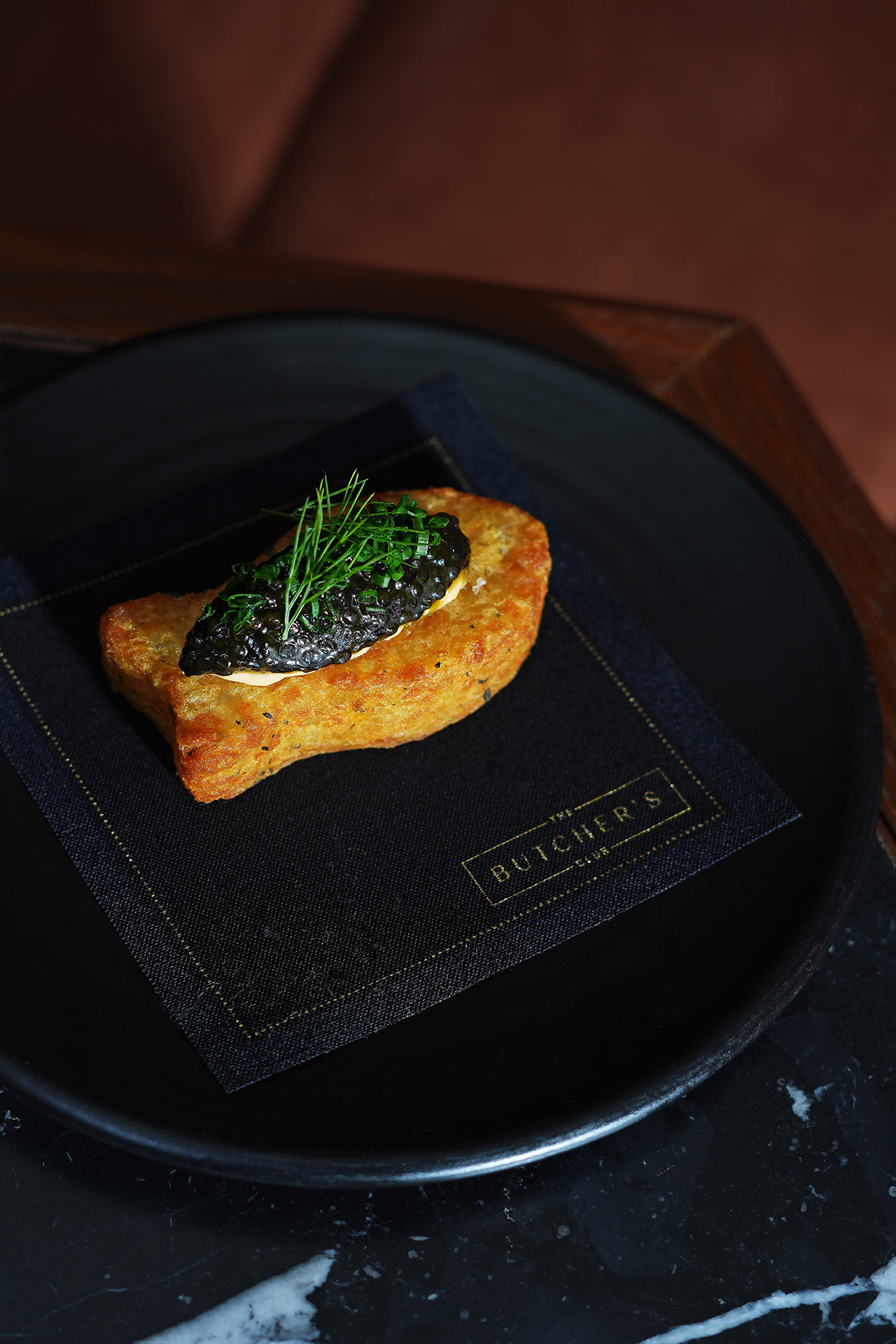
A hash brown is cut into the shape of “one fish,” while a topping of smoked salmon crème fraîche and caviar delivers the “two fish.” © The Butcher’s Club
Passion Fruit Kouign Amann
aioli, West Palm Beach
In West Palm Beach, aioli serves an all-day menu that tempts with baked goods, breakfast sandwiches, soups, salads and more. But what sets it apart is the viennoiserie program: the laminated dough is made in house and the pastries on offer tell personal stories inspired by family travels.
Co-owner Melanie Hackman says that one of the standouts is their passion fruit kouign amann, a buttery, crisp and sugary pastry often considered the caramelized cousin to the croissant. She and her husband, Michael, who is the chef at aioli, first tried kouign amann — which was invented in Brittany, France — on a 2015 trip to San Francisco.
“When we returned home, Chef Michael immediately began perfecting his own version. At the time, the pastry was virtually unheard of in our local area, and he was excited to introduce something both classic and unexpected to our community,” she says.
To make it uniquely South Floridian, the pastry is filled with vibrant passion fruit curd made from locally grown fruit.
“We bake more than 40 varieties of pastries every day, but the passion fruit Kouign Amann remains a customer favorite,” says Hackman.

A buttery, crisp and sugary pastry, often considered the caramelized cousin to the croissant, is filled with vibrant passion fruit curd. © Melanie Hackman/aioli
Rhode Island Crispy Calamari
Ela Curry & Cocktails, West Palm Beach At Ela Curry & Cocktails in West Palm Beach, Chef Pushkar Marathe showcases the diverse cuisines of the Indian subcontinent, drawing on his upbringing in India and the home cooking of his mother and family.
It may come as a surprise, then, that one of the restaurant’s most popular dishes is Rhode Island Crispy Calamari. But while the seafood comes from New England, the inspiration is unmistakably Indian — from the technique and spice blend to the finishing touches.
Point Judith calamari is flown in every other day, then marinated in buttermilk, Kashmiri chili and fried curry leaves before being dredged in chickpea flour, rava flour (also known as semolina or sooji) and cornmeal and fried until crisp. “As soon as the calamari comes out of the fryer, it is tossed in a house-made Podi seasoning blend (affectionately known as ‘Gunpowder’ and made from roasted lentils, dried chilies and aromatic spices), giving the calamari a coating as well as aromatics that make the dish unique,” says Marathe.
A creamy aioli made with pickled green mangoes is served alongside. The mangoes are pickled for three months, allowing the kitchen to capture the fruit’s bright flavor long after the season has ended.

Rhode Island calamari is marinated in buttermilk, Kashmiri chili and fried curry leaves before being dredged in flour and cornmeal and then fried. © Alissa Dragun Photography/Ela Curry & Cocktails
Royal Red Shrimp
Emelina, West Palm Beach The philosophy behind West Palm Beach’s Emelina imagines what Cuban cuisine might have become if the island’s chefs had been free to travel the world, experience other cultures and flavors, and bring that knowledge back home. “Rather than recreating traditional Cuban dishes,” explains chef-owner Osmel González of the West Palm Beach restaurant, “we use that lens to tell the story of a Cuba that never had the chance to evolve in that way.”
Once you’ve settled into one of just 16 seats surrounding the open kitchen, prepare for a singular tasting menu experience. Among the dishes that diners consistently rave about is the Royal Red Shrimp, featuring sweet Florida shrimp in a young coconut curry broth infused with galangal (an aromatic root spice from the ginger family), lemongrass, hoja santa (a fragrant Mexican herb) and muntingia, a tropical berry with a delicate cotton candy-like sweetness.
“Coconut trees have always been part of our island, as have ingredients like culantro [a tropical herb similar to cilantro] and lemongrass]. [These are] flavors we often associate with other cultures, yet growing under the same Caribbean sun that shaped our own.”

Sweet Florida shrimp in a coconut curry broth is infused with galangal, lemongrass, hoja santa and muntingia. © James Jackman/Emelina
Short Rib Empanadas
būccan, Palm Beach At būccan in Palm Beach, Chef Clay Conley offers creative takes on a panoply of new American classics, from grilled swordfish puttanesca to a hot dog panini. His love of Latin flavors inspired one of the restaurant’s most sought-after bites: the short rib empanada, available individually or in multiples, depending on your appetite.
To make it, the kitchen braises short ribs with the flavors of lomo saltado — peppers, onions, soy sauce, ginger and tomato — before shredding the meat and folding it back into the reduced braising liquid. The filling is wrapped in empanada dough, deep-fried until crisp, then finished with aji amarillo aioli and a bright, acidic onion-based salsa criolla.
“It is flavor-forward but balanced,” says Conley. “You have that crispy, flaky, rich pastry, the creamy slightly spicy aioli, and then a bright salsa to cut through the richness. This is how I love to eat and I think it really resonates with our guests.”

Short rib filling is wrapped in empanada dough, deep-fried until crisp, then finished with aji amarillo aioli and an onion-based salsa criolla. © būccan
Vegetable “Pachadi Salad”
Stage Kitchen & Bar, Palm Beach Gardens Stage Kitchen & Bar in Palm Beach Gardens offers an eclectic menu not bound by any one cuisine. Chef Pushkar Marathe’s Indian heritage, however, does pop up in some dishes, like the signature Pachadi salad.
Instead of lettuce, the salad combines finely shaved seasonal vegetables with steamed sweet corn. Because it contains no leafy greens, it travels exceptionally well without wilting, making it just as popular for takeout as it is in the dining room.
The real star, however, is the dressing. “Fresh turmeric and ginger are juiced, then blended with Dijon mustard, blue agave, vinegar and habanero juice,” says Marathe. “To finish, we use the traditional Indian technique of tadka to temper spices, which are combined with bloomed mustard seeds soaked in vinegar, incorporating them into the dressing. That final step creates remarkable depth and umami, transforming a humble collection of vegetables into something deeply satisfying.”

Instead of lettuce, the salad combines finely shaved seasonal vegetables with steamed sweet corn. ©Libby Vision/Stage Kitchen & Bar
Wagyu Lumpia
Palm Beach Meats, West Palm Beach Palm Beach Meats, located in West Palm Beach, is something of an anomaly: an all-wagyu retail butcher shop, wholesaler and fast-casual restaurant. It’s also the first Kobe-certified establishment in Palm Beach County.
The goal is to highlight wagyu’s versatility. “We always strive to minimize waste, keep the menu approachable and fun, and showcase how wagyu can be used in many ways, from a wagyu tallow brownie sundae to Japanese-inspired wagyu katsu sandos,” says co-owner Eric San Pedro, who runs Palm Beach Meats with his wife, Meghan.
One of the most popular bites is the wagyu lumpia, a crispy Filipino spring roll inspired by San Pedro’s own heritage. “As Filipino food is often viewed as ‘third world,’ adding a few Filipino-inspired dishes to the menu seemed like a must.”
He explains how it’s prepared: “The lumpia filling is made with Australian wagyu trimmings from steak cuts from our meat case and kitchen. We grind it and mix in onion, carrots, green onion, ginger, salt and pepper, then roll that in lumpia wraps.” Fried to order and served with a sweet-and-savory house-made lumpia sauce, it’s an irresistible snack.
“It’s casual and eaten with your hands and people love that… and sauce. Everyone loves dipping in sauce!”

Lumpia filling is made with Australian wagyu trimmings that are ground and mixed with onion, carrots, green onion and ginger, then rolled in lumpia wraps. © Alex Gonzalez/Palm Beach Meats
Hero image: Short Rib Empanada. © būccan

Written by
Kate Heddings
Kate Heddings is a food editor and writer based in New York City. She also contributes to Food & Wine and BBC Travel.
Dining and Cooking