

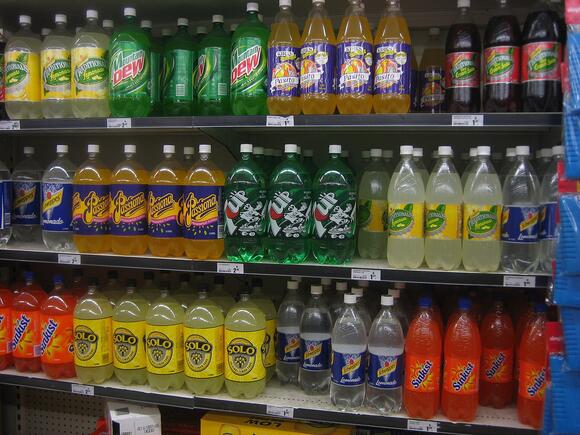
 SMC at English Wikipedia – Public domain, via Wikimedia Commons
Montana, North Dakota, South Carolina and Virginia began limiting what SNAP benefits can buy on Nov. 1, 2026, raising to 12 the number of states where restrictions on sweetened drinks and candy are in force, according to a Nov. 17 report from Global Agriculture. The four states joined eight that had switched on their own rules earlier in the year.
The lists are not identical. Each state asked the U.S. Department of Agriculture for a waiver and chose its own categories, so what a shopper can put on an EBT card in Virginia differs from what is allowed in South Carolina or Montana. Newsweek reported on Nov. 6 that the four states moved ahead even after a June court ruling had delayed their start.
What changed in the four states Markus Spiske via Rawpixel – CC0 1.0 public domain
The USDA’s SNAP food restriction waiver page, updated Nov. 12, lists what each state restricts. Montana covers high-sugar beverages, energy drinks, candy and prepared desserts. North Dakota covers sweetened beverages, energy drinks and candy. South Carolina covers candy, energy drinks, soft drinks and sweetened beverages, while Virginia covers only sweetened beverages.
Local reporting adds detail on the beverage lists. WTVR reported that Virginia’s rule, which took effect Sunday, Nov. 1, bars soda, sugar-free soda varieties, zero-sugar soda and carbonated energy drinks, while non-carbonated energy drinks, unsweetened seltzer, lemonade, juice, tea, milk and infant formula remain eligible. The station added that the change does not reduce a household’s monthly benefit amount and that recipients do not need a new EBT card.
In South Carolina, WIS reported that zero-sugar soft drinks remain allowed, that all SNAP-approved retailers take part and that households cannot opt out. It said the program served 235,235 households in June. For more on the rules in other states, craftingyourhome.com has a report on how Florida, Missouri and Montana restrict prepared dessert purchases with SNAP benefits, and frenzhub.com has a guide to saving money fast for households trying to stretch a grocery budget.
The eight states that moved first
According to Global Agriculture, Indiana and Utah began on Jan. 1, 2026, followed by Idaho and Oklahoma on Feb. 15, Louisiana on Feb. 18, Texas on April 1, Florida on April 20 and Arkansas on July 1. The USDA table shows the scope varies: Utah restricts soft drinks, Indiana and Oklahoma soft drinks and candy, Idaho soda and candy, and Florida adds prepared desserts to soda, energy drinks and candy.
Arkansas goes further on beverages, covering fruit and vegetable drinks with less than 50 percent natural juice along with soda, energy drinks and candy. A craftingyourhome.com report on the drop in SNAP participation nationwide gives the wider enrollment picture, a look at middle-class households that could face unexpected tax bills covers another budget pressure, and frenzhub.com’s list of clever frugal living tips covers budgeting basics.
The court ruling and what is still pending
Newsweek reported that on June 22 a federal district judge ruled that the USDA exceeded its authority in approving waivers for Colorado, Iowa, Nebraska, Tennessee and West Virginia, finding the agency had failed to meet notice requirements. The USDA page notes the order, in Aragon et al. v. Rollins et al., and marks the waivers for Colorado, Iowa, Tennessee and West Virginia as vacated. Global Agriculture said the USDA has told retailers in Iowa and West Virginia to stop applying the restrictions.
Nebraska is next on the USDA’s calendar. The agency lists Dec. 1, 2026 for soda, soft drinks and energy drinks, with candy added on March 1, 2027, although Newsweek said that waiver was still awaiting USDA approval at the time of its report. Wyoming is listed for Feb. 1, 2027, Kansas and Missouri for Feb. 15, 2027, Hawaii and Ohio for April 1, 2027 and Nevada for Feb. 1, 2028. A craftingyourhome.com piece on state grocery aid for eligible SNAP recipients shows other programs moving at the same time.
What it means at the register
SNAP benefits are loaded onto an electronic card and can normally be spent on almost any food or non-alcoholic drink at an authorized store, Global Agriculture explained. Under a waiver, a state removes specific categories from that eligible list for a trial period, and the checkout system declines the restricted items. The USDA page links a retailer notice for each state, and the state agencies also publish a household list of what can and cannot be bought.
Because the categories differ, a shopper who crosses a state line faces a different list. Retailers that operate across state lines, the outlet said, have to reprogram point-of-sale systems store by store. Households in the four newest states keep the same card and, per Virginia, the same monthly amount, with only the eligible items changing, according to the state agencies quoted by local stations.
Why the rules are contested
Agriculture Secretary Brooke Rollins has argued that SNAP should pay for food rather than soda and candy, and the administration describes the waivers as a way to give states flexibility. Anti-hunger groups have criticized the changes. Newsweek quoted Kavelle Christie, who told the outlet that in rural areas and food deserts, convenience stores and fast-food chains are often the only options.
Global Agriculture said critics also argue that the rules add complexity at the register, particularly for retailers that operate across state lines and must follow a patchwork of definitions. The waivers are described as trial periods, so the lists may change as the USDA and the courts weigh in.
For shoppers, the practical step is to check the state’s own list before heading to the checkout, since the categories differ and zero-sugar drinks are handled differently in different places. Frenzhub.com’s collection of wallet-friendly life hacks offers more grocery-budget ideas, and its look at things that are actually getting cheaper adds a price angle, and the USDA page links each state’s retailer notice and contact for questions.
Get stories like this by email.Sign up for Crafting Your Home.
This article was produced with AI assistance and edited for accuracy against the sources linked above.
Image: SMC at English Wikipedia – Public domain, via Wikimedia Commons
Dining and Cooking