
AI-translated and reviewed by a professional translator
Not all business ideas emerge from a meticulously planned strategy. Some arise almost by chance: from a personal experience, a conversation, or something as simple as trying something for the first time. For brothers Juan and Borja Molina-Martell, that spark came with a simple dish of sushi shared in London, which ignited their passion for Japanese gastronomy. At the time, both were in their early twenties and had virtually no hospitality experience, beyond Borja’s brief stint working at his aunt’s rice and seafood restaurant in Mojácar.
Almost without realising it, they had stumbled upon a culinary world that would ultimately define their careers. Backed by financial support from their father, they opened Nomo Gràcia in 2007, at a time when Japanese dining was still a rare proposition in Barcelona. Nearly two decades on, that initial restaurant has evolved into Grupo Nomo, boasting around 300 staff, some ten venues across Barcelona, Girona, the Costa Brava, Madrid, and Andorra, and projected turnover exceeding €20 million this year. Now, that very same enthusiasm for Japan has given rise to Nimi, a new concept within Grupo Nomo that, rather than revisiting the initial sushi dish that first captivated them, focuses on more informal dining: sandos – Japanese sandwiches – okonomiyaki, pastries, matcha, and other dishes inspired by Japan’s street food and modest neighbourhood taverns.
The name of this new venture already mirrors its ethos: a younger sibling that shares Nomo’s roots, philosophy, and much of the insight accumulated over these two decades, but makes no attempt to mimic its older brother. Quite the opposite: the new concept was born precisely to carve out a place for everything that has no home within Nomo.
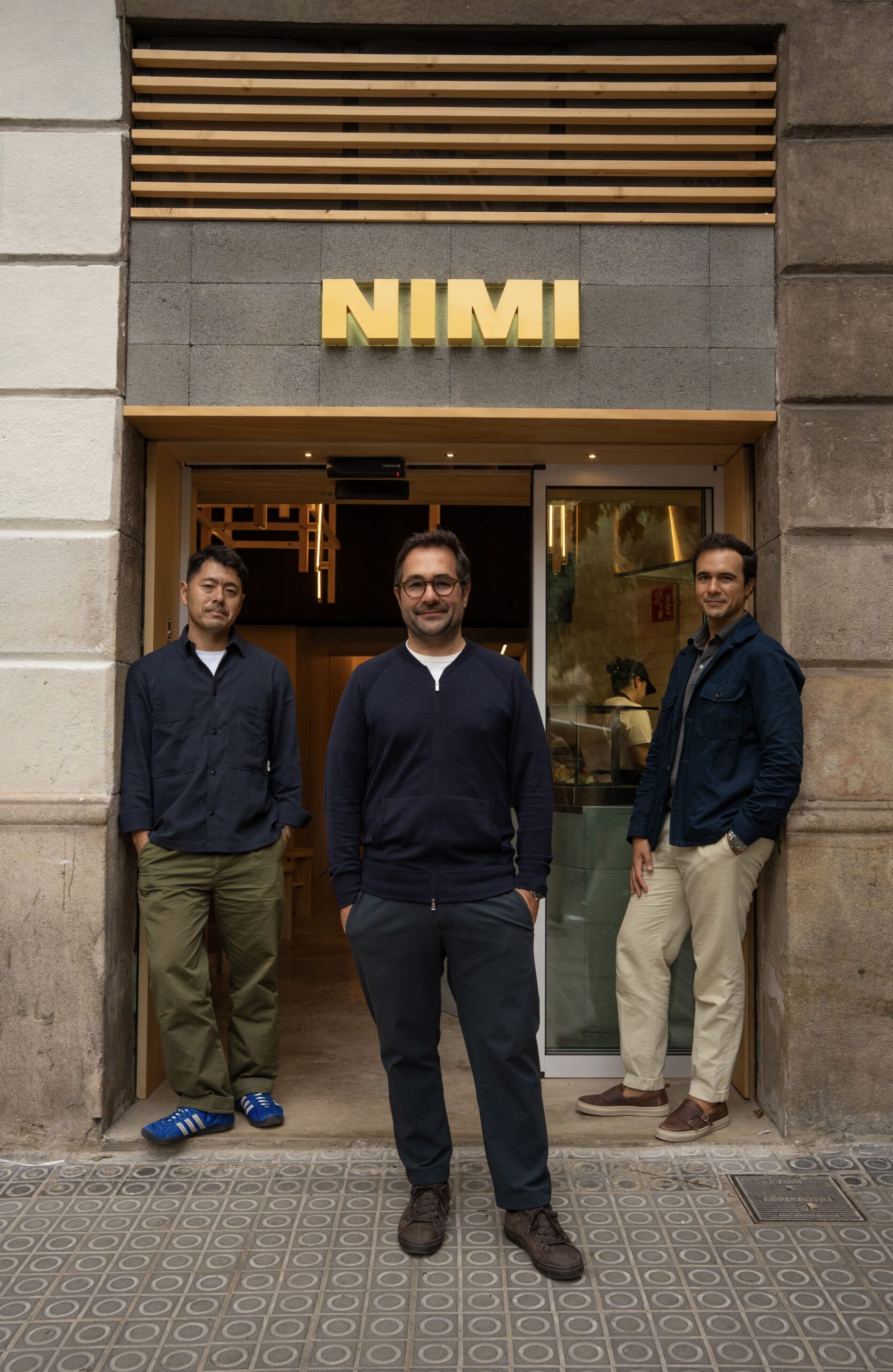
The inaugural Nimi opens this Thursday 8 October at Pau Claris, 107. It will be a more casual Japanese bar, with an average spend of around €22, compared to the €40 to €50 – or even higher – typical of Nomo establishments. It will trade from eight in the morning until midnight, serving a menu where sushi makes way for dishes drawn from Japanese street food culture.
From travels in Japan to the tables of Nimi
Yet the points of departure from Nomo will not be confined to spend or format. Nimi will feature its own dedicated menu, developed from scratch alongside Naoyuki Haginoya, executive chef and partner at Grupo Nomo since its inception, and led by Hisanori Matsuki at the helm of the new concept.
Borja Molina-Martell, Naoyuki Haginoya, and Juan Molina-Martell, co-founders of Grupo Nomo, pictured with some of the new venue’s dishes. © Nomo
Still, although the menu is brand new, the concept for Nimi has been in gestation for around two years. Regular trips to Japan continually expanded the roster of recipes that, for one reason or another, never quite fit within Nomo. “Every year we travel to Japan, we discover new spots and enjoy all kinds of dining, from humble neighbourhood joints to Michelin-starred restaurants. There were recipes and formats that had fascinated us for years, ideas we had kept on the back burner and wanted to bring to life. Nimi provides us with the space to do just that,” explains Borja Molina-Martell, co-founder and CEO of Grupo Nomo, speaking to The New Barcelona Post.
With the concept clearly defined, the time came to secure its own space. The search for the right site – in a central location with plenty of footfall from both locals and visitors – took months. Then came the fit-out, which dragged on for nearly a year and involved an investment of €250,000. Overseen by Mas-Aqui Arquitectura & Interiorismo, the design steers clear of the conventional aesthetic of a Japanese restaurant: free of clichés or overt decorative tropes, Nimi favours an intimate room seating around thirty diners, complete with a counter providing a front-row view of the culinary craft. Timber, concrete, brass, and white brick combine in an interior conceived to outlast fleeting fads and retain a distinctive character over time.
To devise the menu, they largely applied the same approach Borja Molina-Martell outlined in an interview with The New Barcelona Post, which hangs in Nomo’s head office like an operational roadmap: the PACO method, an acronym for Pasión, Aprendizaje, Calidad, and Obtención de Resultados (Passion, Learning, Quality, and Delivering Results). It is a philosophy that carries directly into Nimi’s kitchen: arriving at the six sandos that ultimately made the cut required the team to test roughly 200 variations.
While they might look deceptively simple at first glance, Molina-Martell maintains that everything hinges on produce and letting it take centre stage. “With this type of dish, you can pack in all sorts of ingredients, but for us the priority is having one hero ingredient that is unmistakable and of the utmost quality. Everything else should complement and elevate it, never mask it,” he explains.
The outcome is a menu rooted in Japanese techniques and culinary touchstones, but informed by a local sensibility. Nimi does not seek to replicate Japan literally, but rather to tailor that inspiration to local produce and palates. Highlights among the six sandos include an ebi chilli featuring tempura prawns, lettuce, hard-boiled egg, and a lightly spiced pink sauce; a wagyu creation with teriyaki and Japanese mayonnaise; and panko-crusted pork loin with red cabbage and tonkatsu sauce. The same ethos extends across the rest of the menu, featuring okonomiyaki – reviving a recipe that appeared on Nomo’s very first menu – gyozas, and other dishes pairing Japanese culinary methods with regional ingredients.
Borja Molina-Martell, CEO of Grupo Nomo, at the group’s offices beside the sign detailing the PACO method. © Àngel Bravo
Nor is the menu tied to a single moment in the day. Nimi was conceived to adapt to varying rhythms and occasions, from breakfast through to dinner, alongside quick, informal bites. For breakfast, options will feature Japanese milk bread, cookies, and coffee, alongside various preparations of matcha and ube – a drink crafted from purple yam paste, a Filipino tuber known for its striking violet hue. The daytime offering is rounded out by sweet treats available throughout the day, including a hojicha cheesecake made with recuit de Fonteta and a whipped cream, strawberry, and mascarpone sando.
The way the menu is assembled also reflects an approach to hospitality Grupo Nomo has championed since day one: starting with what they love, then stepping into the customer’s shoes. “I believe Nomo’s success stems from doing what excites us first, but always thinking like customers,” Borja explains. “When we launched the first Nomo, our mantra was simple: let’s build what we would want to find as diners.” It is a philosophy they adhere to today: the brothers and senior leadership regularly dine in their own restaurants, sampling the food as patrons before evaluating it from a business standpoint.
The sando introduced by Grupo Nomo a few months ago, one of the creations that inspired the launch of Nimi. © NomoJapanese dining, twenty years on
The clientele has also shifted considerably since those early tables at Nomo back in 2007, when the cuisine still retained an air of the exotic, appealing mostly to well-travelled diners already familiar with Japanese flavours. Two decades later, sushi is not merely ubiquitous: Japanese culture has become increasingly woven into the fabric of Barcelona, from gastronomy to new ingredients, drinks, and casual dining habits. “My children are three years old and eat sashimi and sushi all the time. To them it’s completely ordinary; twenty years ago, the thought of them eating raw fish would have been unthinkable,” Molina-Martell observes.
That widespread familiarity has also expanded the settings and formats in which Japanese food is enjoyed. It no longer needs to be reserved for a special occasion or confined to a formal dining room: it can be breakfast, a fast lunch, an afternoon snack, or a takeaway order. Indeed, Grupo Nomo has operated in food delivery for fifteen years, long before it became standard practice, launching Nomomoto, its proprietary delivery service. Today, this channel generates around 20% of Nomo’s business, and Nimi incorporates it from the outset, combining dine-in service, takeaway, and home delivery.
Nomo operates ten establishments across Barcelona, Madrid, Girona, and Andorra. © Nomo
Add The New Barcelona Post as your preferred Google source for free
Stay informed with the latest news.
Activate now
Dining and Cooking