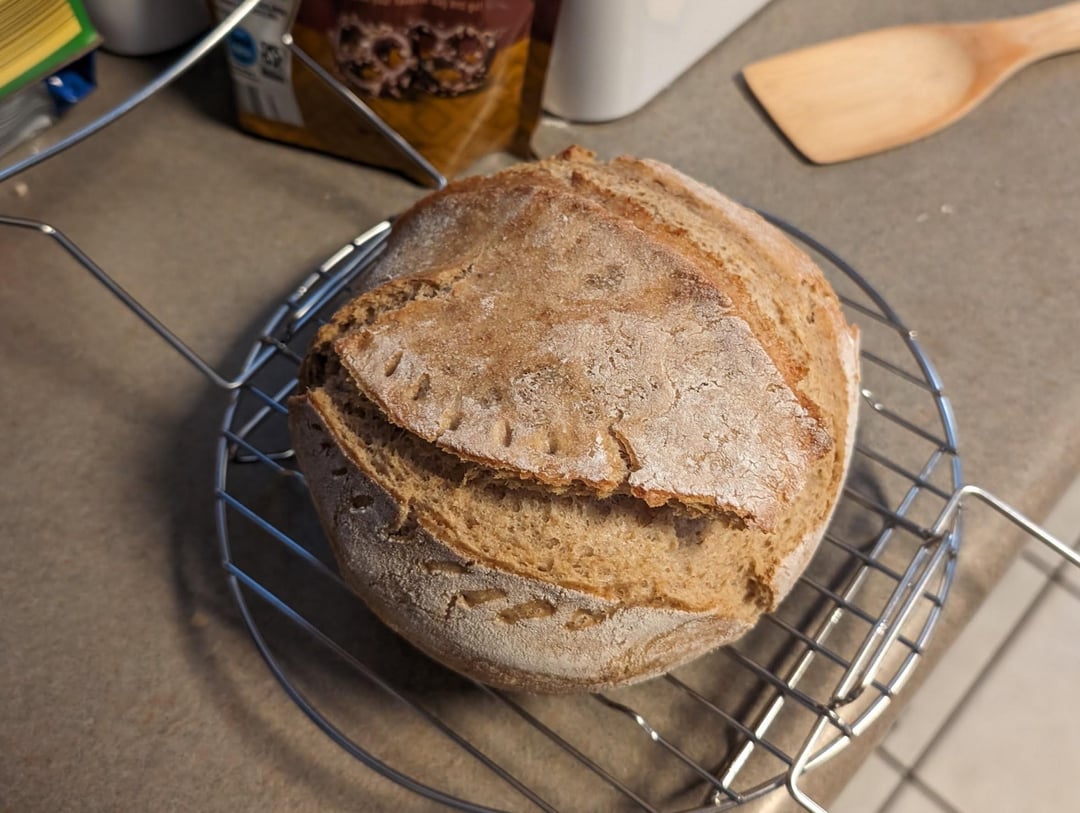
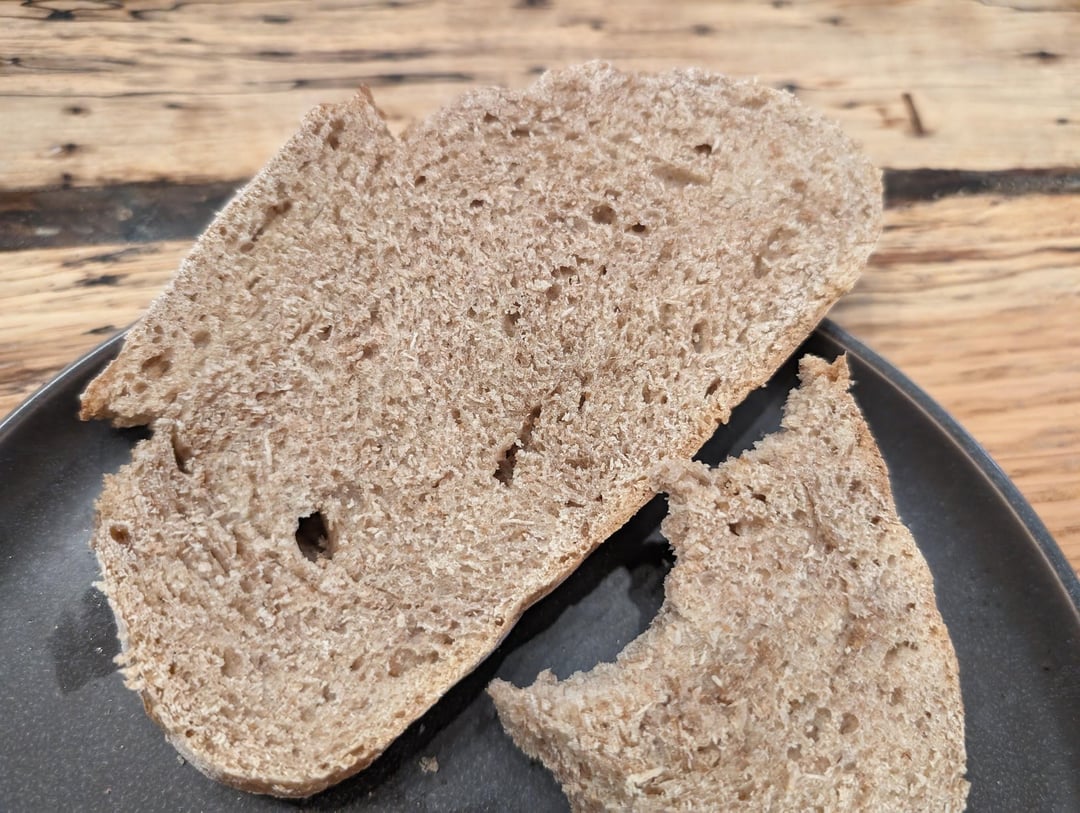
New to bread making, every loaf turns out good looking on the outside, but dense on the inside. What to do?
New to bread making, every loaf turns out good looking on the outside, but dense on the inside. What to do?
by RarScaryFrosty
11 Comments
RarScaryFrosty
Recipe calls for 3.25 cups of all purpose unbleached flour, 1.5 cups of water, 2TSP salt, and 1TSP of yeast. I bloom the yeast first in warm water for 5 minutes, and then add in all of the flour, salt last. I am using a stand mixer with a dough hook to mix the dough.
I let it rise for 18 hours on average in which it gets HUGE 2x the size, then shape it into a ball pulling the sides of the dough over itself. Lightly floured so it’s not sticking to my hands. I then preheat the oven with my dutch oven inside, give it an hour or so to heat up while the bread sits there resting as a ball, and then toss the dough into the dutch oven and bake for 30+ minutes depending on color of the crust.
What am I doing wrong here? The bread tastes good, but is dense. The pictures from the recipe look less dense and have a nicer crumb.
brett-
Are you sure you aren’t using some sort of whole wheat flour? The color of the bread looks quite a bit browner than I would expect from all purpose flour. Whole wheat flour tends to have a tighter crumb like this as well.
JayP1967
It looks over proofed to me. I would think an 18 hour rise might cause your dough to over proof. I also think you need to use less yeast. I would steer you towards the King Arthur website. Their recipes are tested and pretty solid. Use a scale and weights in grams. Are you kneading the dough? Or are you using a no knead recipe?
InksPenandPaper
What kind of qualities are you looking for in your loaf?
If you’re looking for an open, airy crumb that’s indicative of, say, sourdough breads, you’re not going to get that with commercial yeast.
LuigiPasqule
I would use bread flour. I use king arthur bread flour. More glutin!
sailingtroy
I’m trying to see the shape of the holes in your loaf, but the focus isn’t quite clear enough. I think you have some collapsed, wide holes instead round ones. That’s a sign that so much fermentation has occurred that acid has built up. That eats the gluten structure and causes the holes to be flattened. I think your bulk rise is too long.
You could try using less yeast, or do your bulk rise in the fridge so you maintain that overnight, no-knead process. My no-knead recipe uses 1/4tsp of yeast, for example. Otherwise, I would suggest doing the slap ‘n fold, or coil folds with rest periods over a 6 hour period, but that’s kind of a totally different bread at that point.
markedddd
More kneading. Knead until the dough passes the windowpane test (google it). The bulk rise needs to go until the dough has doubled in size. Use a clear straight walled container for the rise so you can mark the dough’s original level and see when it’s doubled in bulk
avrafrost
The recipe you mentioned says you’re using standard yeast with an 18 hour bulk? That seems a bit much. Are you trying to make a faux sourdough? Commercial yeast would need a 2 hour bulk at most at room temp.
plymouthvan
This looks a lot like the results I was getting before I started using a lot less yeast and letting things ferment for a lot longer. If I use about 1/8th teaspoon of yeast for every 500g of flour and let it ferment for a good 24 hours before shaping, my results look a lot more like the beautifully hole-y loaves that often turn up in this sub. It seems that other people are capable of getting those results with much shorter fermentation times, but I feel like I’ve tried everything and still have no idea how they’re doing it.
maythehousecat
Test the ability of the yeast to re-rise that dough after you shape it. Next time you make it, after the 18 hour rise followed by shaping, cover the shaped dough with an overturned glass bowl and wait until you see it rise again at least 1/3 larger. Is your house cold? (Under 70f) might take a couple hours. Does it not rise at all, ever, even after hours on the counter? Yeast is played out, there’s no uneaten food left in the dough for the yeast, it can’t generate the gasses you need for an airy crumb.
If the dough ball rises within a few hours, toss it in the oven per usual, see what you get back out!
If it didn’t rise at room temp on the counter after shaping, dial back your bulk rise to ten or twelve hours, see what changes.

11 Comments
Recipe calls for 3.25 cups of all purpose unbleached flour, 1.5 cups of water, 2TSP salt, and 1TSP of yeast. I bloom the yeast first in warm water for 5 minutes, and then add in all of the flour, salt last. I am using a stand mixer with a dough hook to mix the dough.
I let it rise for 18 hours on average in which it gets HUGE 2x the size, then shape it into a ball pulling the sides of the dough over itself. Lightly floured so it’s not sticking to my hands. I then preheat the oven with my dutch oven inside, give it an hour or so to heat up while the bread sits there resting as a ball, and then toss the dough into the dutch oven and bake for 30+ minutes depending on color of the crust.
What am I doing wrong here? The bread tastes good, but is dense. The pictures from the recipe look less dense and have a nicer crumb.
Are you sure you aren’t using some sort of whole wheat flour? The color of the bread looks quite a bit browner than I would expect from all purpose flour. Whole wheat flour tends to have a tighter crumb like this as well.
It looks over proofed to me. I would think an 18 hour rise might cause your dough to over proof. I also think you need to use less yeast. I would steer you towards the King Arthur website. Their recipes are tested and pretty solid. Use a scale and weights in grams. Are you kneading the dough? Or are you using a no knead recipe?
What kind of qualities are you looking for in your loaf?
If you’re looking for an open, airy crumb that’s indicative of, say, sourdough breads, you’re not going to get that with commercial yeast.
I would use bread flour. I use king arthur bread flour. More glutin!
I’m trying to see the shape of the holes in your loaf, but the focus isn’t quite clear enough. I think you have some collapsed, wide holes instead round ones. That’s a sign that so much fermentation has occurred that acid has built up. That eats the gluten structure and causes the holes to be flattened. I think your bulk rise is too long.
You could try using less yeast, or do your bulk rise in the fridge so you maintain that overnight, no-knead process. My no-knead recipe uses 1/4tsp of yeast, for example. Otherwise, I would suggest doing the slap ‘n fold, or coil folds with rest periods over a 6 hour period, but that’s kind of a totally different bread at that point.
More kneading. Knead until the dough passes the windowpane test (google it). The bulk rise needs to go until the dough has doubled in size. Use a clear straight walled container for the rise so you can mark the dough’s original level and see when it’s doubled in bulk
The recipe you mentioned says you’re using standard yeast with an 18 hour bulk? That seems a bit much. Are you trying to make a faux sourdough? Commercial yeast would need a 2 hour bulk at most at room temp.
This looks a lot like the results I was getting before I started using a lot less yeast and letting things ferment for a lot longer. If I use about 1/8th teaspoon of yeast for every 500g of flour and let it ferment for a good 24 hours before shaping, my results look a lot more like the beautifully hole-y loaves that often turn up in this sub. It seems that other people are capable of getting those results with much shorter fermentation times, but I feel like I’ve tried everything and still have no idea how they’re doing it.
Test the ability of the yeast to re-rise that dough after you shape it. Next time you make it, after the 18 hour rise followed by shaping, cover the shaped dough with an overturned glass bowl and wait until you see it rise again at least 1/3 larger. Is your house cold? (Under 70f) might take a couple hours. Does it not rise at all, ever, even after hours on the counter? Yeast is played out, there’s no uneaten food left in the dough for the yeast, it can’t generate the gasses you need for an airy crumb.
If the dough ball rises within a few hours, toss it in the oven per usual, see what you get back out!
If it didn’t rise at room temp on the counter after shaping, dial back your bulk rise to ten or twelve hours, see what changes.
Let it proof nore