
10 Failed Food Inventions You’ve Never Heard Of
► Subscribe For New Videos! ► https://goo.gl/XPOHAZ
► For copyright issues, send us an email at : business@plainmedia.co
Would you eat a frozen dinner if it tasted like toothpaste customers thought it was so gross that McDonald’s discontinued it after one month in The Culinary world Innovation is key but not every creation becomes a staple some turn out to be epic fails and a forgotten part of the food industry from
Cheeto chapsticks to celery flavored Jello-O some inventions left consumers curious confused and even disgusted join us as we explore 10 notable food inventions that missed the mark number one ranch dressing soda the ranch dressing soda was introduced as a novelty item in the 2000s it aimed to capture the familiar Tangy notes of
Ranch dressing in a liquid form developed by a specialty soda company Lester’s fixen it represents an adventurous step in flavor experimentation merging a popular American condiment with the concept of a soft drink the Public’s response to ranch dressing soda was mixed some consumers were intrigued by its innovative approach eager to experience
This unconventional flavor Fusion others however were hesitant finding the idea of a salad dressing flavored soda outside their comfort zone despite varying opinions ranch dressing soda gained attention for its bold attempt to redefine traditional soda flavors number two mixed spaghetti by McDonald’s in the late 1980s McDonald’s ventured into
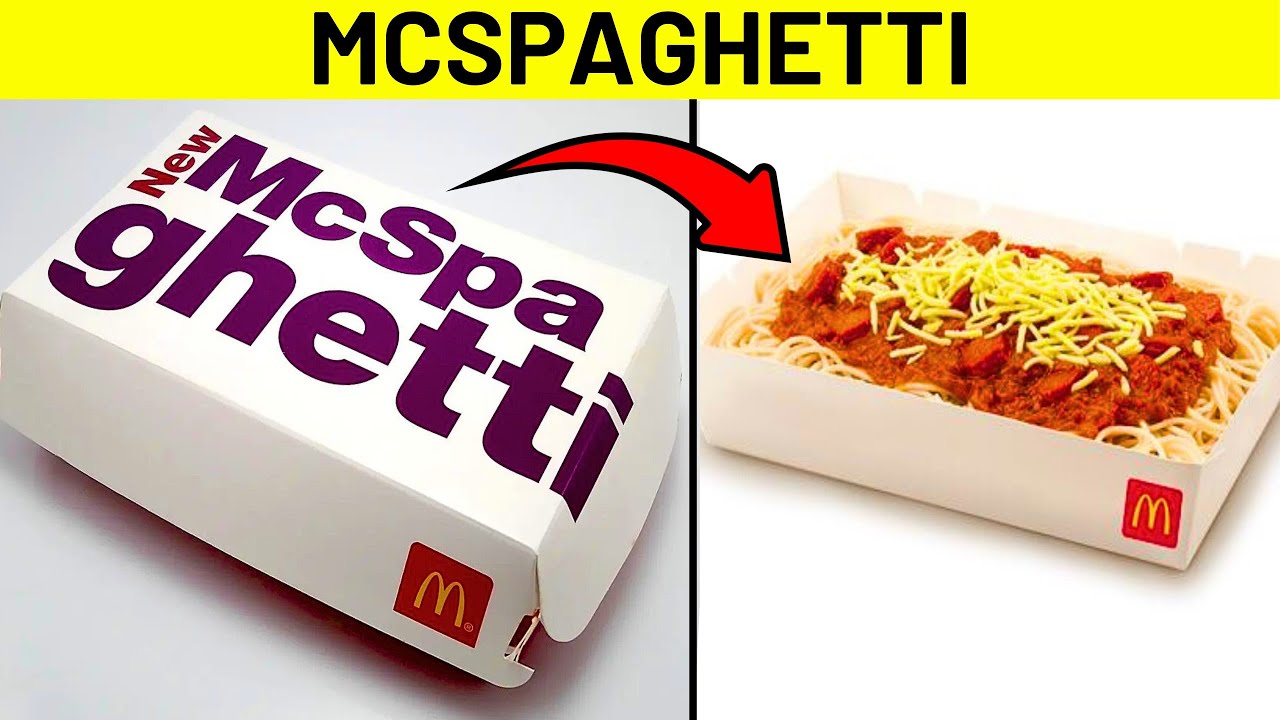
Italian cuisine with items like MC spaghetti as part of an effort to expand their dinner menu this move was a shift from their traditional offerings of Burgers and Fries however the introduction of Mex spaghetti along with items like mcpizza was not well received by customers the core issue was that
These Italian dishes did not align with McDonald’s established brand identity customers came to McDonald’s for its classic American fast food and the Italian options seemed out of place this disconnect led to the poor performance of mix spaghetti in the market additionally customers expressed dissatisfaction with the longer preparation time of these items which
Contradicted the Quick Service aspect McDonald’s was known for the quality of McDonald’s Italian offerings particularly the pizza was also criticized for not matching those of specialized pizza chains ultimately the experiment with Italian food including MC spaghetti was short-lived and it was removed number three hoola burger by McDonald’s in the early 1960s McDonald’s
Introduced the hoola Burger this unique creation replaced the traditional meat Patty with a grilled pineapple ring topped with a slice of American cheese and served on a standard McDonald’s bun this menu item was part of an effort to cater to meat avoiding customers particularly during the Lenton season
When many Catholics abstain from meat the hoola Burger was conceptualized by Ray Croc McDonald’s then president as an alternative to the fileo fish a fish sandwich invented by franchisee Lou groan Gran’s invention was in response to declining sales during Lent McDonald’s decided to hold a popularity contest between the hoola burger and the
Fileo Fish at select locations the result was clear the fileo fish was a success selling 350 sandwiches compared to only six hoola Burgers the hola Burger’s failure was attributed to its unconventional composition customers found the combination of pineapple and cheese on a bun to be unappealing leading to its quick removal from the
Menu today the hoola Burger is remembered as one of McDonald’s biggest flops often cited as an example of an innovation that missed the mark in understanding its customer base number four colgate’s beef lasagna in the world of unlikely brand extensions Colgate beef lasagna stood out this product was
Rumored to be part of colgate’s attempt to enter the Frozen TV dinner Market in the 1980s it was often cited as a classic example of brand extension gone wrong the story gained prominence thanks to the Museum of failure in Sweden which highlights various corporate mistakes including Colgate step into the food
Industry Colgate reportedly denied any recollection of such a product line creating doubt about its existence despite this sources like the Museum of failure and the drum discussed the product the Museum of failures Dr Samuel West reconstructed what colgate’s frozen dinner looked like based on information from reputed online sources meanwhile
The drum noted colgate’s attempt to capitalize on its brand loyalty to enter the ready meal Market historical records from the 1960s like a profile in television age magazine and a report by the American Institute of food distribution provided some evidence of colgate’s brief and unsuccessful entry into food food products including
Chicken and crab meat Entre these Ventures were reportedly test marketed and quickly withdrawn indicating colgate’s exploration Beyond its traditional product range while the full truth about Colgate beef lasagna remains a mystery these Snippets from history suggests that Colgate experimented with expanding its brand into the food sector with limited and short-lived success
Number five celery flavored Jello-O in the 1960s amidst the popularity of Jell-O salads and aspics a unique product emerged which was celery flavored Jello-O this product was part of a line called Jello-O for salads designed to simplify the preparation of savory jellies celery Jell-O characterized by its celery flavor
Wiggly texture and a hint of sweetness was intended to be combined with added vegetables to create a convenient salad dish the idea behind celery Jello-O and the broader Jello-O for salads line was to capitalize on the trendy concept of gelatin based salads however the notion of celery flavored gelatin did not align
Well with consumer references the concept of adding more vegetables to Jello a product traditionally associated with sweetness and desserts was met with skepticism this mismatch in expectations contributed to the product’s lack of success while Innovative the product ultimately did not resonate with the public reflecting a misstep in understanding the evolving culinary
Preferences of the time number six Hines colored ketchup in 2000 Hines an iconic American brand known for its red ketchup made a bold move it introduced the easy squirt line of vibrantly colored ketchup in Shades like purple pink orange teal and blue the first color blast and green
Was launched in line with the first Shrek movie attracting significant interest from children and parents alike this line saw initial success with over 25 million bottles sold and Hines capturing 60% of the US ketchup Market however by January 2006 the brand was discontinued due to declining sales the
Primary target audience for Hines easy squirt was children with efficient packaging and move tie-ins to appeal to Young consumers while this strategy generated initial excitement it did not sustain long-term brand growth children’s interests change rapidly and products tied to specific movies or Trends tend to have short lifespans additionally parents the primary
Purchasers eventually went back to traditional red ketchup for its familiarity the product itself required significant changes from traditional ketchup including the removal of natural color and the addition of food coloring this re-engineering led to health concerns among parents increasingly wary of artificial additives in their children’s food number seven Cheetos
ChapStick in 2005 Cheetos expanded Beyond its iconic cheesy snacks the brand entered the beauty industry with a Cheetos flavored lip balm this initiative followed a trend of non- Beauty Brands creating novelty products Brands like coca colola and Hershey’s had already ventured into this space Cheetos aimed to offer the taste of
Their snack in a calorie-free lip balm format however the product was not well received by consumers the main issue was in the flavor Choice while other other brands had success with sweet fruity or minty flavors Cheetos opted for a cheese flavor which did not resonate with the typical expectations for lip balm
Consumers generally prefer more traditional lip balm flavors like cherry or mint over something as bold and unconventional as cheese number eight Taco Bell seafood salad in 1986 Taco Bell introduced a seafood salad an unconventional item for a brand known primarily for its Mexican inspired fast food this salad included a mix of shrimp
White fish and crab along with typical taco toppings all served in a tortilla bowl the introduction of seafood to Taco Bell’s menu was a significant departure from their standard fair and represented an attempt to diversify their offerings however the seafood salad was short-lived and was quickly removed from
The menu the primary reason for its discontinuation was a series of reported food poisoning cases as per spoon University these incidents raised concerns about the safety and quality of seafood items in a fast food setting particularly from a chain not traditionally associated with seafood the Swift removal of the seafood salad
From Taco Bell’s menu marked its entry into the list of failed fast food Concepts number nine chocolate chip pancake wrapped sausage Jimmy Dean’s chocolate chip pancake wrapped sausage is a unique breakfast offering that combines the Savory Taste of sausage with the sweet flavor of chocolate chip pancakes this product is designed for
Convenience offering a quick and easy breakfast solution that can be enjoyed on the go it consists of a sausage link wrapped in a chocolate chip infused pancake combining two traditional breakfast items into one snack while the products convenient is a significant selling point it also raises questions about consumer expectations and health
Considerations this product might not align with the health expectations of some consumers the addition of chocolate chips to the pancake wrap combined with the sausage contributes to a higher calorie and sugar content compared to more traditional breakfast options Jimmy Dean’s chocolate chip pancake WRA sausage reflects the ongoing innovation
In the breakfast food market aiming to provide quick flavorful options for busy consumers number 10 McDonald’s mclobster McDonald’s mclobster was an attempt by the fast food giant to include a seafood sandwich in its menu introduced in the 1990s the mclobster featured a lobster roll this was a popular dish on the east
Coast of North America so they adapted it for fast food the roll typically included Lobster meat mixed with mayonnaise green onions and celery with a drizzle of butter served on a bun the mclobster was primarily available in Maritime regions like Halifax Nova Scotia where Lobster is abundant and popular priced at
$7.99 Canadian it was positioned as a premium item compared to standard McDonald’s offerings its price varied but was generally lower than lobster rolls at local restaurants which could cost anywhere from $8 to $20 however the public reception of the mech Lobster was mixed its Regional availability and
Seasonal nature meant that it wasn’t a staple item across all McDonald’s locations additionally its pricing while competitive for a lobster product was higher than the typical fast food fair this impacted its appeal to the broader McDonald’s custom customer Base
6 Comments
First like
And comment
SECOND LIKE
Ew
The McSpaghetti wasn't really a failed thing, it's still kicking and going strong here in the Philippines where spaghetti is abundant in almost every fast-food restaurant
Thank you for the update, Facts Junkie..!! I remember McPizza but not McSpaghetti. 🤣