
I'm so confused by all the information providing contrasting conclusions about what is healthy. It seems there are articles, books, influencers, and scientific studies all saying complete opposite things! Some are adamant that low carb/paleo/keto is the way to go, and others say WFPB is the answer. I'm trying to be evidence based, but how do you weed through the psuedoscience? I'm also increasingly confused by the "antinutrient" info I'm seeing on sites like this–> https://draxe.com/nutrition/antinutrients/
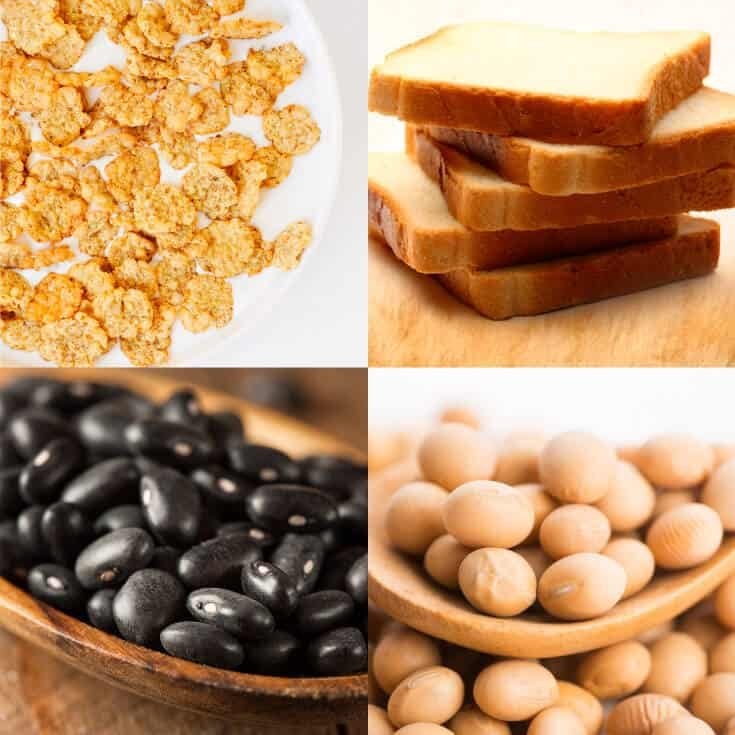
Phytates, tannins, oxalates, lectins, saponins, tripsin inhibitors, isolfavones, solanide, and chaconine… lots of those are apparently found in soy and grains, which are two things I eat a decent amount of. Is this all just fearmongering or is there some validity to it? I've read about fermenting, soaking, sprouting, and cooking to destroy or reduce "antinutrients" but I hadn't been doing any of those things (other than cooking obviously) until now. Is it possible I've been causing nutrient deficiencies unknowingly?? If I can't sprout/ferment/soak or don't like the flavor of fermented foods, is it still safe to eat them? Am I ok to eat plain old unfermented oats, unsprouted legumes, unactivated nuts, plain tofu instead of tempeh, etc.? So much anxiety.
by Due_Butterscotch1647
11 Comments
Nutrition made simple on youtube is a great source of information.
A great website is [examine.com](http://examine.com)
You can just type in whatever you’re looking into and it will bring up any relevant studies that have actually been done and give you a quick breakdown. If there is no info on something you search it’s a strong indicator whatever you’re reading / watching / etc is bullshit.
What are your goals?
The linked article contains a classic brand of nutrition grifter bullshit: fear mongering about a specific chemical or a few chemicals while overlooking the evidence of how the food item as a whole, that contains thousands of different chemicals, affects humans who eat it according to scientific studies.
If studies show that people receive health/nutritional benefits from eating whole grains and legumes, then these foods can’t be “dangerous”, even if one of their many chemical components can be detrimental in isolation.
In general, beware of sources trying to sell you a story (“this food item contains one compound that is good/bad”, “this food item was/wasn’t consumed by ancestral humans”, “this food item does/doesn’t have industry interests promoting it”) instead of evidence (“this type of food is shown to be beneficial/detrimental/neutral by randomized human studies or at least human cohort studies”).
I second the recommendation for Nutrition Made Simple; it’s a great channel.
> I’m trying to be evidence based, but how do you weed through the psuedoscience?
Follow the large organizations that review all the evidence to come up with their recommendations. Government organizations, universities, etc.
Some may say, “Well, they’ve been recommending X for decades, and health is just getting worse.” But that ignores a few points: First, 90% of people don’t follow guidelines. Second, those that *do* follow them, generally have better health outcomes. Finally, we actually have seen improvements in outcomes in conjunction with updated guidelines (e.g., although cardiovascular disease continues to be the leading cause of death, both the incidence and death rate from CVD has dropped steadily for decades).
That said, weight management is one of the most important factors in health, and the saying generally is “The best diet is the one you can stick to.”
I’d also say, in general, chiropractors are not a great source for nutrition advice. The best source will generally be registered dieticians since they have to pass specific certification to use that title (in the US — other countries have different protected titles, I believe).
If you don’t like veganism – you don’t have to be vegan… but please do not post in vegan sub-reddits thinking you’re going to convince anyone with bullshit. Your previous posts about expecting vegans to eat egg whites means that you are now arguing in bad faith.
Dr. Axe is bullshit. “I’m so confused” posting is bullshit too. We vegans constantly read posts like this…
We know the act, it’s boring – so please stop.
Just relax… understand that people decide this stuff on their own… there’s nothing you can do about it no matter how much health mumbo jumbo you post.
there’s articles, books, and influences, sure, but pretty much all of the science confirms that everyone should be eating more fruits, vegetables, whole grains, legumes, etc, and less processed food. Keto is complete nonsense and I’m not really sure what Paleo is tbh.
If you’re getting the majority of your information from the Internet, what you’re going to find is not going to be evidence based.
Is there a reason you’re not spending time with a registered dietitian if you find yourself so confused?
Not a gym bro, not a self proclaimed “nutritionist“. A registered dietitian who has years and years and years of education and practicum.
They can help you learn about actual evidence-based nutrition.
Read about orthorexia.
Trying to be evidence-based? Here ya go: [https://nutritionfacts.org](https://nutritionfacts.org)
You have to look at LONG TERM STUDIES with THOUSANDS of participants. Sure you can lower your weight and certain blood parameters with keto/carnivore/paleo etc., but that is merely short term. In the long run, they are not beneficial and ultimately cause harm. You will not find one long term study that shows these diets to be health promoting and cancer (second leading cause of death) goes up in relation to the amount of animal products eaten.