
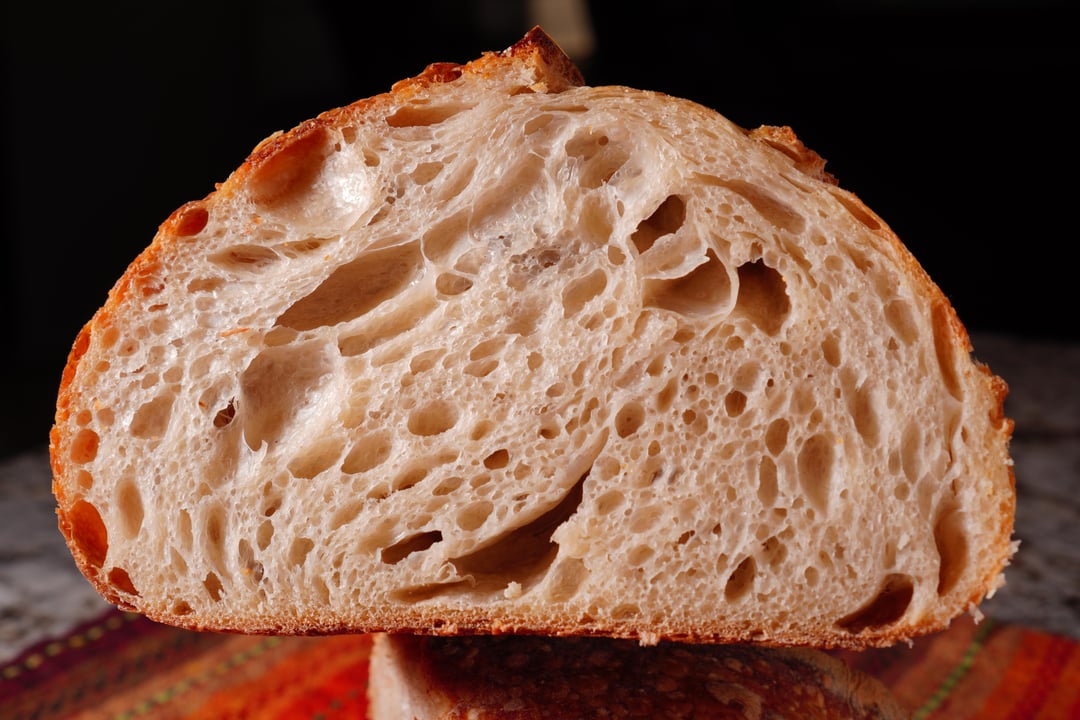
Disclaimer, I am not an expert. But here are some of the things that I wish I had known when I started 6 months ago. Please feel free to add to this list, it would be great to compile lessons learned and share our success crumb photos in this thread.
1) I'll start with some of the things I knew because I watched so many YouTube videos, here was my starting point. Because of the YouTube channel @thesourdoughjourney I knew about the importance of hydrating the dough, monitoring temperatures, building gluten strength, having a strong starter.
2) starter acidity. I had some modest success early on, but after a couple of months I don't know if I got complacent about feeding my starter or I was storing it in the refrigerator for too long but I started to notice that my dough would ferment really quickly, like in a couple of hours. I posted about it on Reddit and someone suggested that my starter had gotten contaminated with commercial yeast, and that sent it about right because my dough is fermenting really quickly and it was sticky and lacked strength and was impossible to shape and the bakes were awful. I decided to recreate my starter from some dried starter flakes that I was saving for an emergency, but I still had the same problem. It took me a long time to figure out that my starter was too acidic, and the way I fixed that problem was to do 1:1:1:peak to peak feeding. Also, I closely monitor the pH of the starter and by trial and error have determined that the optimal pH for my starter in terms of oven spring is 4.09. Monitoring pH has been an absolute game changer for me.
3) cold oven. Because of the YouTuber @chainbaker, I started experimenting with letting my combo cooker come up to temperature, in my case 420° F, and then place the scored loaf in the cooker and turn off the oven completely for 10 minutes and then remove the combo cooker and rescore the bread at the top of the loaf so that it can continue to expand. I have found that this cold oven allows for much more oven spring, the theory is that it's creating an ideal environment for the yeast to do its last hurrah without getting to the temps that kill yeast right away and also keeping the skin of the loaf nice and pliable so that it can rise without having to fight against a hard brown crust. The cold oven method necessitates a longer bake, as does the lower, 420° F, oven temperature. As a result, what used to be a 40-minute bake is now about a 52-minute bake to get it to the right color. If you haven't tried this, definitely give it a shot.
4) cutting off bulk fermentation. I used to religiously follow the sourdough journey channel recommendation, that is widely distributed and adopted, as it relates to percentage rise. I keep my dough at 80° F, so according to all the charts I'm looking for a 30% rise before I preshape. As I mentioned earlier I'm monitor pH of my starter and my dough, the common recommendation for cutting off bulk fermentation is to wait for the dough to drop to a pH of 4.5, do your pre-shape, let it sit for 30 minutes until it drops down to a pH of 4.3. then put it into cold retard for about 12 hours. When it comes out your pH should be at about 4.15. at that pH the acid is starting to take over and is just beginning to destroy the gluten network in a way that's going to interfere with your oven spring. But if you bake it at 4.15, that is absolutely optimal in my experience. It still has lots of dough strength and the yeast is at its peak population. So back to percentage rise for a minute, all the charts say to let it rise about 30% at 80° F, in my experience if I let the dough drop to the optimal pH level The percentage rise at 80° F is about 60%. I let a 1,000 gram batch of dough rise up to about the 1900 ml mark in a fermentation vessel. Allowing it to drop to the proper pH and rise so much more it sounds like you're going to over ferment it, but that has not been my experience at all. Your mileage may vary. One more hint here, at least for me the optimal fermentation creates this effect in the Benetton where the dough pulls away from the sides of the shaping basket at the top. When my bannotin looks like that, I know I'm going to get a good bake.
5} I don't like what putting ice cube does to the look of the crust, in my experience it makes it look mottled in an unpleasing way. I know other people swear by it but my double scoring method and cold oven method are all I need to optimize the spring.
6} lower hydration. I'll be honest, I use cheap flour that is available at my Costco, it's like $9 for 25 lb and it has a gluten percentage of about 13%. It's not fancy and it starts to break down if I add too much water. But I have found that a hydration level of 65% can still give really decent results if you let the dough ferment properly.
7) proofing chambers. I bought a used brod and Taylor proofing chamber on eBay for $100. I love it so much, it has made such a difference for me. I can keep everything in there the flour, water, starter, mixing bowl, autolysing dough. It takes all of the guesswork out of maintaining optimal temperatures and has a nice humid environment for your hungry yeast.
8) Don't be afraid to use a mixer, I find that it's a real time saver and I love the results. I use it to mix the flour and water for the initial autolyse,
Then I use it to mix in the starter and the salt. I don't go too crazy I just let it get it nice and mixed and then I start strengthening by hand.
9) learn bakers percentage, once you know Baker's percentage you can create your own recipes on the fly very quickly and with great confidence.
10) use more salt, recipes call for 2% but they don't take the starter into account. For a 1000 g loaf I do 22 g.
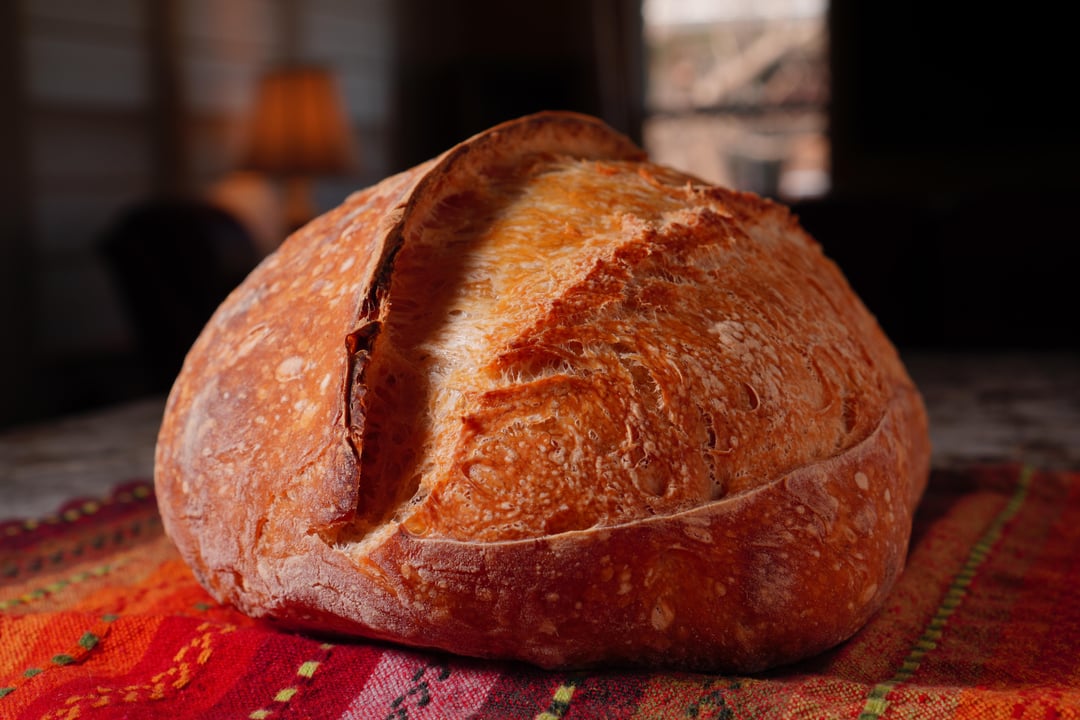
That's it, my top 10 lessons in the last 6 months. Please tell me your lessons and share photos of your success stories. I am posting a couple of photos of my most recent bake, it's not perfect but man was it tasty.
Now you go.
by Slow_Manager8061
4 Comments
Thank you very much for sharing these tips with us! One that particularly stood out to me was the one about a cold oven as most of the time we hear people rave about the importance of having a pre-heated Dutch oven for best results. This is definitely one to play around with 😊
I’m just getting ready to start so I’m saving this!
Appreciate the write up, I’m on my 36th bake and also love to experiment and tweak. The one from your list I plan to try is the cooler oven. I started at 420 and found better results going hotter initially so now I preheat a pizza stone or dutch oven at 500f for an hour. I think my electric oven is slow to preheat because after I quickly put the loaves in, the oven is down to 450f. I drop the temps down to 420f after the initial steamy 20minutes.
Agree with ice cubes, and adding water into the dutch oven, I prefer having a small saucepan of boiling water (to avoid waiting for water to steam) on the bottom of the oven for humidity.
Still messing with hydration, especially when switching between flours. I’ve had good results with Costco organic AP 11.5% at 70-75%. Higher protein isn’t available at my Costco.
I like mixer results, but really enjoy kneading by hand for 10-15min initially to get a feel for the dough and a workout. I like a longer autolyse and long manual knead, with fewer stretch and folds or coil folds later. It’s more convenient.
wow thank you so much for sharing this. I just put a pH tester in my amazon cart!