
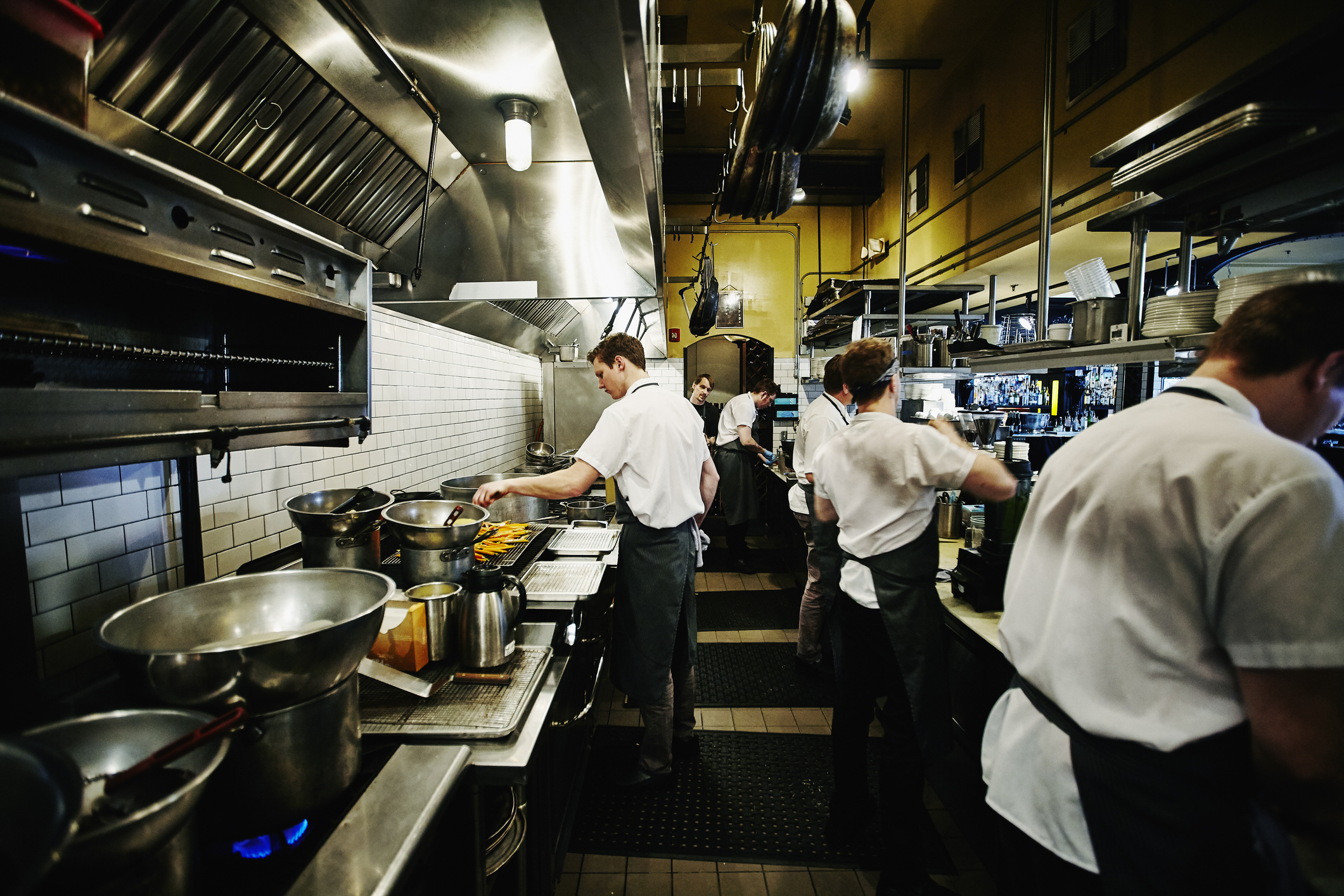
Sweden is the latest EU country to make the origin labelling of meat in restaurants mandatory, as the European Commission hints at an EU-level push in its strategy for the future of agriculture.
European legislation requires labels that indicate the country of origin to market on beef, pork, sheep meat, goat meat and poultry meat. However, there is no obligation at European level to display the origin of the meat consumed in restaurants.
But a wave of EU countries have already taken their own measures to ensure the country of origin appears on menus.
In Slovakia, the obligation for restaurants, canteens, bistros and festival stands to label the origin of their meat has been in force since 2019. It applies to pork, beef, poultry, sheep and goat meat.
In Finland, the same obligation came into force in 2019.
The measures initially met some resistance from restaurants. In Slovakia, the main issue was the administrative burden they would bear to put the origin on their menu.
A compromise solution was found: the origin of the meat does not have to be indicated on the menu if this becomes burdensome, but restaurants must make the information available on the notice board or at the consumer’s request. In Finland as well, restaurants have complained about the increased workload, but not significantly.
The German Poultry Association (ZDG) is urging the future federal government to adopt the same measures.
Last month, Estonia published a draft amendment also requiring the country of origin of the meat to be indicated in catering establishments, and on the same day the French government issued a decree making it compulsory to indicate the origin of all types of meat served in restaurants.
National produce
In France, the measure seems popular with both producers and restaurants.
“Pork consumption is increasing and people are often unaware of where this meat comes from,” director of the French pork industry association (INAPORC) Anne Richard told Euractiv.
According to a 2024 INAPORC survey, she explains, “80% of French people want to know the origin of the meat they eat, and are sensitive to the fact that it comes from France”.
Similarly, Yann Nédélec, director of the French poultry sector association (ANVOL), told Euractiv he was pleased that this obligation will “favour French products”.
This could see more and more restaurant goers order local meat. Alain Fontaine, the president of the French Association of Catering Professionals, said that “if consumers have this transparency, they will naturally turn to French products.”
Dismissing the idea of a possible price increase, he said that the French meat restaurant owners buy “is no more expensive than foreign meat”.
Canteens, which seek to keep prices low, “can avoid transport costs and intermediaries by buying local products,” he added.
But these associations want origin labelling to go even further.
Richard regretted “that this obligation exists for meat, but not for charcuterie,” even though it is frequently served in French restaurants and bars.
Nédélec said that during the trial period in 2023 in France, “only 15% (of restaurant’s owners) applied the law because they were unaware of it.”
Harmonization at EU level
The Vision for Agriculture states that the Commission will “propose an extension of the country of origin labelling” for food.
But the issue is less consensual than it appears.
When Austria and Germany proposed a debate among EU agriculture ministers for a general extension of the obligation for origin labelling, only a dozen of countries supported the initiative.
This is despite the fact that eight EU countries – France, Finland, Greece, Italy, Lithuania, Portugal, Romania, and Spain – have in the past approved their own national schemes on origin labelling for specific foods.
Rules for meat served in canteens and restaurants might provide a starting point.
European Commissioner for Agriculture, Christophe Hansen “seemed very open to the idea” that origin labelling should “be mandatory throughout Europe” at the Agriculture Show in Paris last week, Richard said.
An EU official told Euractiv that the European Commission intended to engage and consult with all relevant stakeholders before proposing any new measures in that regard, and aimed to ensure that any new labelling measures will be practicable, effective and avoid posing disproportionate administrative burdens on farmers and agri-food operators.
[ADM/OM]