
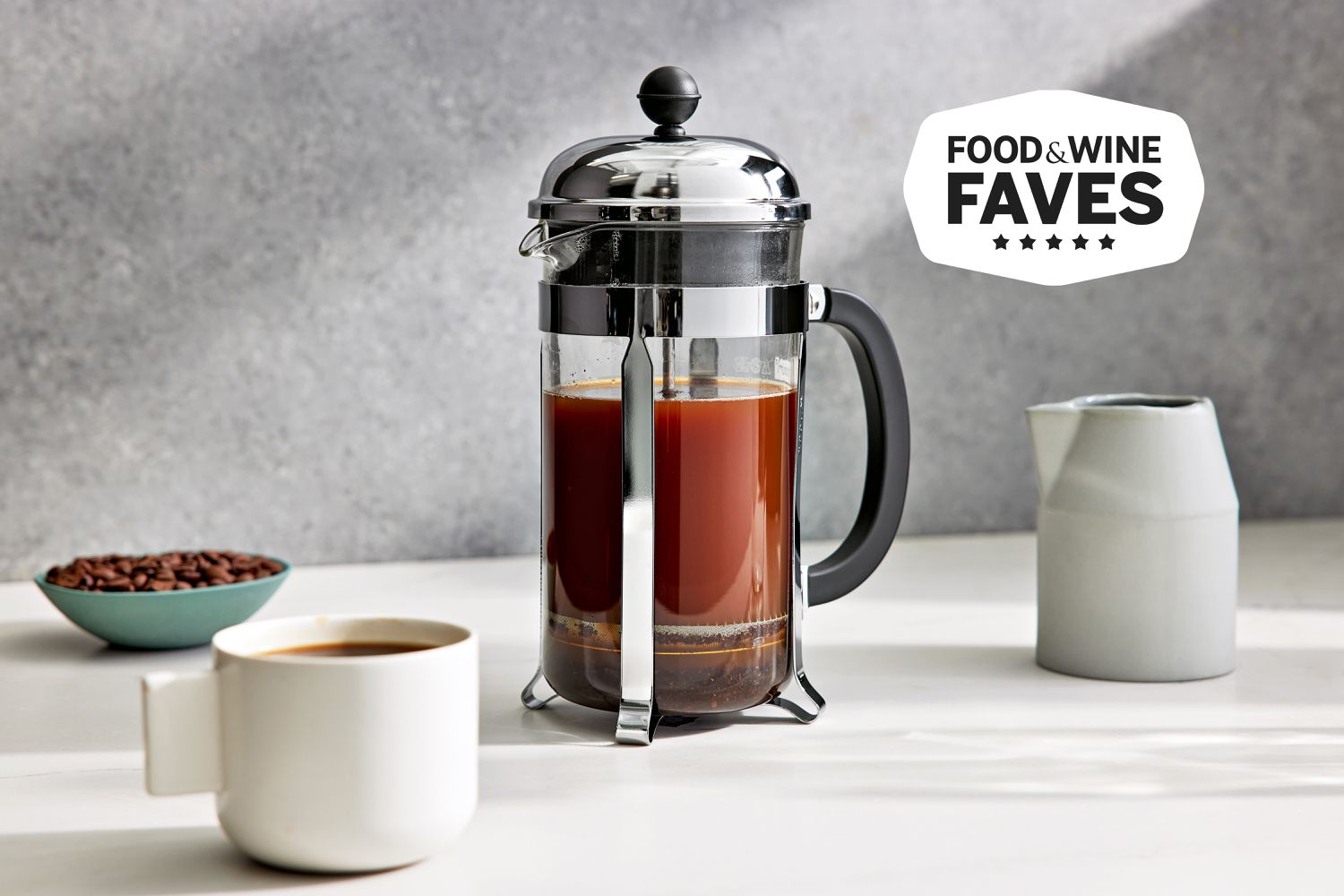
Whether you prefer something automatic or manual, the coffee maker you choose is personal. French press coffee is ideal for those who prefer a simple, customizable, and classic brewing method. Since coffee grounds are submerged in hot water longer, a richer flavor is extracted. Once you master making French press coffee, we bet you’ll never go back to drip. The best French presses enhance the bold flavors of coffee while expertly filtering the grounds to leave behind a clean, smooth cup of coffee.
We tested 21 French presses from Bodum, Espro, Le Creuset, Yeti, and Fellow, sipping our way through each option to discover the best design, ease of use, and brew quality. Our favorite French presses produce perfectly balanced cups of coffee with no bitterness or sediment.
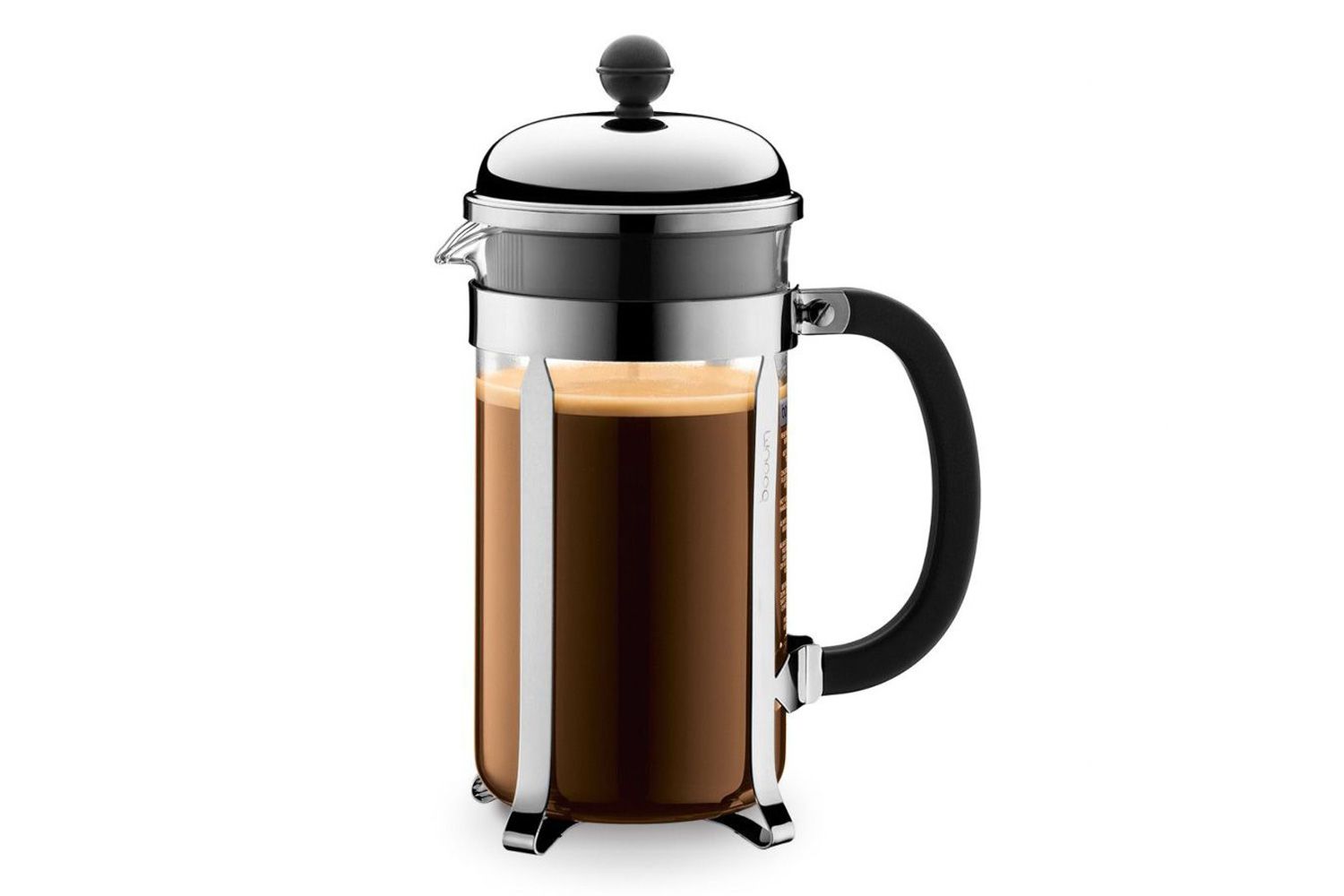
PHOTO: Amazon
Coffee lovers will instantly recognize the Bodum Chambord French Press. It’s one of the most classic French presses that has been around for over three decades since its inception in the 1990s. During our tests, this French press delivered exactly what we expected from French press-made coffee — a cup that drinks smoothly with no sediment and shows off a balance of acidity and flavor. The Bodum Chambord has an easy-to-use plunger that doesn’t stick, and cleaning it was painless since it’s dishwasher-safe.
The only drawback we could find is the lack of added insulation, so it’s best to enjoy the coffee immediately after brewing. The Chambord performed well across our tests, and the consistently excellent brew quality is exactly what we expected. Test after test, it remains the best French press overall.
Material: Borosilicate glass, stainless steel, and plastic | Insulation: No | Capacity: 34 fluid ounces | Dishwasher-safe: Yes
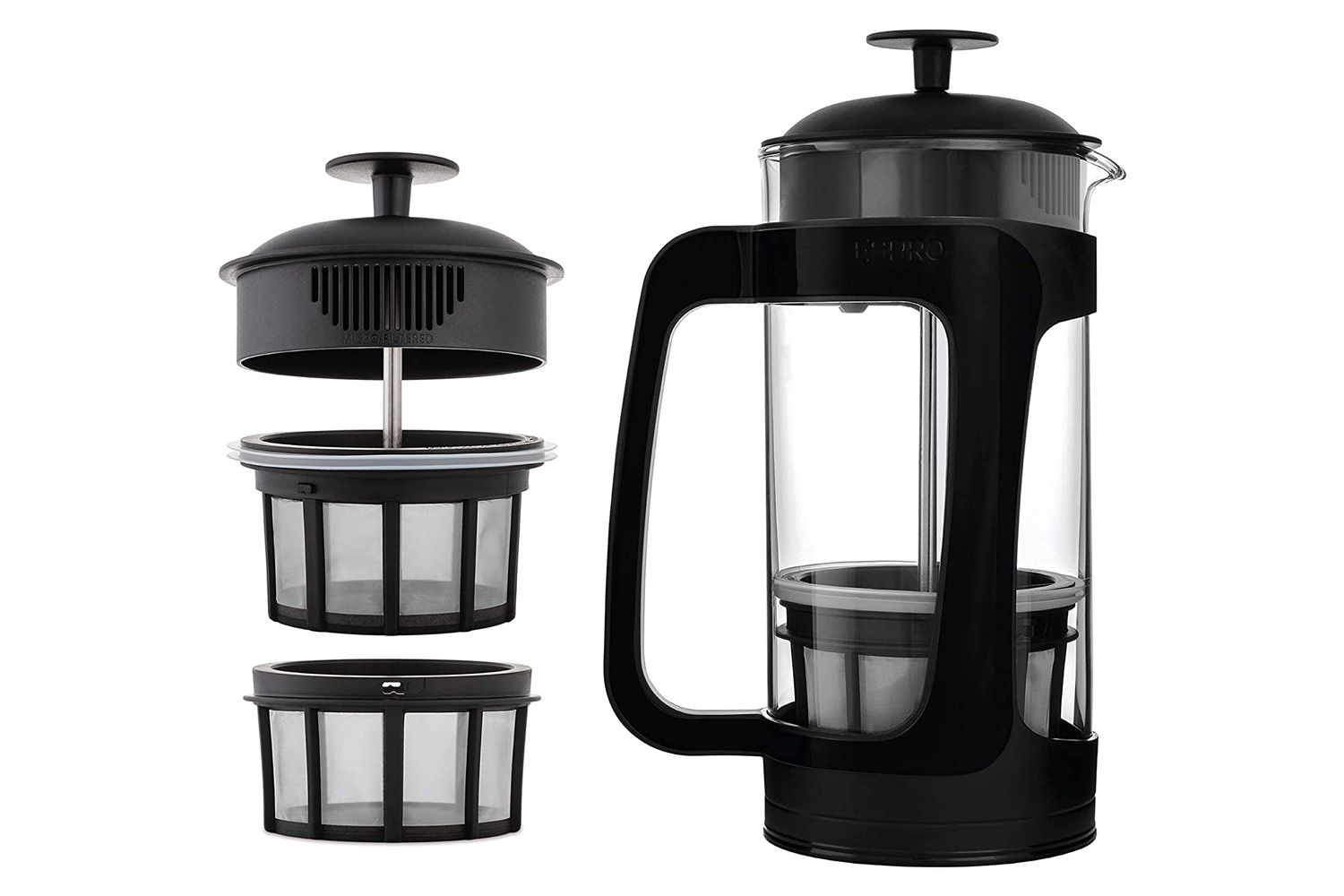
PHOTO: Amazon
Pros
For those who like glass, this is a sturdy and safe option because it’s reinforced with a thick, non-breakable cage that locks in place.
This affordably priced and classically styled French press produces a balanced and pleasant cup of coffee. In our tests, we raved about the taste results, which showcased clean, balanced, and flavorful coffee with no sediment. We like the sturdy base of this French press and the strong, locked-in cage that holds the glass carafe — which is by no means fragile, as it’s engineered to be 40% thicker than classic French presses. For purists who believe glass is the only way to go, this is a tried and true style with essential features.
Material: Schott-Duran glass (carafe), polypropylene plastic (cage and handle) | Insulation: No | Capacity: 32 fluid ounces | Dishwasher-safe: Yes
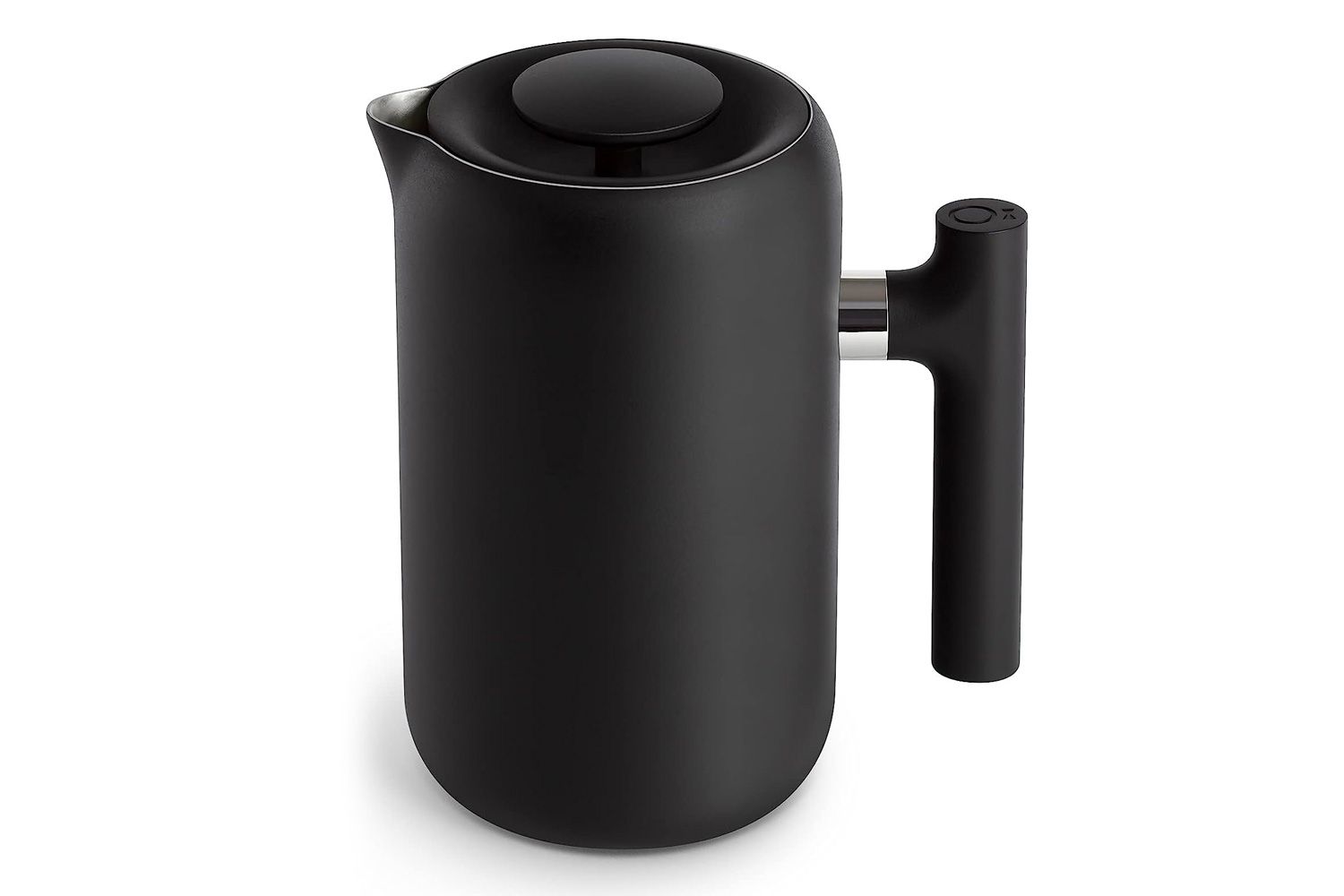
PHOTO: Amazon
The sleek look of this French press from Fellow makes it a winner for design. It’s modern and functional and will look right at home next to your new coffee grinder and glass coffee mugs. In addition to this French press making a well-balanced and clean cup of coffee with rich and deep flavor, we liked the extra features: an agitation stick for stirring grounds, a counterbalanced handle for easy pouring, an all-directional pour lid, and guidelines for ratio of coffee grounds to water.
Material: Stainless steel, BPA-free plastic, nonstick PFOA-free-coated interior | Insulation: Yes | Capacity: 24 fluid ounces | Dishwasher-safe: No, only the mesh filter is dishwasher-safe
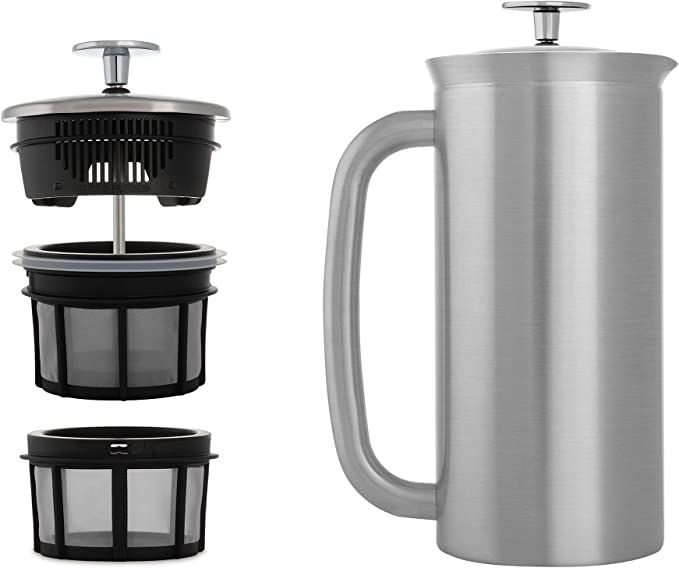
PHOTO: Courtesy of Amazon
The Espro P7 makes perhaps one of the smoothest cups of coffee you’ll taste from a French press. It crafts a clean and consistent cup of coffee every time, and the insulation keeps whatever’s left inside the press hot for whenever you’re ready to refill your coffee mug. The plunger system is smooth and seamless, which results in a balanced cup of coffee with little to no sediment.
Did we mention it’s beautifully made? The quality of construction and brew makes this French press worth investing in. One thing to note is that the basket filter is fine, so you may consider grinding your coffee beans finer to find the perfect fit for your taste preference. Because the filter is so fine, there is no worry that the grounds will end up in your coffee.
Material: Stainless steel, plastic | Insulation: Yes | Capacity: 32 fluid ounces | Dishwasher-safe: Yes, top rack recommended
Our Favorite French Press
Our best overall pick, the Bodum Chambord, came out on top because it makes a balanced and enjoyable cup of coffee and combines form and function for an affordable price. During our tests, we felt that the ultra-fine, double filtration made a big difference in the quality of the coffee. We also like the ESPRO P3 French Press. Its durable outer cage prevents any accidents. Beyond its quality construction, it produces little sediment.
How We Tested French Presses
Food & Wine / Isaac Nunn
We tested 21 top-rated French presses from Bodum, Espro, Fellow, Frieling, OXO, and Le Creuset. We assessed everything from design and ease of use to brew quality. We also took note of the insulation, additional special features, and how easy it was to clean. During the testing, each French press was tested for performance, quality of taste, and overall value.
First looks: Before using each French press, we took a proper look at its specs, assessing qualities like dimensions, volume, weight, included filters, and quality.
First taste test: Our first test was a taste test. After brewing for six minutes, we tasted each coffee and recorded flavor notes, depth, acidity/bitterness, and balance.
Filtration test: After tasting, we poured the coffee through a paper coffee filter into another vessel, observing the amount of coffee grounds caught in the filter. During each test, we recorded if the outside and/or handle was hot to the touch.
Insulation test: Next, we performed an insulation test. After brewing, we left eight ounces of coffee in each French press for 10 minutes and recorded the temperature. We repeated this after 30 minutes.
Second taste test: We performed a second taste test. Without using a coffee scale, we eyed approximately the same amount of grounds from the first round of testing. We brewed the coffee using the same method. After brewing, we tasted each coffee and recorded flavor notes, depth, acidity/bitterness, balance, and additional thoughts.
Ease of cleaning: We washed each press according to the manufacturer’s instructions, recording whether it was easy or hard to clean thoroughly and whether there was any wear and tear or stains on the product.
Value: We weighed each French press’s value against its performance. The non-insulated models cost $25 to $100, averaging $45 per unit. Other models were insulated, averaging at $155 each.
Food & Wine / Isaac Nunn
Factors to Consider
Capacity
In general, the average French press holds between 32 and 36 ounces. The best French press for you depends on your coffee capacity needs. French press pots can make as little as one cup or as many as a dozen cups. Narrowing down your choice begins with determining how many cups of coffee or tea you want to make at once. If you need a couple of cups at a time, your coffee or tea will brew quicker in a smaller model.
Insulation
While our two best overall picks do not provide insulation, some value this feature. An insulated French press will keep your coffee warmer longer, which is key for slower drinkers. Alternatively, you can also look for a quality material, like stainless steel or thick glass to keep your coffee warm as it brews. And of course, you can always opt for a mug warmer instead.
The Right-Sized Mesh Filter
The mesh filter inside the press captures the grounds or leaves and fully blooms the coffee or tea. The mesh should allow for smooth function; too tight or too close a mesh will remove too many essential oils from your coffee or tea. Too loose, grounds and leaves can remain in the liquid as you pour.
The Spruce Eats / Isaac Nunn
Design
In addition to a good filter, the best French presses have an easy-to-use plunger that seamlessly plunges through the water while still having a tight seal that prevents grounds from escaping. It should also have a tight-fitting lid that prevents spills when pouring.
Ease of Cleaning
Some French presses are dishwasher-safe; some are not. Cleaning a French press can be a bit complicated since grounds and tea leaves can get stuck in the filter spring, so if easy cleanup is important to you, check that the model you choose is dishwasher-safe. Glass containers might also need occasional descaling or can get foggy over time. A combo of vinegar and baking soda will return them to their original shine.
Frequently Asked Questions
Is French press coffee better?
“That is a matter of preference,” says Jessica Easto, author of Craft Coffee: A Manual. “I often recommend French presses to beginners for manual coffee making. They are easy to master. A French press is a full-immersion method, which means the water and coffee are in contact for the whole brew time. Then you filter the grounds out. You don’t have to worry about pouring, but just how long you let your coffee set.
French press coffee has a distinct quality because French presses use a metal filter. The metal filter lets through coffee oils and fines (tiny coffee particles), making a distinct mouthfeel (heavier, more texture). Some people love this. Paper (or cloth) filters capture most of the oils and fines, so the mouthfeel is different (some describe it as “cleaner” or “lighter”) with coffee brewed on devices that use paper or cloth filters.”
How long do you steep French press coffee?
Probably the trickiest part of French press coffee is figuring out when to press! “I have a recipe in my book. I do quite a long brew time: 8 minutes. But the trick is using very coarse coffee grounds,” Easto says.
How do you clean a French press?
It’s important to clean your French press after every use to prevent bacteria and mold. A few of the models we included are dishwasher-safe. For models that must be hand-washed, first dump the cashed coffee grounds. Then, detach the mesh, spring, and attachment plate from the plunger and rinse with warm water and dish soap. Place the parts on a clean kitchen towel to dry and clean the carafe.
How do you make cold brew in a French press?
Easto is a fan of cold brew, and her recipe requires patience for the best results. “For cold brew in a French press, I recommend a medium-coarse grind and a 1:6 ratio of coffee to water. This will make a cold brew concentrate that you can dilute to taste (try 1:1 to start) with fresh cold water. In the book, I suggest using 96 grams of coffee (about 1 cup) and 600 grams of cold water (about 20.3 fl oz). Grind the beans and put them in the chamber of a French press, gentle shaking to level them out.
Add the cold water, insert the plunger, and depress it just enough to keep the grounds submerged under the water (so not all the way!). Put the French press in the fridge for 12 hours to brew. After that, you can depress the plunger and pour the cold brew concentrate into a separate container for storage.
However, instead of just plunging quickly, I learned from James Hoffman that there is a gentler way that does not agitate the coffee too much: stir the coffee a couple of times to break up the crust and let the grounds sink to the bottom for about 10 minutes. Then put the plunger back in and depress it just enough so that it rests on top of the coffee. Then pour the concentrate into a separate container. It should keep in the fridge for 1 to 2 weeks.”
What size grind is best for French press?
A medium-coarse to coarse grind is best. The larger size prevents the grinds from slipping through the mesh filter.
Other French Presses We Tested
Strong Contenders
Yeti Rambler French Press ($130 at Yeti)
Like all things Yeti, their French press has incredible insulation, a range in capacity (with both a 34- and 64-ounce option), and a twist-lock top that keeps it from flipping open when pouring. Its design may be too outdoorsy or rustic for some tastes.
Le Creuset Stoneware French Press ($85 at Amazon)
This French press makes a nice, full-bodied cup of coffee but leaves a bit of fine silt at the bottom of the cup. The drawback here is that the plunger and lid felt unstable while pouring, despite the solid construction of the carafe itself.
Bodum Caffettiera French Press Coffee Maker ($30 at Amazon)
This model is very similar to the Bodum Chambord, the only difference being a plastic lid and plunger handle. It is still a consistent brew with a classic aesthetic, but we prefer the Chambord for its material.
Coffee Gator French Press Coffee Maker ($35 at Amazon)
The insulation and brew quality is nice for the price point, especially compared to the other similarly constructed carafes. We prefer a slightly more secure and better-fitting lid.
What Didn’t Make the List
While some French presses were quick to impress us, others had significant downsides. Even popular brands like Bodum, Mueller, OXO, and Stanley made models we found to have bad filtration systems, were too difficult to clean, had awkward designs, or produced poor-tasting coffee.
Our Expertise
Melissa Vogt wrote this piece. Years of tasting and writing about food, wine, and spirits guide Vogt’s research. Read more of her writing on her website and in Napa Valley Life, Very Napa Valley, and Wine Country This Month. For this piece, Melissa parsed insights from our lab test of over 20 French presses to determine the best options.
Stacey Ballis, a writer, recipe developer, and product reviewer, provided additional reporting for this piece. She spoke with Jessica Easto, author of Craft Coffee: A Manual.