
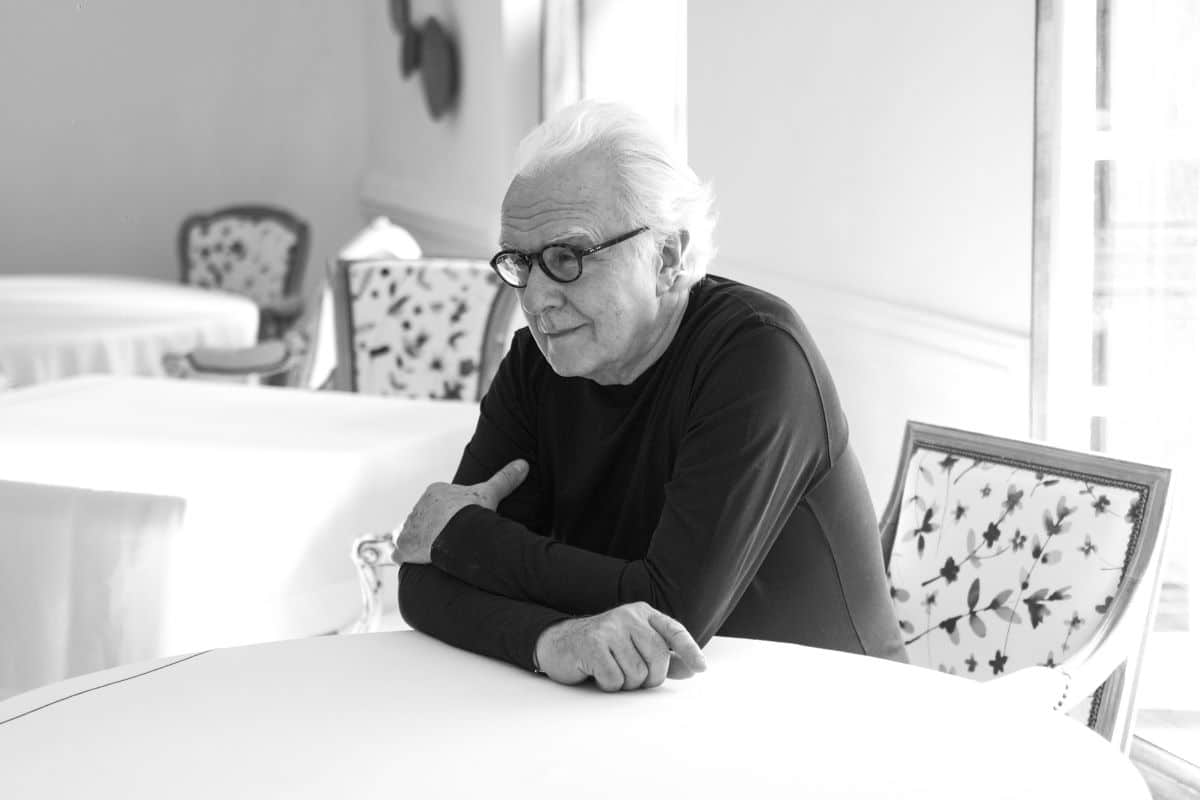
A few weeks ago, I met Alain Ducasse, the guardian of French culinary tradition and Gault&Millau Academy Member, in TakaHisa, Gault&Millau UAE’s recently awarded Home-grown Restaurant of the Year.
The legendary chef, with his long-time collaborator Romain Meder, was scheduled to combine for a trio of meals with Takashi Namekata and Hisao Ueda as part of a prestigious Gulfood 2025 chef alliance that saw him introduce dishes alongside sushi and wagyu signatures from TakaHisa.
We sat together in a quiet corner of the restaurant, a bottle of Antipodes water promptly upgraded to IWA 5 sake, the brainchild of ex-Dom Pérignon’s chef de cave, Richard Geoffroy.
Ducasse shuffled in the comfort of the booth, the jet-setting restauranteur having only set foot in Dubai a few hours prior. Seated, he swished the thin-stemmed Zalto glass and sipped delicately between swirls.
“Tu sais ça, David?” he asked, examining the black bottle. “It’s a very good sake and an interesting story.” He then switched back to French, making steady eye contact with me beneath a bush of eyebrows: ” L’ex-chef de cave de Dom Pérignon.”
I nodded, jittery in the company of the great chef, then picked up my glass and swirled, mimicking his action.
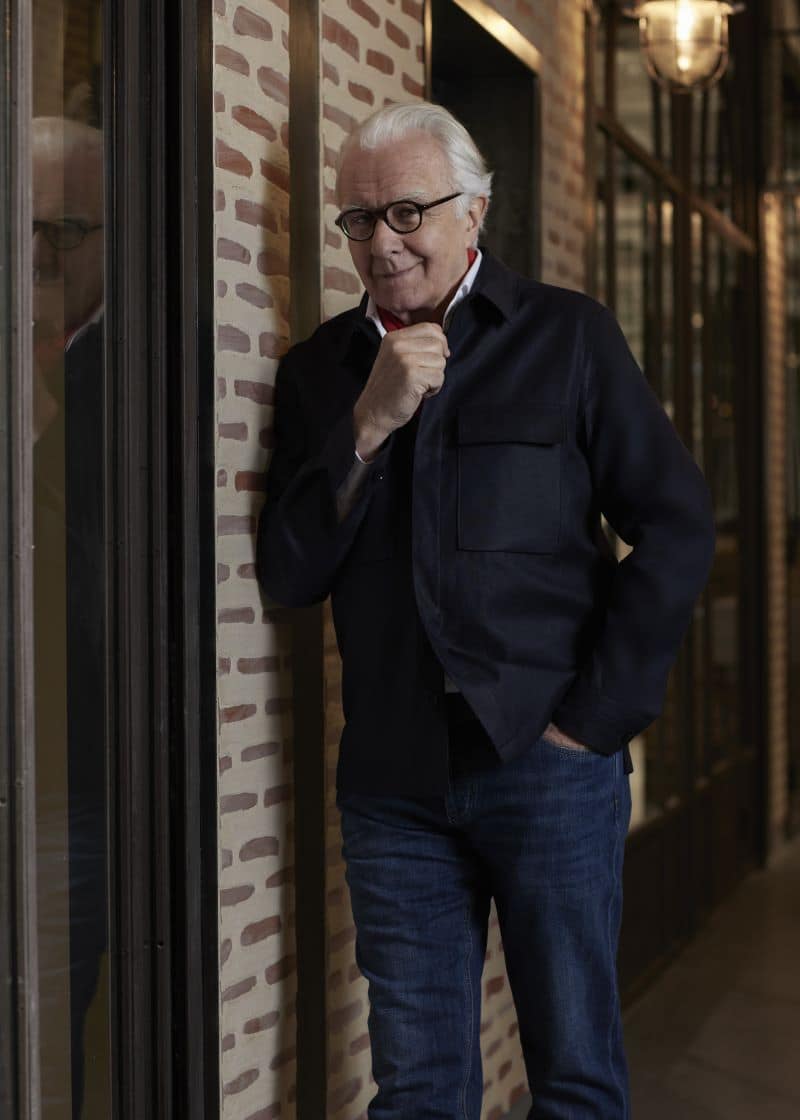 Ducasse has opened more than three dozen restaurants (c) Jair Lanes
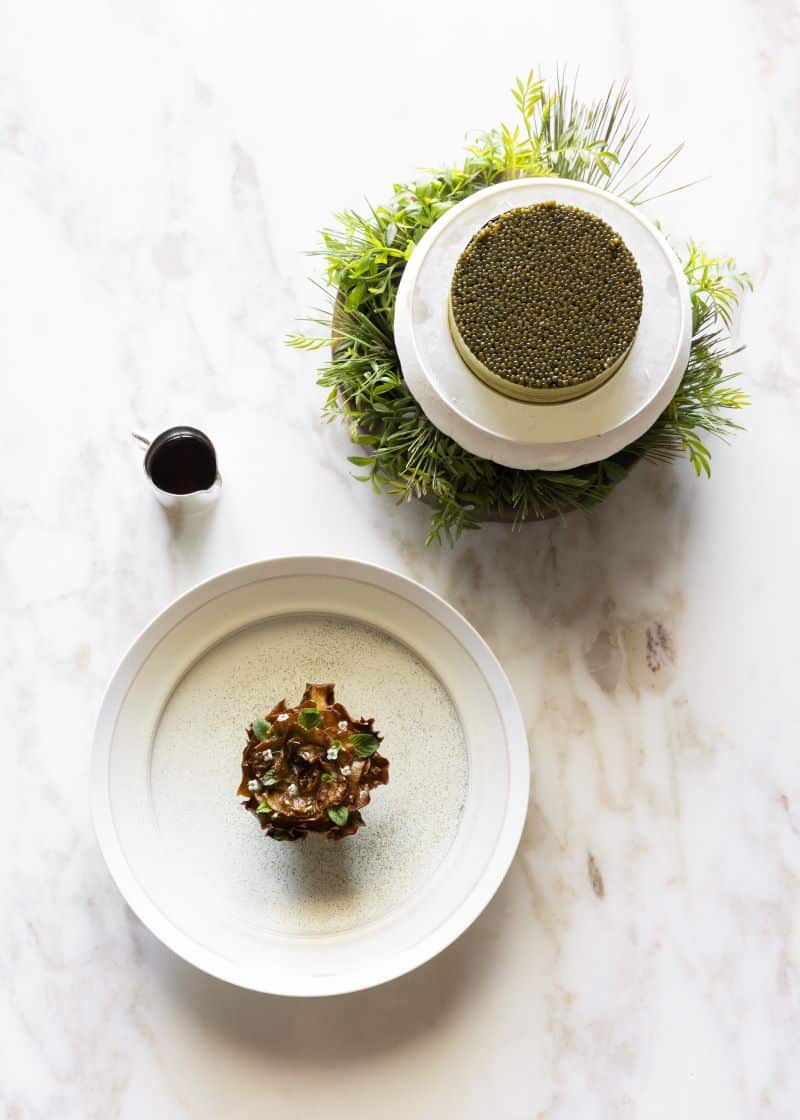 L’artichaut (c) Matteo Carassale
I have only a little allotted time with Ducasse before lunch when the excitable admirers arrive. Still, we make quick work on the sake, which helps to loosen tongues and lubricate conversation.
Emmanuelle Perrier, his communications director and long-time translator, is with us, and it soon becomes apparent that a third party will conduct the rest of the conversation. It’s fine; it’s still early, and Ducasse has switched continents this morning. Plus, we’re already half a bottle of sake in. So off we go.
However, with an illustrious career spanning 40-ish years, a restaurant empire comprising bistros and brasseries that stretches from Paris and London to Tokyo, Bangkok and Qatar, and a consortium of chocolate, coffee, ice cream, cookie factories and cooking schools worldwide, where does one begin? I’m tempted to eat up our time with talk of chocolate and cookies while swirling and sipping sake.
Thankfully, I was briefed on the recent publication of his new book, Good Taste: A Life of Food and Passion, and I had spent the last two evenings reading it, absorbing Ducasse’s edible words and world.
For the self-proclaimed bon vivant and international restaurant box-tickers, Good Taste is a sort-after reveal of Ducasse’s resume and professional achievements, filled with boastful accomplishments and the blueprint for his succession plan.
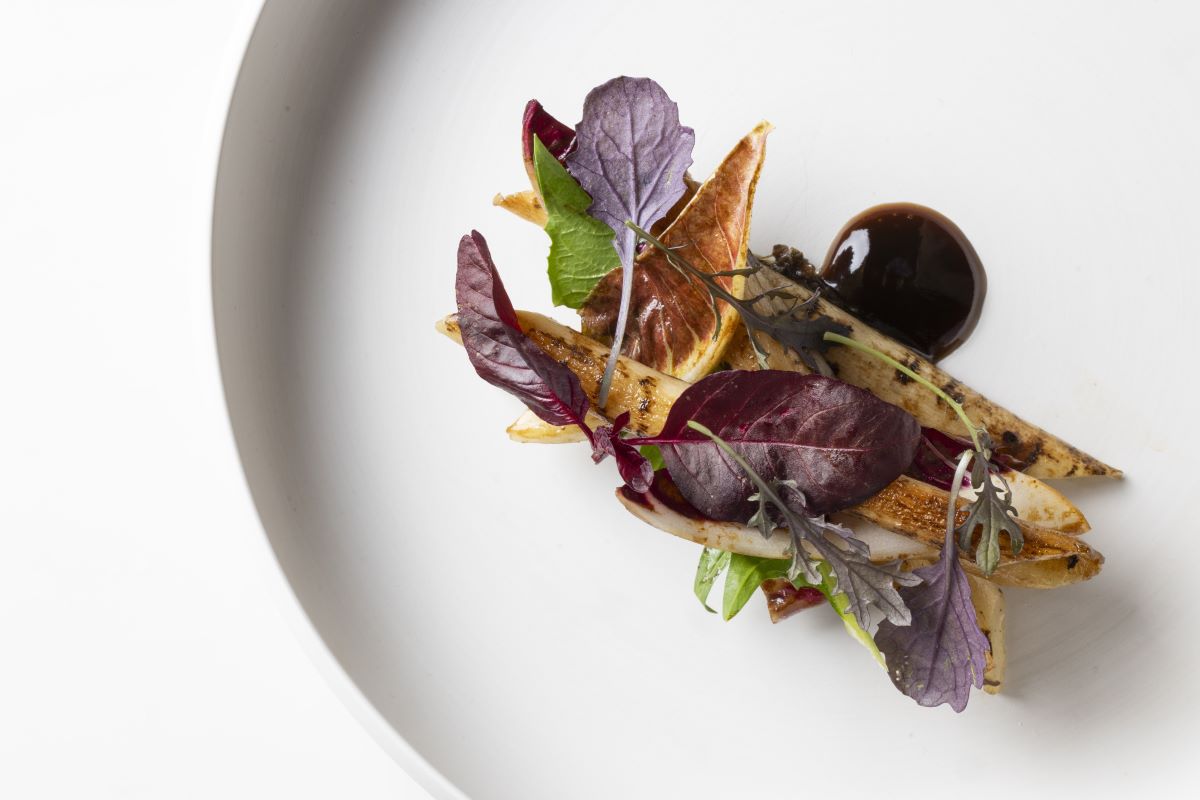 Scorsonère, cornouille, noix, garum, herbes amères, shoyu de champignons (c) Matteo Carassale
At 68, Ducasse isn’t so much stepping back but considering the future in more studious ways. In the book, he writes, “Nothing should be kept secret. Knowledge is a shared resource, and it is only by giving it to others that we can broaden it with new flavours and new skills… In that respect, our schools are museums as much as they are laboratories.”
I put it to Perrier, who puts it to Ducasse, “Why now, and why is there such a focus on teaching?” Then, through the triplicity of foreign tongues and language transferral, I received my answer: “It’s about encouraging the next generation of talented people. So if you take École – Ducasse’s global culinary schools, including an outpost opened in partnership with Erth Hospitality in Abu Dhabi – then you are talking about a common vision, the competence to meet the needs of a global industry and supplying young people with the tools to cuisine. We must record the story of cooking so that it is not forgotten, and we must continue to drive it forward.”
Hearing the importance placed on education, conterminous with the preservation and “story” of cooking, I ask him about opening a new Ducasse headquarters called Le Maison du People, slated to open later this year in Clichy, a suburb of Paris. The historic building was built in the late 1930s by Charles Auffray, who was mayor of Clichy at the time, and will act as “a new way of providing education, as a laboratory and a centre of thought – learning from the past, but producing the cooking of the future.”
Ducasse continues the explanation, “It is important to think about your food before eating it, and Le Maison du People will force us to learn, to stay curious and to be alive.”
With the recent news of a pop-up in AlUla, Saudi Arabia, Ducasse is undoubtedly keeping his curiosity alive while demonstrating his knack for global expansion. In an interview with Caterer Middle East, he described the pop-up in the ancient city oasis as “a fresh opportunity to engage in a new culinary dialogue, one that merges French gastronomy with the authentic flavours of AlUla.”
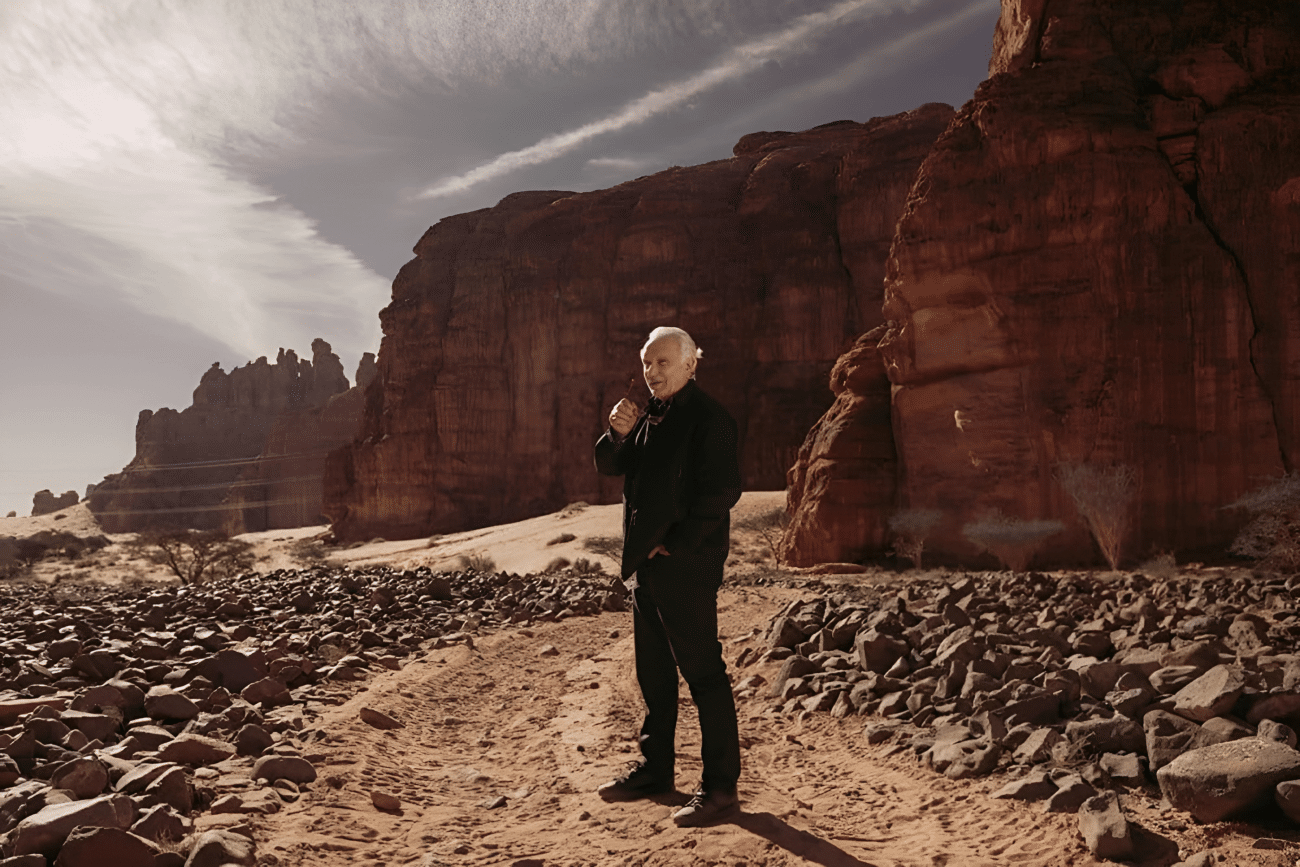 Alain Ducasse calls AlUla “unlike anywhere else in the world”
While sitting together, he expands on his sense of responsibility as a chef, “Respecting the integrity of ingredients is central to my approach as a chef – it is about being deeply connected to the landscape, whether that is Paris, Bangkok or AlUla.”
This idea of respect and integrity of ingredients is continually highlighted in our conversation and is an evident part of Ducasse’s mindset and approach as a chef. His passion for fresh produce, but attentively cooked, has informed his new book and menus for four-plus decades.
Growing up on his parent’s farm in Castelsarrasin in southwest France, his bedroom was above the kitchen, and when his grandmother cooked blanquette de veau for Sunday lunch, the smells would waft upstairs. The young Ducasse was hooked. Then, as a teenager, he undertook a stint as a waiter but is quoted as saying, “I had to be a chef because being a waiter was too much work.”
Forgoing a career front of the house, Ducasse was trained by Alain Chapel, one of the originators of nouvelle cuisine, before becoming a head chef in 1985 at Hotel Juana in Juan-les-Pins. Having written an obituary last August on the passing of his friend Michel Guérard, another pioneer and cohort of the nouvelle cuisine movement and, like Ducasse, part of the all-French Gault&Millau Academy, I am tentative to bring up the subject of Chapel, Guérard and nouvelle cuisine.
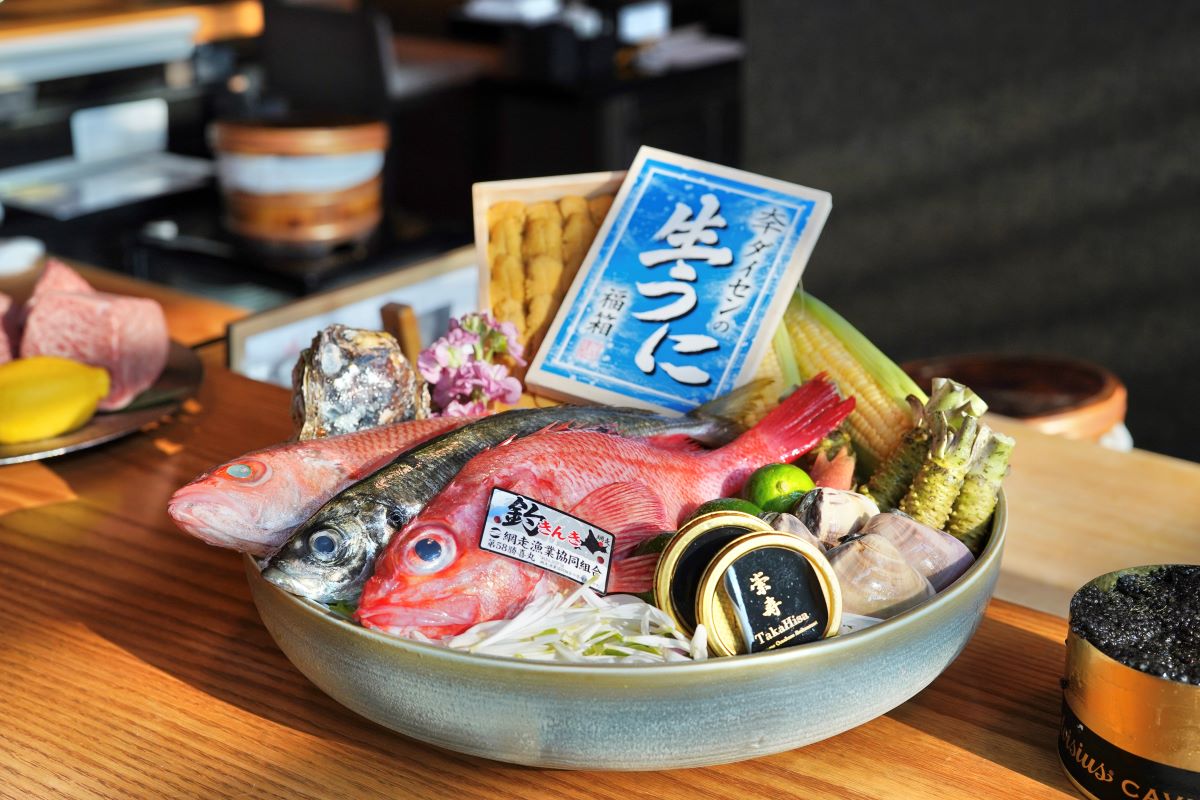 TakaHisa collaborated with Alain Ducasse and Romain Meder as part of Gulfood 2025
I submitted the theme to Perrier, who nodded her approval. So, I ask, “Can you talk a little about Guérard and nouvelle cuisine?”
Ducasse nods and sighs a melancholy sigh, “Guérard was a very mindful chef who adapted French cuisine to meet the needs of today’s consumers. He was aware of his health, the impact of quality, organic ingredients and our environmental responsibilities – which is no straightforward accomplishment.”
He concludes his peroration, “To project oneself into the future, one must dare. But first, one must master. We must embrace Guérard’s culinary philosophy because we are the living practitioners, keeping his legacy alive.”
Later, post-interview, at the TakaHisa collaboration, Ducasse stands on the other side of the high-rise counter, tasting a velouté with Meder and seemingly making things happen without actually doing anything. Occasionally, he sips from another glass of IWA 5, which is promptly upgraded to Puligny-Montrachet Burgundy, followed by vintage Dom Pérignon P2 2004, of which he insists I join him.
And so, still jittery in the company of the great chef and in the venturous spirit of education and “staying curious,” I do.
Follow Alain Ducasse on Instagram and read about Good Taste: A Life of Food and Passion here.
Read more interviews like this …
Marco Pierre White exclusive: “I’m ruled by emotion, and that’s my life’s story”
When David J Constable met Marco Pierre White, they went the distance, covering nouvelle cuisine, microwaves, Scotch eggs and the news of his recent partnership with Meals on Me
“I prefer to work with one ingredient and push it,” says Pierre Hermé
On the day Majlis by Pierre Hermé opened in Rosewood Abu Dhabi, Gault&Millau UAE editor David J Constable sat down with the world-famous chef
“What is classic is modern”, and “what is simple is difficult”, says Jean Imbert
As Riviera at The Lana – Dorchester Collection officially opens, David J Constable sat down with the chef responsible for leading the kitchen, the enfant terrible Jean Imbert